
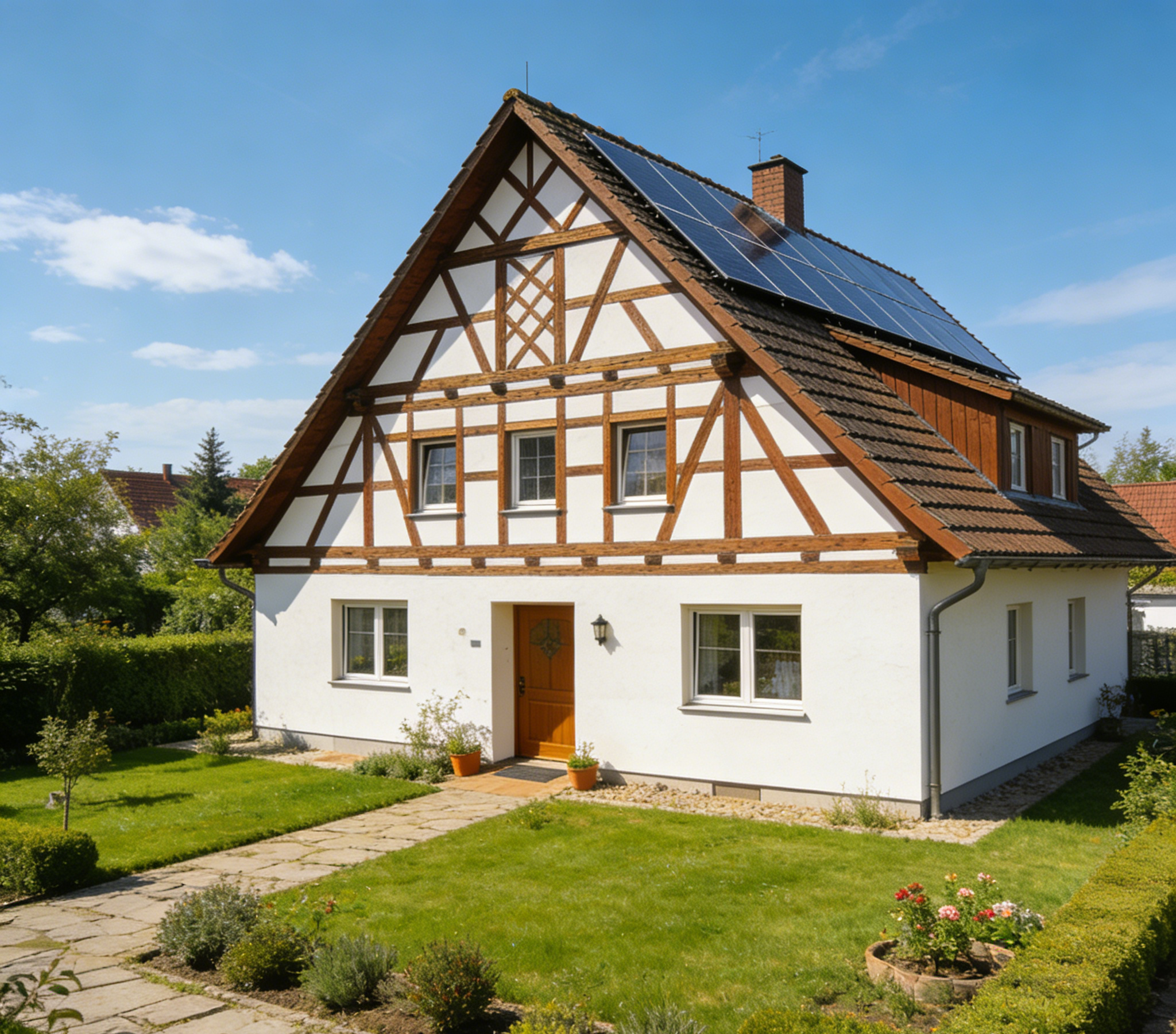
According to statistics, more than 40% of newly built residential buildings in Germany were equipped with standard photovoltaic (PV) systems in 2024; globally, the penetration rate of household PV in Australia has even exceeded 35%. Green electricity is becoming a lifestyle trend across national borders.
More and more European families are facing major energy decisions. Are you also thinking:

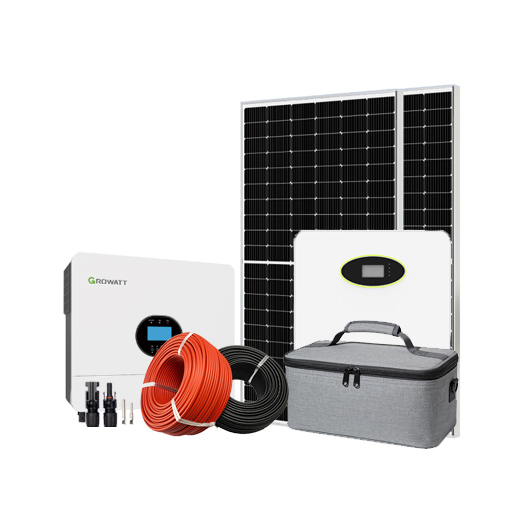
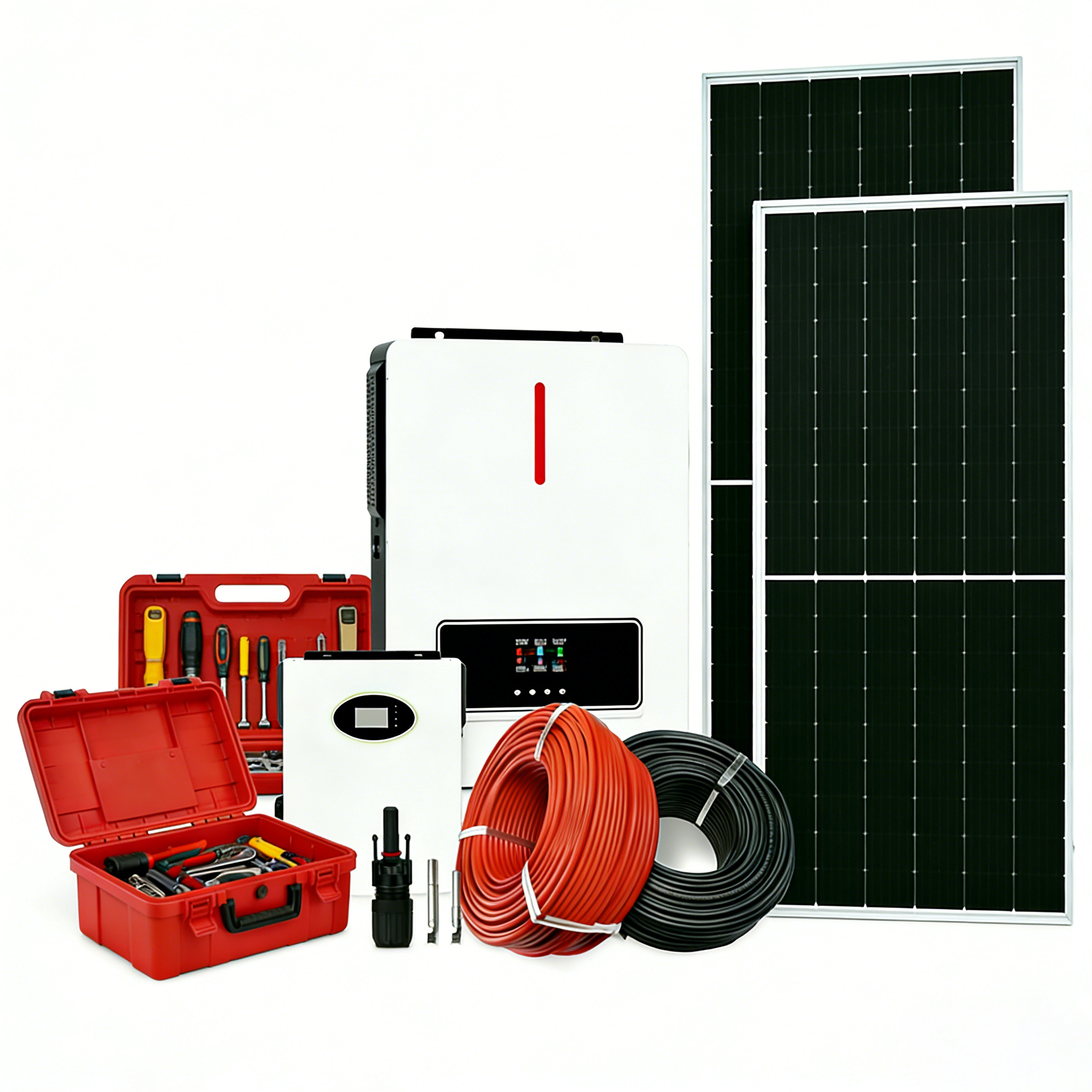
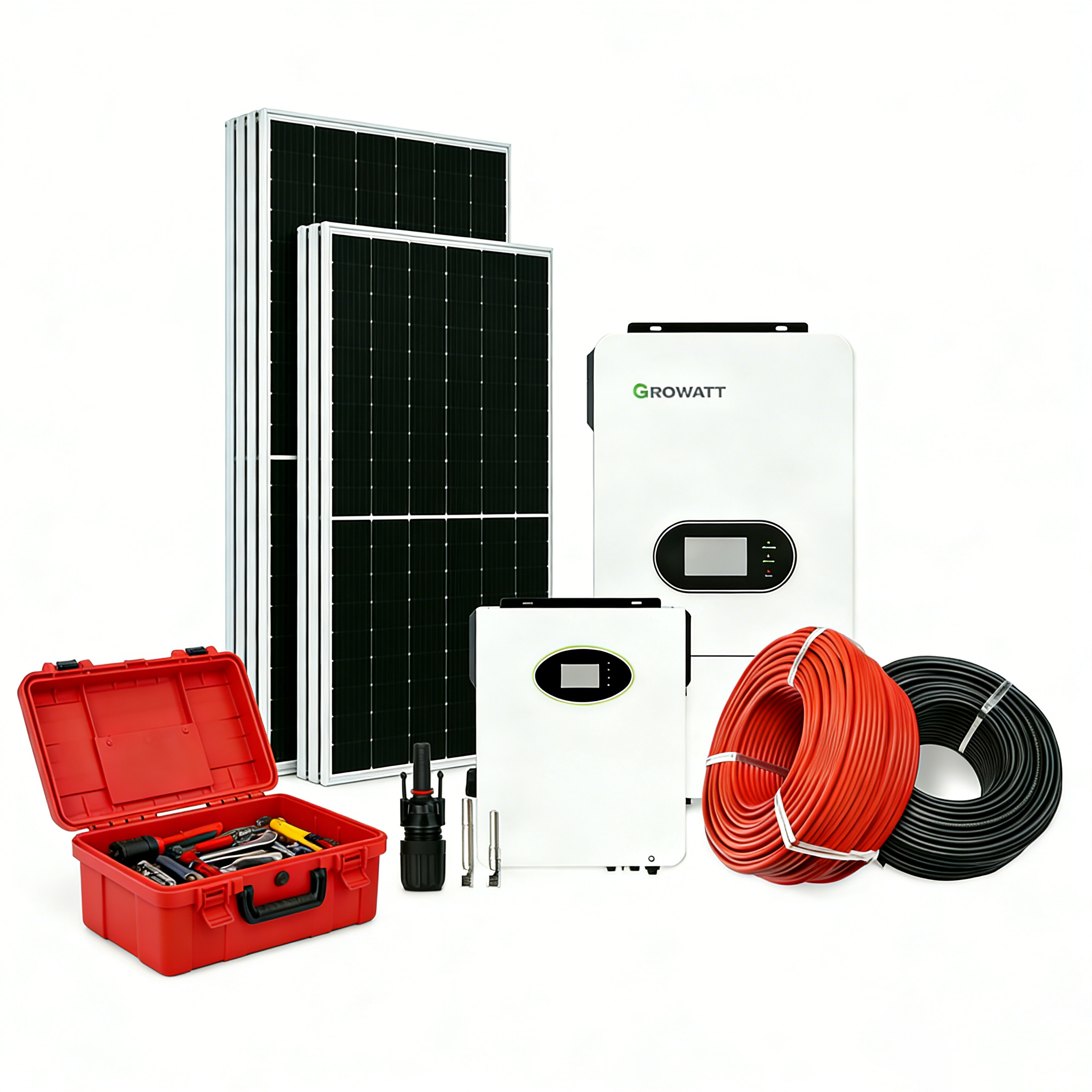
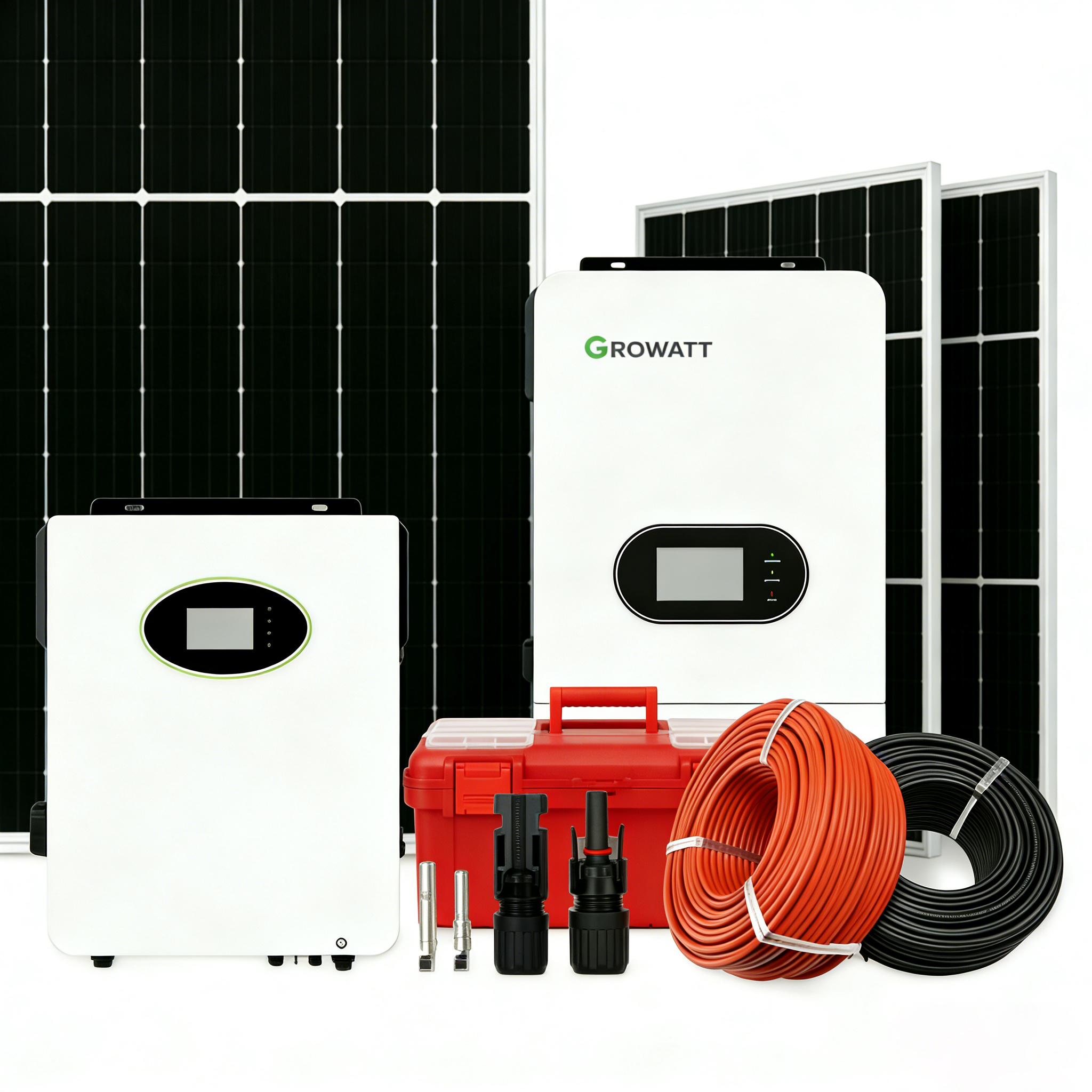
🔋 What Is A Residential Hybrid Solar Energy System?
The core advantage of the system: Three-in-one intelligent energy management
Hybrid grid solar systems (grid connection + energy storage) are an ideal choice for Europe’s energy transition, ingeniously combining:
1. Photovoltaic power generation: Revitalizing idle rooftop assets to produce zero-carbon electricity
Efficient space utilization: No need to occupy additional land resources, fully revitalizing the idle asset of residential rooftops, especially suitable for European countries with tight land resources such as Germany. Whether it is a tiled roof with a sloping roof, a concrete roof with a flat roof, or a metal roof, they can all be installed through customized bracket solutions without affecting the original function and aesthetics of the roof.
Clean and zero-carbon attributes: The power generation process is noise-free and has no pollutant emissions, fully aligning with the EU’s target of “42.5% of renewable energy by 2030” and the subsidy requirements of Germany’s Renewable Energy Act (EEG). Users can not only meet their own electricity demands by generating electricity, but also sell the excess power through the power grid to earn additional income.
2. Battery energy Storage: Off-peak power storage to resolve the contradiction between “daytime generation and nighttime use” and seasonal electricity consumption
Solve the problem of power consumption mismatch during different time periods: During the peak period of photovoltaic power generation in the daytime, the excess electricity can be stored in batteries for use at night, on rainy days and other periods without sunlight, significantly increasing the self-consumption rate of electricity.
Against the backdrop of a significant difference in peak-valley electricity prices in Germany, users can avoid the period when they purchase electricity at high prices and only purchase additional electricity during the low price period, further reducing their electricity costs.
Balancing seasonal energy differences: In response to the characteristics of short daylight hours and high electricity demand (for heating and lighting) in European winters, energy storage systems can store the surplus of photovoltaic power generation in summer, alleviating the pressure on power supply in winter.
3. Intelligent Management: Digital regulation and control to achieve dual optimization of benefits and energy efficiency
Precise optimization of self-consumption rate: Real-time monitoring of household electricity load, photovoltaic power generation and energy storage capacity, and automatic allocation of power flow – prioritizing the satisfaction of one’s own electricity demand, with the remaining power automatically stored in the battery rather than directly connected to the grid.
Remote monitoring and operation and maintenance: Users can view power generation, storage and consumption data in real time through the mobile APP or web page, and grasp the system operation status. The system supports automatic fault diagnosis and early warning. Maintenance personnel can remotely locate problems, reducing offline maintenance costs and ensuring the stable operation of the system throughout its entire life cycle.
🌍 Why Is It Particularly Suitable For European Families?
The unique value proposition of the European photovoltaic market centers around three major dimensions: “high return certainty, strong policy support, and customized adaptation”
1. High electricity price arbitrage: The peak-valley price difference drives the large-scale development of energy storage, with clear returns
The electricity price structure of the European energy market provides a significant arbitrage space for the combination of photovoltaic and energy storage. From January to September 2025, the average peak-valley price difference in most regions of Europe has exceeded 85 euros per MWh.
In some Eastern European countries, due to the high proportion of new energy power generation, the return rate of energy storage projects brought by the price difference has even exceeded 15%, far exceeding the conventional investment return level. This high price difference stems from the temporal differentiation of electricity demand – electricity prices soar during peak periods for industrial production and residential use (such as daytime commuting and evening cooking), while negative electricity prices may occur during late nights or when there is an excess of new energy generation. Energy storage systems can achieve flexible operations of “storing electricity during off-peak hours and selling it during peak hours”.
2. Policy support: Dual incentives from the EU and its member states, along with compliance thresholds and guarantees
The policy support for the European photovoltaic market presents a dual superimposed feature of “top-level guidance + local implementation”. At the EU level, the “Net Zero Industries Act” and the “Critical Raw Materials Act” have been passed to establish a framework for the development of green energy, taking photovoltaic power as the core path to achieve carbon neutrality. Member states have introduced targeted subsidy policies, forming a diversified incentive system.
3. Climate Adaptation: Customized design addresses diverse climates and ensures reliability throughout the entire life cycle
Europe spans multiple climate zones, ranging from the cold and snowy Northern Europe, the hot and dry Southern Europe to the mild and humid Western Europe. The climate pressures in different regions put forward differentiated requirements for photovoltaic systems, and climate adaptive design has become one of the core values.
📊 In-depth Analysis Of The European Market Suitability Of The Four CapacitySystems
| 5KW Residential Hybrid Solar Energy System – Small and Medium-Sized Family Economy Preferred | |
| Applicable scenarios↓ | |
| Germany/Northern Europe: | 3,500-4,500 KWH per year for a family of 3-4 |
| Southern Europe: | Small apartments or holiday homes |
| Especially suitable for: | First-time solar homes |
| Climate adaptation strategy↓ | |
| Nordic optimization: | Increase tilt Angle to 40°, add snow proof design |
| Southern Europe optimization: | Strengthen the heat dissipation design, considering the shading function |
| Product Link Recommendations↓ | |
| 5KW Hybrid Solar Energy System |
|
| 6KW Residential Hybrid Solar Energy System – Standard Household Balance Solution | |
| Applicable scenarios↓ | |
| Germany/Northern Europe: | 4,500-6,000 KWH per year for a family of 4-5 |
| Southern Europe: | Medium-sized households |
| Especially suitable for: | families with plans to buy an electric car |
| Climate adaptation strategy↓ | |
| Nordic optimization: | Double sided components to enhance winter power generation |
| Southern Europe optimization: | Optimize ventilation design to reduce temperature losses |
| Product Link Recommendations↓ | |
| 6KW Hybrid Household Solar Energy System |
|
| 10KW Residential Hybrid Solar Energy System – High Performance Solution For Large Units | |
| Applicable scenarios↓ | |
| Germany/Northern Europe: | 8,000-10,000 KWH electricity per year for a two-storey villa or a family of 5-6 |
| Southern Europe: | Large house or multi-generation family |
| Especially suitable for: | Homes with heat pumps installed or planned |
| Climate adaptation strategy↓ | |
| Nordic optimization: | East-West installation boosts the generation curve throughout the day |
| Southern Europe optimization: | Improve efficiency in summer with water cooling systems |
| Product Link Recommendations↓ | |
| 10KW Hybrid Household Solar Energy System |
|
| 12KW Residential Hybrid Solar Energy System – The Ultimate in Energy Independence | |
| Applicable scenarios↓ | |
| Germany/Northern Europe: | Luxury villa or small commercial building, annual electricity 12,000 degrees + |
| Southern Europe: | High-end resort villas or small hotels |
| Especially suitable for: | Homes seeking total energy independence |
| Climate adaptation strategy↓ | |
| Nordic optimization: | Integrated air source heat pumps form an integrated energy system |
| Southern Europe optimization: | Combined pool heating and air conditioning system |
| Product Link Recommendations↓ | |
| 12KW Household Hybrid Solar Energy System |
|
💡Our service: From Consultation To Power Generation, Worry-Free Throughout The Process
No matter which power of rooftop photovoltaic solution you choose, we offer
– Free plan design: Based on your address, roof orientation/area, and electricity bill, accurately calculate power generation and revenue
– Local compliance support: Provide grid connection document templates for various countries/provinces and cities, policy interpretations, and assist in completing the approval process
– Professional installation and construction: certified team on-site construction, full security monitoring, free acceptance after completion- Full-cycle operation and maintenance: Graphic, video tutorials + online technical support
– Warranty: 25 years warranty for components, 5-10 years warranty for inverters, lifetime after-sales consultation
✅ Has served more than 11,000 households and small businesses around the world, covering Germany, France, the Netherlands, Italy, Australia, the United States and many domestic provincial markets
❓️FAQ
Q1: Will the installation of rooftop photovoltaic systems damage the roof? Does it affect waterproofing?
A:For the professionally and standardly installed Residential Hybrid Solar Energy System, it will not damage the roof structure nor undermine the original waterproof performance of the roof. The specific safeguard measures are as follows
♦ Customized brackets and non-destructive fixation solutions
We use custom brackets that match the roof types (such as the common German terracotta tile roofs, metal roofs, and flat roofs), and the fixation methods follow the German construction standards. For metal roofs, special locking fixtures are used, eliminating the need to drill holes through the roof panels. For flat roofs, counterweight brackets are used, completely eliminating the need for drilling holes in the roof and fundamentally preventing structural damage.
♦ Comprehensive waterproofing inspection and pretreatment before construction
Before installation, professional technicians will conduct a comprehensive inspection of the roof, including checking the integrity of the roof waterproof layer, the degree of aging, and the sealing condition of the joints, etc. If any potential hazards such as cracks or aging are found in the original waterproof layer, repair and reinforcement will be carried out first. For old roofs, waterproofing membranes or sealing coatings will be added based on the actual situation to ensure that the basic waterproofing performance meets the standards before carrying out photovoltaic installation work.
♦ Waterproof reinforcement treatment during the installation process
If it is necessary to drill holes for fixation due to the special structure of the roof, a standardized process of “drilling – cleaning – sealing – fixing – secondary sealing” will be adopted during construction. Weather-resistant sealants and waterproof gaskets certified in Germany will be used to apply multi-layer sealing treatment to the drilled areas to prevent the path of rainwater infiltration. At the joints between photovoltaic modules and brackets, waterproof pressure strips and seals will also be installed to form double waterproof protection.
♦ Post-construction acceptance and quality guarantee commitment system
After installation is completed, a water-tightness test will be conducted to check the waterproof effect and ensure there are no leakage issues. At the same time, we offer a roof waterproofing warranty service, promising that any roof leakage problems caused by photovoltaic installation and construction will be fully repaired by us, completely eliminating users’ worries.
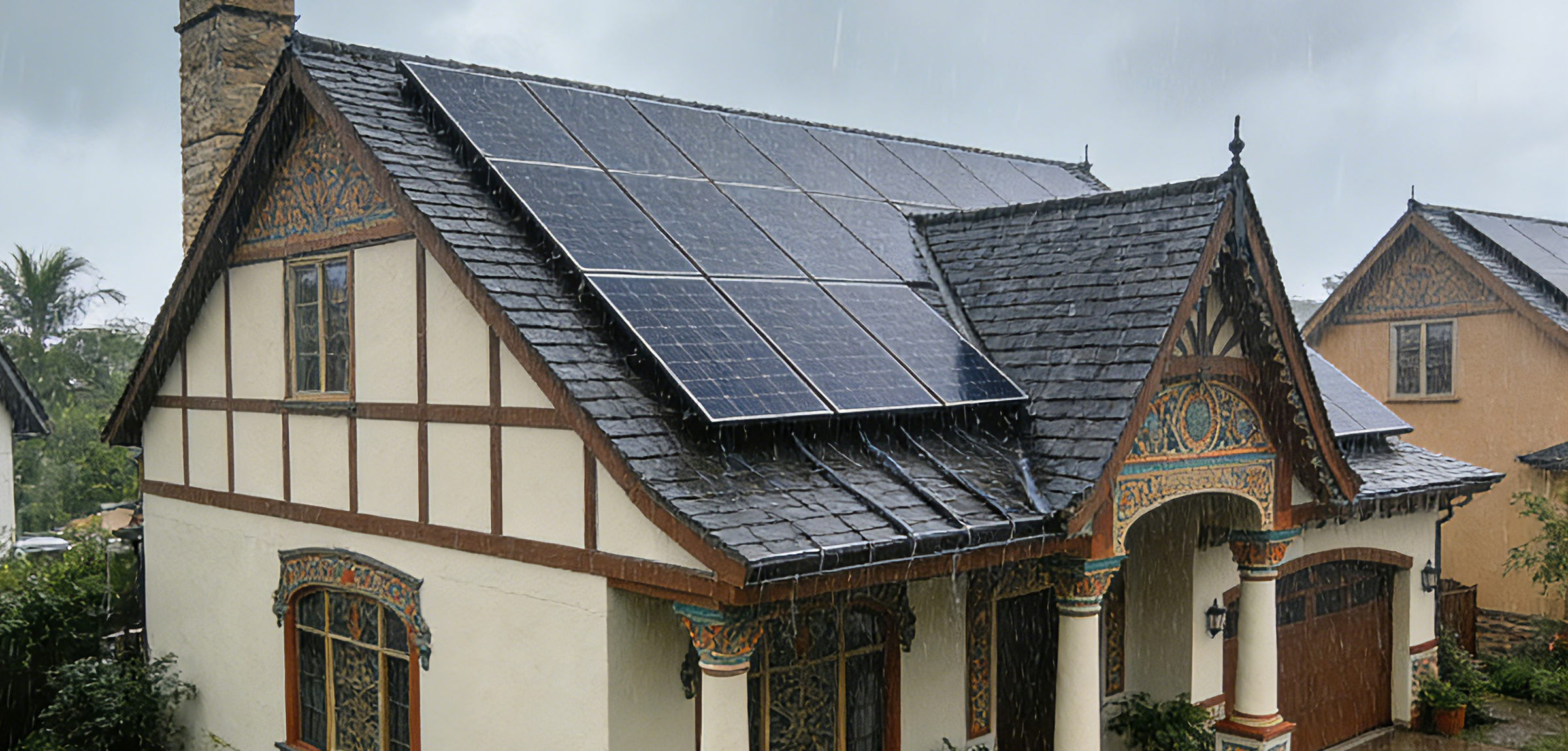
Q2: Are the subsequent maintenance costs high for rooftop photovoltaic systems of different power levels?
A:The subsequent maintenance costs of rooftop photovoltaic systems with different power ratings (such as 5kW, 6.2kW, 10kW, and 12kW) are all at extremely low levels, and the impact of power differences on the average annual maintenance costs is negligible. It can be specifically explained from the following aspects:
♦ The core components have an extremely long lifespan and are covered by a high warranty
The designed service life of photovoltaic modules can reach 25 to 30 years, and they possess stable performance in resisting hail, ultraviolet rays and wind and snow. Under the climatic conditions in Germany, they hardly ever malfunction during daily use. For core equipment such as inverters and brackets, brand manufacturers usually offer an original factory warranty of 5 to 10 years.
For some high-end inverters, the warranty period can be extended to 15 years. If quality problems occur during the warranty period, users can enjoy free repair or replacement services without incurring additional costs.
♦ Daily maintenance is simple to operate and cost-effective
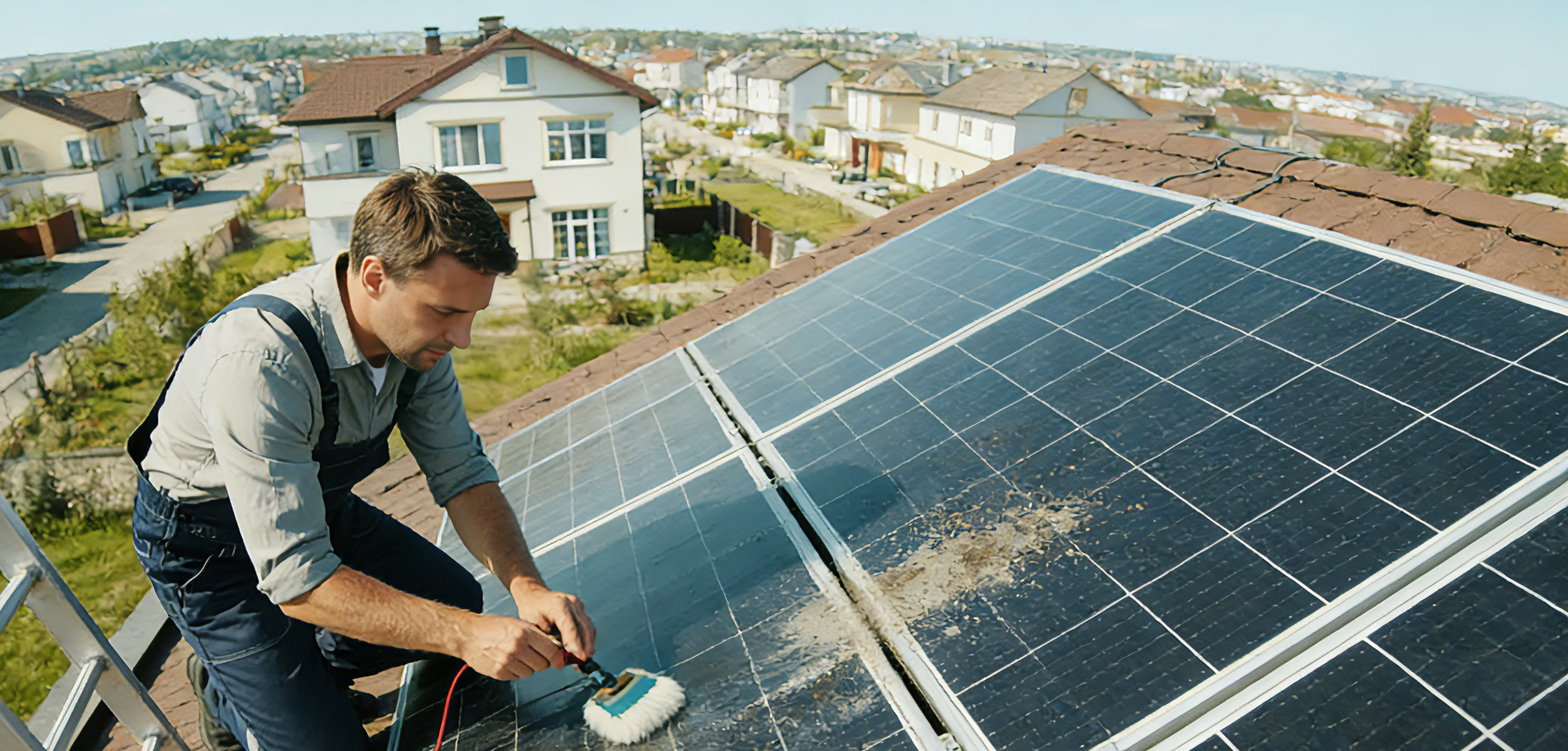
The daily maintenance of photovoltaic systems mainly involves cleaning the dust and fallen leaves on the surface of the components. Germany’s rainy climate allows most of the dust accumulated on the surface of the components to be washed away by natural precipitation.
Only simple manual wiping is required during the spring and autumn seasons when there is a lot of sand and dust, or when the surface of the components is obviously covered with dust and affects the power generation efficiency. No professional tools or technicians are needed, and there is basically no cost expenditure. Even if a professional cleaning team is hired, for household systems within 12kW, the cost of a single cleaning is only 50 to 80 euros, and the average annual cleaning frequency does not exceed two times.
♦ The average annual maintenance cost is controllable and transparent
Overall, regardless of the power level of household systems, the average annual maintenance cost is generally less than 100 euros. This cost mainly covers occasional manual cleaning fees, inspection fees, and a very small amount of replacement costs for vulnerable parts (such as terminal blocks and sealing strips). For systems with slightly higher power of 10kW and 12kW, due to the slightly larger number of components, the cleaning cost will increase slightly, but the average annual increase will not exceed 20 euros. Overall, it still falls within the category of low-cost maintenance.
♦ There are no additional hidden operation and maintenance expenses
Household photovoltaic systems do not require dedicated operation and maintenance personnel like large-scale photovoltaic power stations, nor do they need to pay complex equipment monitoring and data management fees. Most brands are equipped with free remote monitoring systems. Users can check the system operation status in real time through their mobile phones or computers. Once an abnormality occurs, an automatic alarm will be triggered, facilitating timely contact with after-sales service for handling and further reducing the time and financial costs of maintenance.
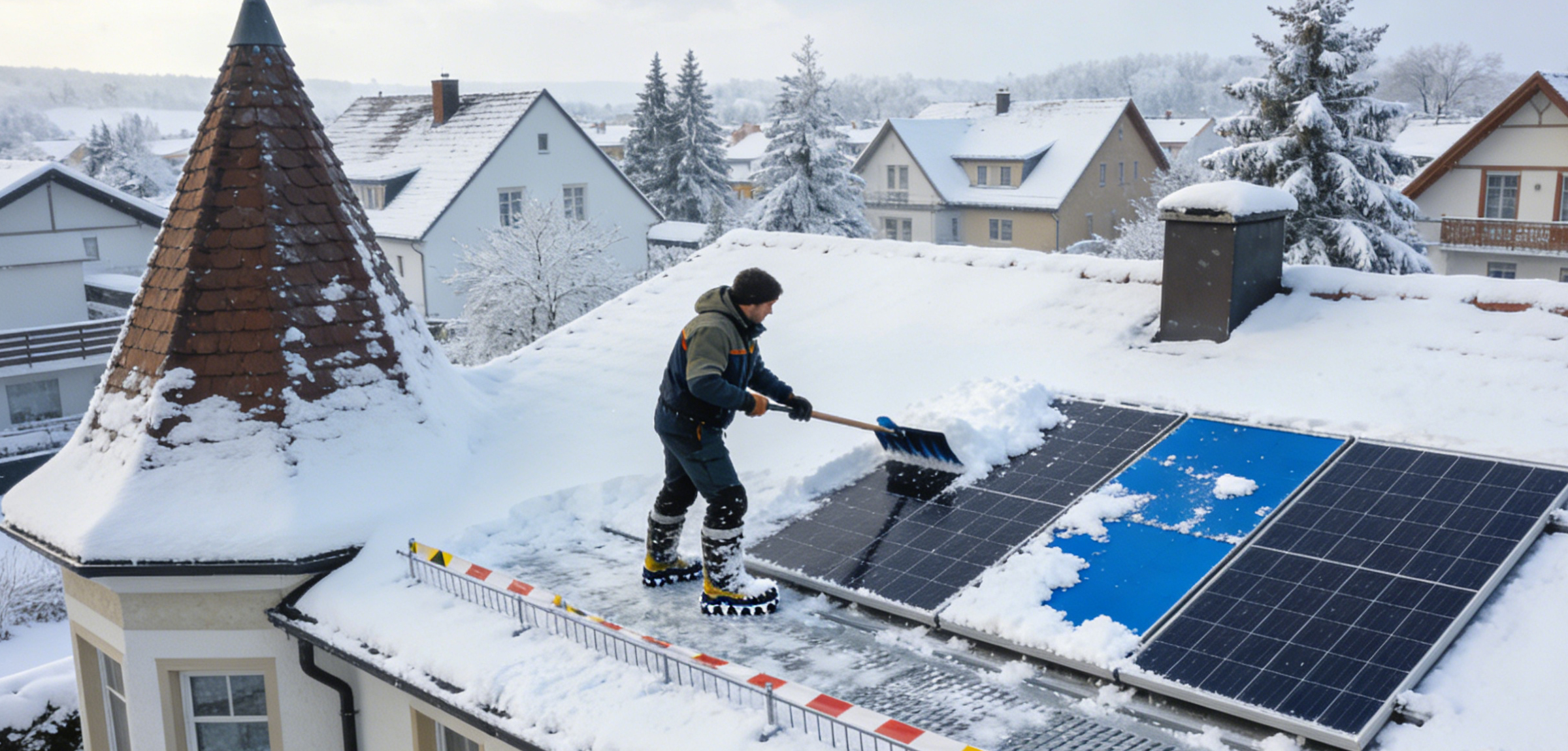
Q3: Will hybrid solar systems incur additional costs when they rely on power from the grid in Germany, where the light is weak in winter?
A:There will be no additional costs incurred. Only the cost of supplementary power supply to the grid needs to be paid according to the normal electricity price for German residents.
The core advantage of the hybrid solar system is “self-generated, self-consumed, surplus power fed to the grid, and insufficient power supplemented by the grid”. Even in the scenario of weak winter sunlight and reduced power generation in Germany, the economic efficiency of this model remains prominent. Take a 5kW hybrid photovoltaic system as an example:
♦ The electricity cost in winter is controllable
The average daily peak sunshine duration in Germany during winter is relatively short. The average daily power generation of a 5kW system is approximately 8kWh, while the average daily electricity consumption of an ordinary German household is about 10kWh. Therefore, only 2kWh of electricity needs to be replenished from the power grid. Based on the average electricity price for German residents of approximately 0.45 euros per kWh, the daily cost of purchasing electricity from the power grid is only 0.9 euros, which is far lower than the expenditure of relying solely on power supply from the grid.
♦ Summer surplus electricity revenue covers winter expenditure:
After entering summer, Germany enjoys abundant sunlight. The average daily power generation of a 5kW system can reach 35kWh, far exceeding the daily electricity demand of 10kWh for households. The remaining 25kWh can be connected to the public power grid. Under Germany’s current electricity purchase price or “net metering” policy, this surplus electricity can generate a daily income of approximately 2.25 euros.
♦ The comprehensive benefits for the whole year are considerable
From an annual perspective, the revenue from the surplus electricity fed into the grid in summer is sufficient to cover the small amount of power purchase expenses of the power grid in winter, ultimately achieving a significant reduction in electricity charges, and the entire process does not require the payment of additional grid connection service fees, capacity fees and other surcharges.
Q4: Is there a complicated approval process to install a hybrid solar system in Germany?What materials do I need to prepare?
A: Relative specification process, is not complicated, and we will assist to handle.German mixed net for examination and approval of the solar system, for example, the core process includes online submission steps, grid field exploration, safety acceptance, about 2 to 4 weeks.Need to prepare the materials mainly include: building property right certificate, system design (including the power parameters, component model), the installation team qualification certificates, personal identity, we will provide standardized template materials, the preparation easier.
📥 Next step: Get your exclusive rooftop photovoltaic solution
Tell us your basic information and we will assist you
– Recommend the most suitable power model
– Provide accurate power generation and revenue forecast reports (PDF)
– Local subsidy application guide and approval process manual are included
Sunlight belongs to every roofed home – whether you are seeking daily energy conservation or long-term investment returns.
Choose the appropriate rooftop photovoltaic solution and embark on your family’s energy freedom journey.
[Consult now to customize your Green Home Energy plan ↓]