
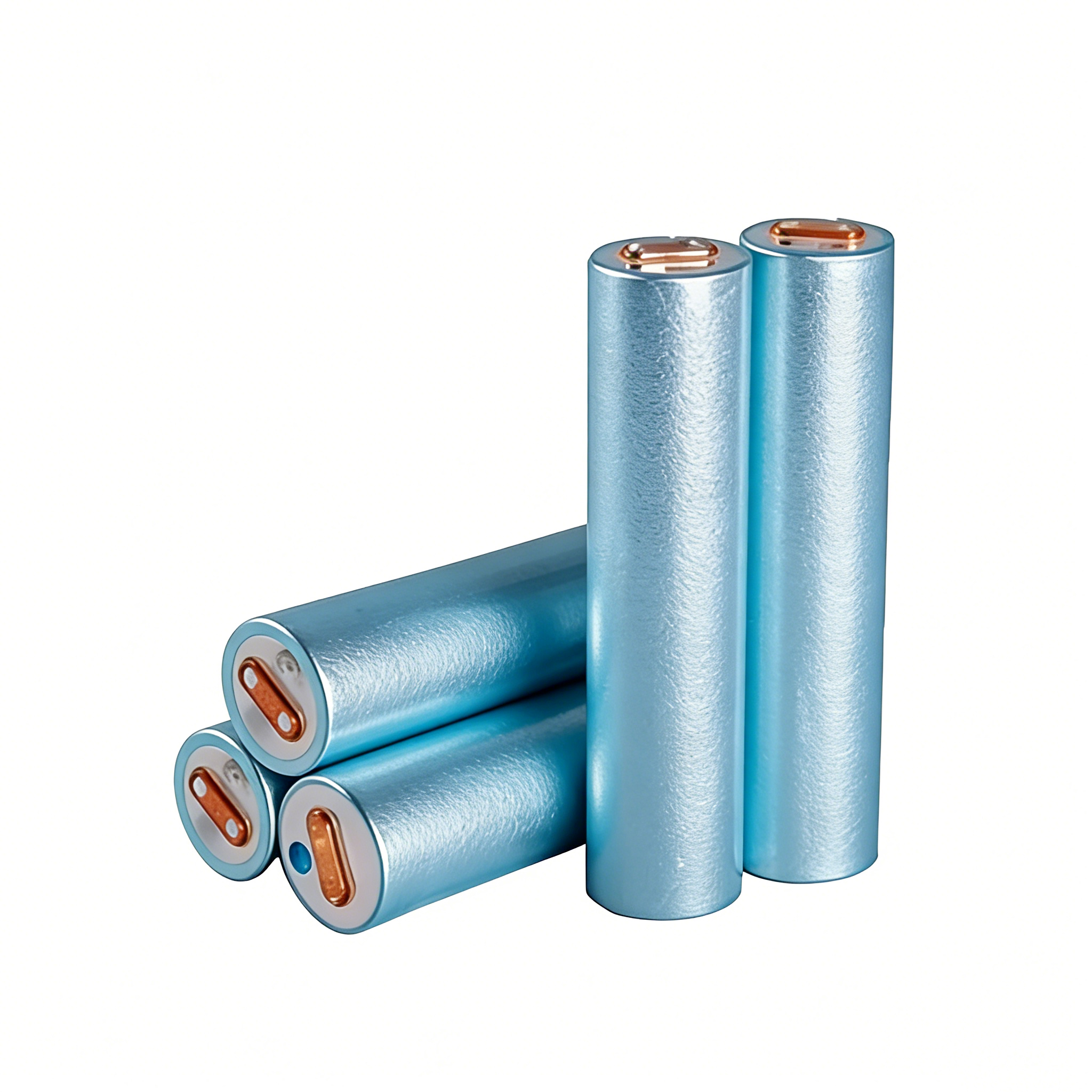
INR46115S Ternary Lithium Ion Cell 41.6Ah Cylindrical Power Cell
Product Introduction
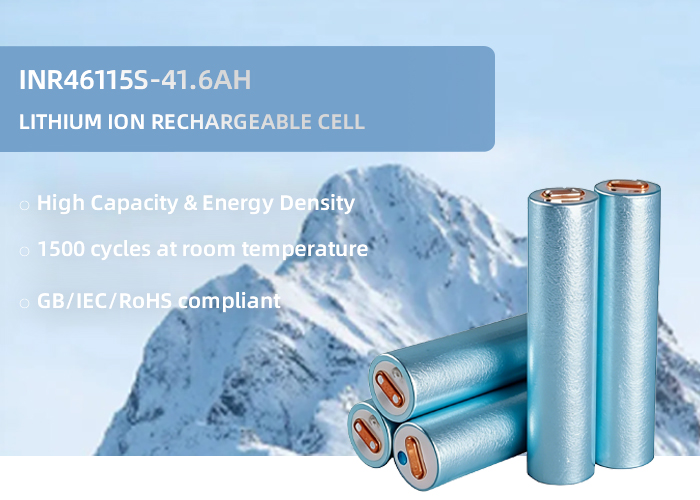 This product is the genuine original INR46115S-41.6Ah ternary lithium ion cell with a steel shell cylindrical structure, manufactured by Hefei Gotion . Boasting excellent electrical and mechanical performance, it features a nominal voltage of 3.63V and a nominal capacity of 41.6Ah at 0.33C rate, with a gravimetric energy density of 285Wh/kg and a volumetric energy density of 780Wh/L, realizing an optimal balance of compact size and high energy output.
The cell supports efficient fast charging, completing the 10-80% SOC charge in ≤12 minutes at 25℃, and has a standard cycle life of no less than 1500 cycles at 80% SOH, ensuring long-term stable and reliable operation. It has passed the strict GB 38031-2020 and UN38.3-2021 safety certifications, with outstanding performance in overcharge, overdischarge, short circuit and crush resistance, eliminating risks of explosion and fire in use.
Core Selling Point
✅ Genuine Original Specification: Original sample specification from Hefei Gotion High-Tech, implementing enterprise standards, referring to national/UN transportation standards, with controllable quality.
✅ High Energy Density: 285Wh/kg gravimetric energy density + 780Wh/L volumetric energy density, small size with high endurance, suitable for compact power scenarios.
✅ Fast Charge & Long Endurance: Fast charge (10-80%SOC) only ≤12min at 25℃, constant current charge capacity ratio ≥80% (25℃/2C), with high energy supplement efficiency.
✅ Wide Temperature Adaptation: Discharge temperature range -30℃~55℃, low temperature discharge capacity retention ≥75% at -30℃, high temperature discharge capacity ≥41.6Ah at 55℃, suitable for all regions.
✅ Long Cycle & High Rate: Standard cycle life ≥1500 times, max pulse discharge current 10C, gravimetric power density ≥2600W/kg, meeting high-rate power requirements.
✅ Multiple Safety Certifications: Passed 14 safety tests including overcharge, overdischarge, short circuit, crush, heating, low pressure, etc. Steel shell structure with explosion-proof valve design for safer use.
Technical Specifications
| Item | Specification |
| Model | INR46115S-41.6Ah |
| Material | Aluminum |
| Voltage | 3.63V |
| Capacity | 41.6Ah |
| Optimum Working Temperature | 10~35℃ |
| Normal Temperature Cycle Life | 1500 cycles @80% SOH |
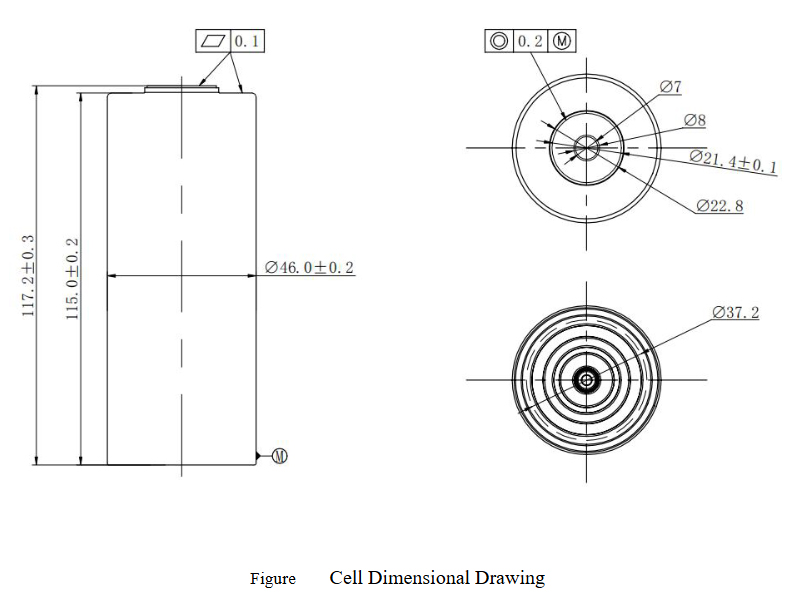
| Dimensions (w/o film) | Diameter: 46.0 ± 0.2 mm Height: 115.0 ± 0.2 mm, w/o terminal 117.2 ± 0.3 mm, with terminal |
| Weight (w/o film) | 520 g ± 5 g |
Application Scenario
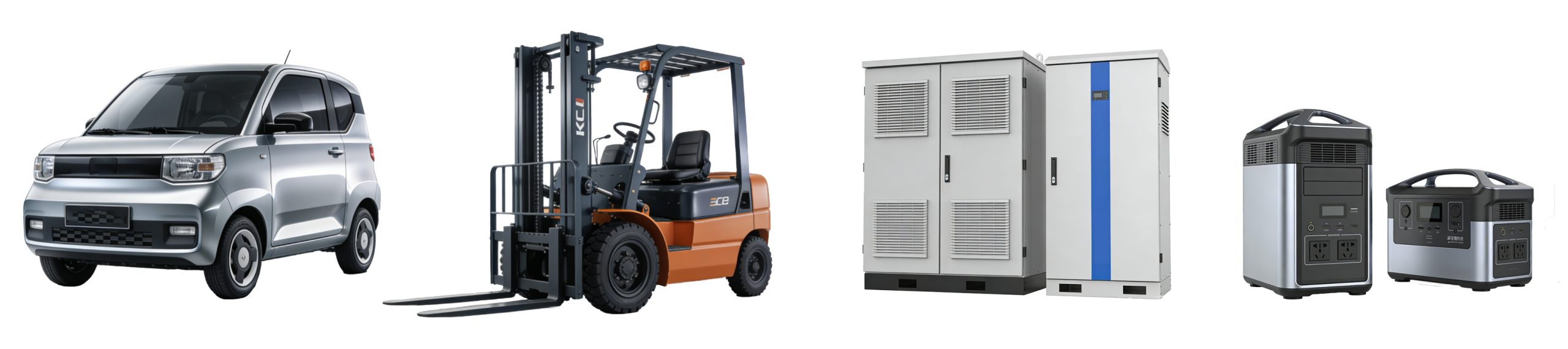
Gotion INR46115S-41.6Ah LFP cylindrical cell is specially built for power and energy storage fields with the core characteristics of wide temperature adaptation, high power, long cycle life and high safety. As the core power choice for new energy vehicles, industrial equipment and energy storage systems, it is fully adapted to multiple scenarios, covering the application needs of commercial vehicles, civil products and industrial-grade full categories:
– New Energy Vehicle Field
Power battery packs for new energy passenger/commercial vehicles, power sources for low-speed electric vehicles/electric tricycles. Adapt to the high and low temperature driving conditions of the whole vehicle, the low internal resistance and high pulse power ensure the power output, and the long cycle life matches the service cycle of the whole vehicle, greatly reducing the replacement cost of the vehicle battery pack.
– Energy Storage System Field
Portable outdoor energy storage power supplies, home energy storage systems, photovoltaic/wind power supporting energy storage batteries, communication base station backup power supplies. The 10~35℃ wide temperature range is suitable for outdoor non-temperature-controlled environments, the excellent SOC retention meets the demand for long-term floating charge/standing, and the high uniformity ensures the stability of energy storage pack assembly.
– Industrial Power Field
Industrial automation robots, AGV unmanned guided vehicles, electric forklifts/warehousing and logistics equipment. The high-rate pulse power adapts to the power demand of frequent start and stop of equipment, the all-round safety protection adapts to the complex industrial operating environment, and the low internal resistance characteristic improves the endurance and working efficiency of equipment.
– Portable Power Field
High-power electric tools, outdoor operation equipment, mobile testing instruments. The lightweight design (520 g ± 5 g) balances portability and power, the wide temperature operation is suitable for outdoor high-altitude, severe cold/high temperature operation scenarios, and the safety protection avoids the risk of cell failure during equipment use.
– Special Application Field
RV/yacht backup power supplies, field exploration equipment, emergency rescue power supplies. Stable long-term storage performance, no risk of open fire and explosion, suitable for outdoor emergency scenarios without special personnel on duty, providing continuous and safe power support for special operations.
Packaging and Transportation
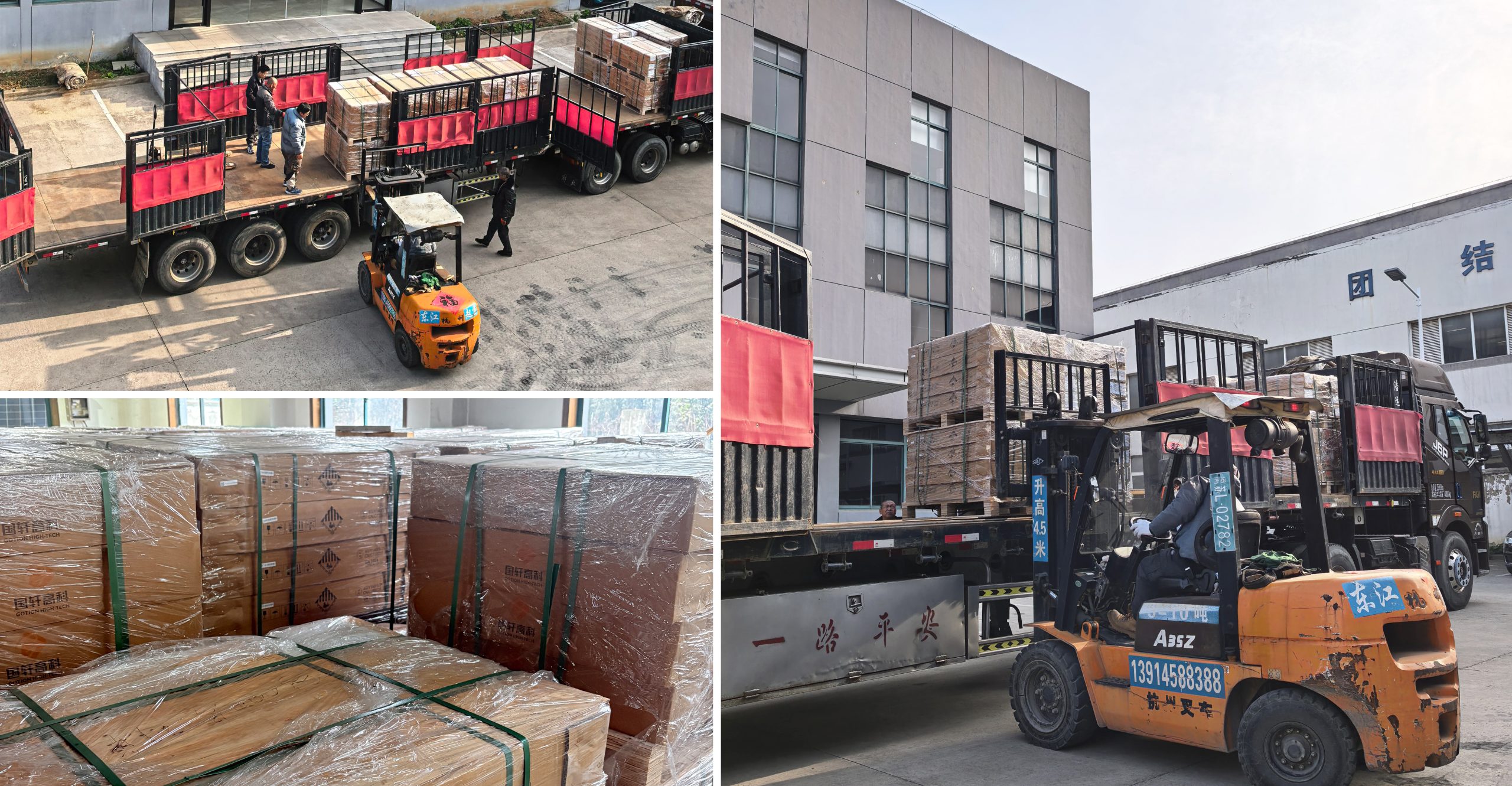
Packaging:Original anti-static packaging, external carton protection, to avoid mechanical damage during transportation; each cell is marked with a clear bar code for traceability.
Transportation:Complies with UN38.3 transportation standards, strict prohibition of violent loading and unloading, prevent severe vibration, impact and extrusion, avoid sun and rain.
FAQ
Q1: Do I need to strictly control the charge and discharge voltage of this cell in daily use, and what are the voltage ranges at different temperatures?
A: You must strictly follow the specified voltage range; otherwise, the cell’s service life will be affected and potential safety risks may arise. When the temperature is >0℃, the continuous operating voltage is 2.75V~4.25V and the pulse operating voltage is 2.5V~4.25V, with the maximum charging voltage not exceeding 4.25V and the minimum discharging voltage not lower than 2.5V. When the temperature is ≤0℃, the continuous operating voltage can be relaxed to 2.4V~4.25V and the pulse operating voltage to 2.0V~4.25V. It is recommended to set 2.4V as the cut-off voltage for low-temperature discharge to effectively protect the cell’s performance and lifespan.
Q2: How to properly use the cell in high and low temperature environments for outdoor work or long-term use, and what key points should be avoided?
A: For low temperature environments (≤0℃) : Preheat the cell before discharge, avoid direct high-rate discharge and use a discharge rate of ≤1C if possible. Prioritize maintaining the 2.4V cut-off voltage to prevent damage from over-discharging. For high temperature environments (≥40℃) : Avoid simultaneous charging and discharging, charge the cell in a cool and ventilated area, and limit the maximum continuous charging current to no more than 3C. After discharge, let the cell cool naturally to room temperature before recharging, and never charge or discharge it immediately after exposure to direct sunlight.
Q3: What precautions should be taken for daily storage of the cell, and what are the differences between short-term idle storage and long-term storage operations?
A: General storage requirements : Store the cell in a dry, ventilated environment free of corrosive gases, away from fire sources, heat sources and metal conductive materials. Store cells separately to avoid short circuits caused by contact between positive and negative poles.
Short-term idle storage (within 1 month) : Maintain the cell at 30%~50% SOC and control the ambient temperature at 0℃~25℃; frequent recharging is unnecessary.
Long-term storage (more than 1 month) : Control the ambient temperature at -10℃~30℃ with relative humidity ≤75%, and keep the cell at about 50% SOC. Complete a full charge-discharge cycle every 2 months to prevent cell aging due to low power. Unpackaged cells are recommended to be stored in their original sealed packaging for better protection.
Q4: What professional practical points should be noted when assembling this cell in series and parallel packs, and how to maintain the assembled packs in daily use?
A: Practical points for series and parallel pack assembly :
① Select cells of the same batch, identical internal resistance and consistent capacity for assembly; avoid mixing different batches to prevent unbalanced charging and discharging.
② Ensure reliable insulation at connection points and firm contact to prevent heat generation caused by poor contact.
③ Configure a matching protection board after assembly, which is adapted to the cell’s maximum charging voltage of 4.25V and the discharge cut-off voltage corresponding to the actual operating temperature range.
Daily maintenance of assembled packs :
① Regularly check the connection points for oxidation or loosening, clean and reinforce them in a timely manner.
② Ensure uniform temperature of all cells in the pack during charging and discharging to avoid local overheating.
③ Replace individual cells with the same specification in time if capacity attenuation occurs after long-term use, to prevent affecting the overall performance of the pack.
Q5: What parameters need to be noted for fast charging, and will daily use of fast charging significantly shorten the cell’s service life?
A: Practical fast charging parameters : Use fast charging only at room temperature (25℃) and within the cell’s SOC range of 10%~80%. Ensure the charging current matches the cell’s specifications (maximum continuous charging current of 5C at 20℃~50℃) and the charging voltage does not exceed 4.25V. It is recommended to let the cell stand for 5~10 minutes after fast charging before discharging.
Impact of fast charging on service life : Reasonable use of fast charging in accordance with the factory specifications will not significantly shorten the cell’s service life. The cell’s standard cycle life test (≥1500 cycles) includes conventional fast charging conditions. However, forced fast charging in high or low temperature environments, or continuous fast charging after the cell reaches 100% SOC, will accelerate cell aging. It is recommended to use standard charging (0.33C) as the main method in daily use, and fast charging only for emergency energy supplement.
Why Choose Our INR46115S-41.6Ah Cell?
– Direct supply of Gotion cells, complete technical documents provided, quality controllable throughout.
– Provide selection and pack assembly scheme guidance on demand, solve application implementation problems.
– 100% factory inspection of appearance/internal resistance/capacity, batch sampling of size/weight, zero-defect delivery.
– Support small batch samples and large batch customization, in-stock shipped within 48 hours, suitable for R&D/mass production.
– Provide usage/storage guidance, return/exchange for non-human quality problems, exclusive service for bulk purchase.