
What Is An Off-grid Household Solar Energy System?
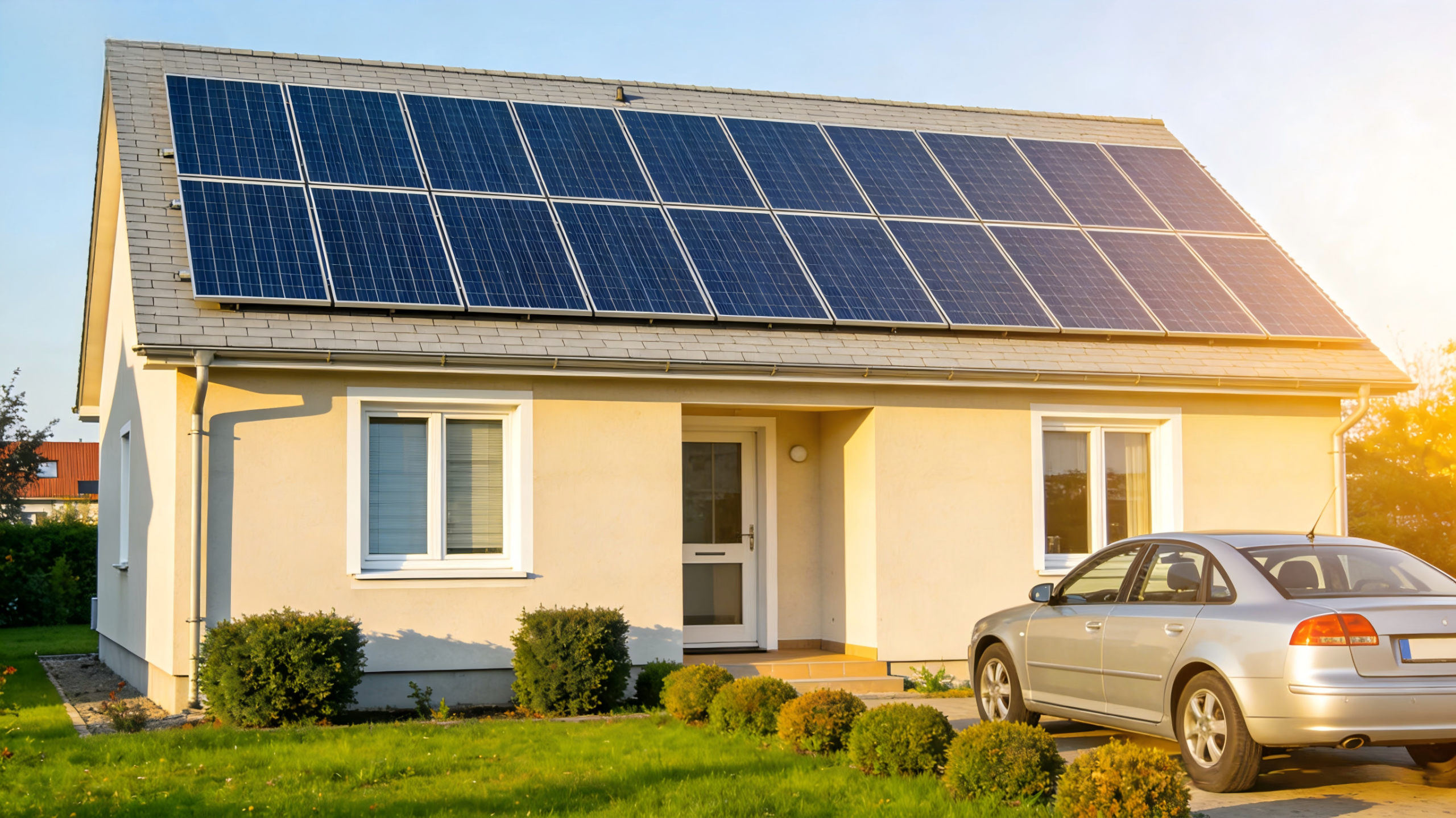
The off-grid household solar energy system is a small photovoltaic power generation system that is not connected to the public power grid, relies entirely on solar power generation and cooperates with energy storage equipment to achieve independent power supply.
It is mainly used to meet the daily electricity needs of households or small places. Its core feature is self-sufficiency in electricity, which is not affected by power outages and power cuts. It is especially suitable for remote areas without grid power coverage, or users who need power independence.
Core working principle
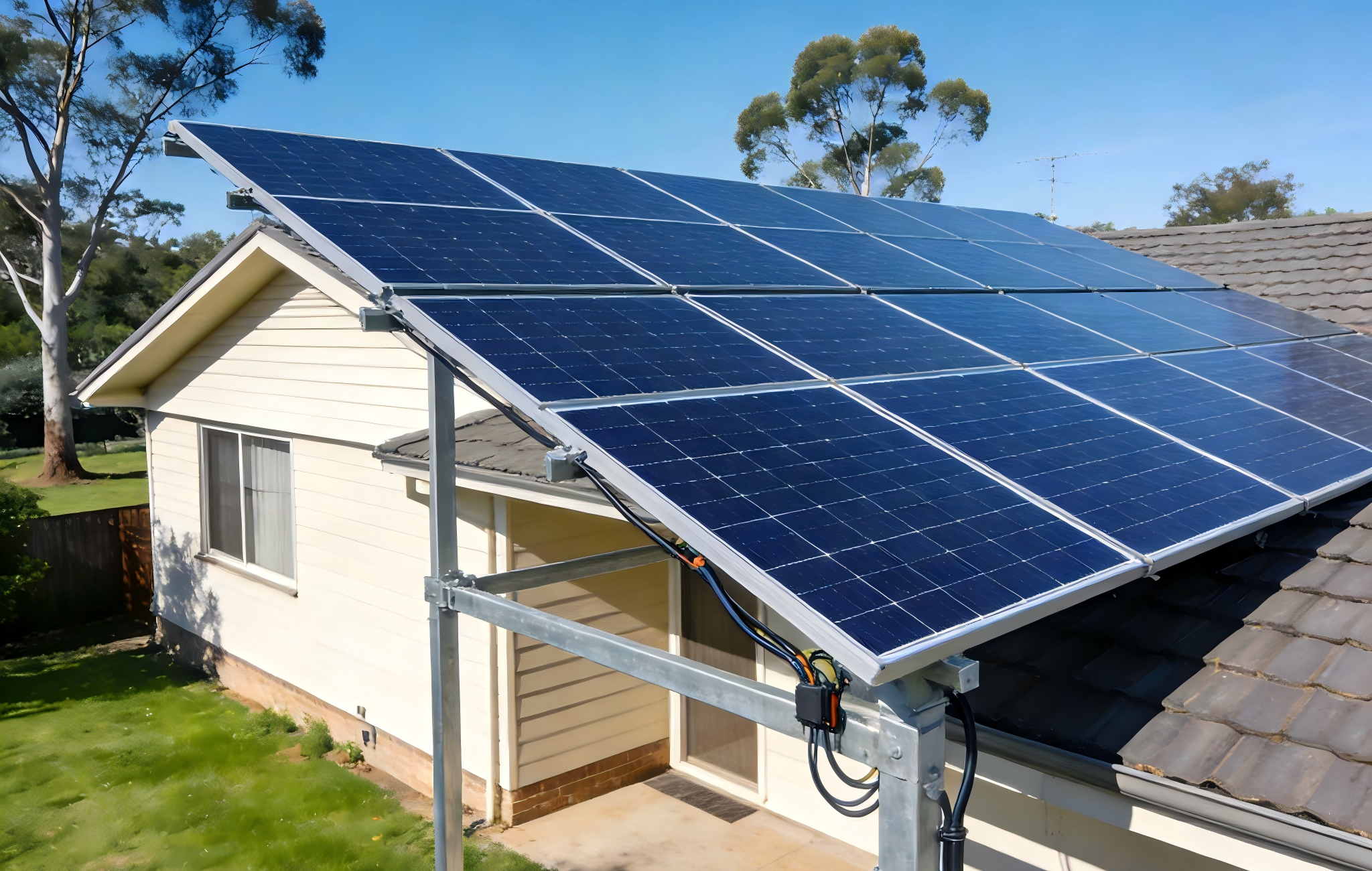
- Power generation link: The photovoltaic panel absorbs solar energy and converts it into direct current.
- Regulation link: The solar controller (MPPT/PWM) regulates the voltage and limits the current of direct current. On the one hand, it supplies power to the load, and on the other hand, it transmits the excess power to the battery storage.
- Energy storage link: The battery pack stores electric energy to provide protection for electricity consumption during dark periods such as night and rainy days.
- Inverter link: The off-grid inverter converts the DC power output by the battery into AC power available for household appliances.
Core components
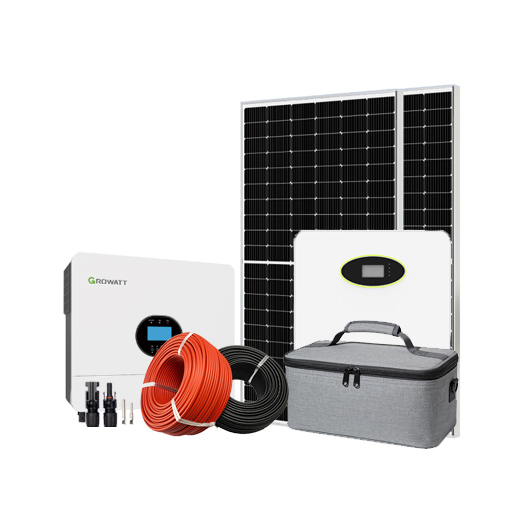
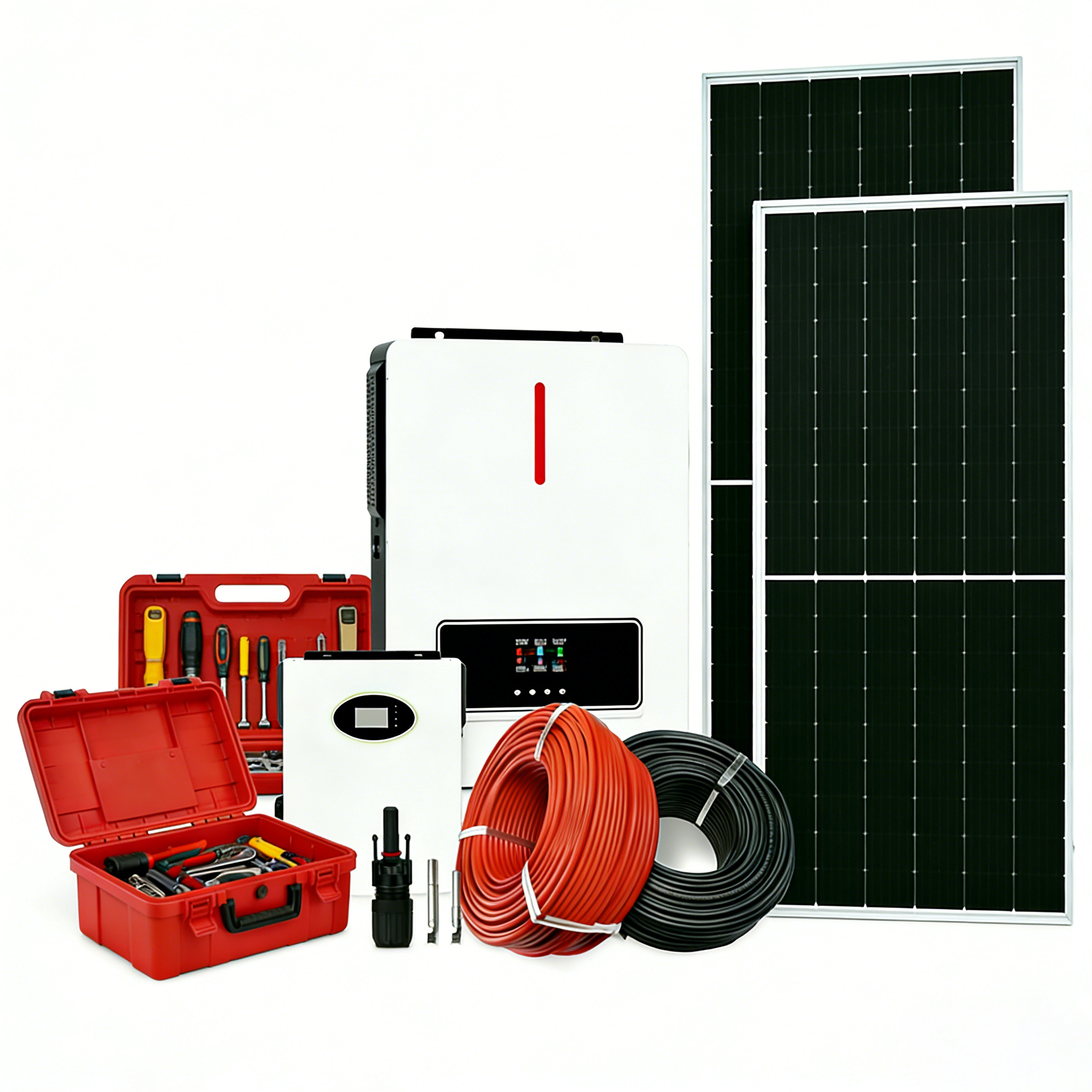
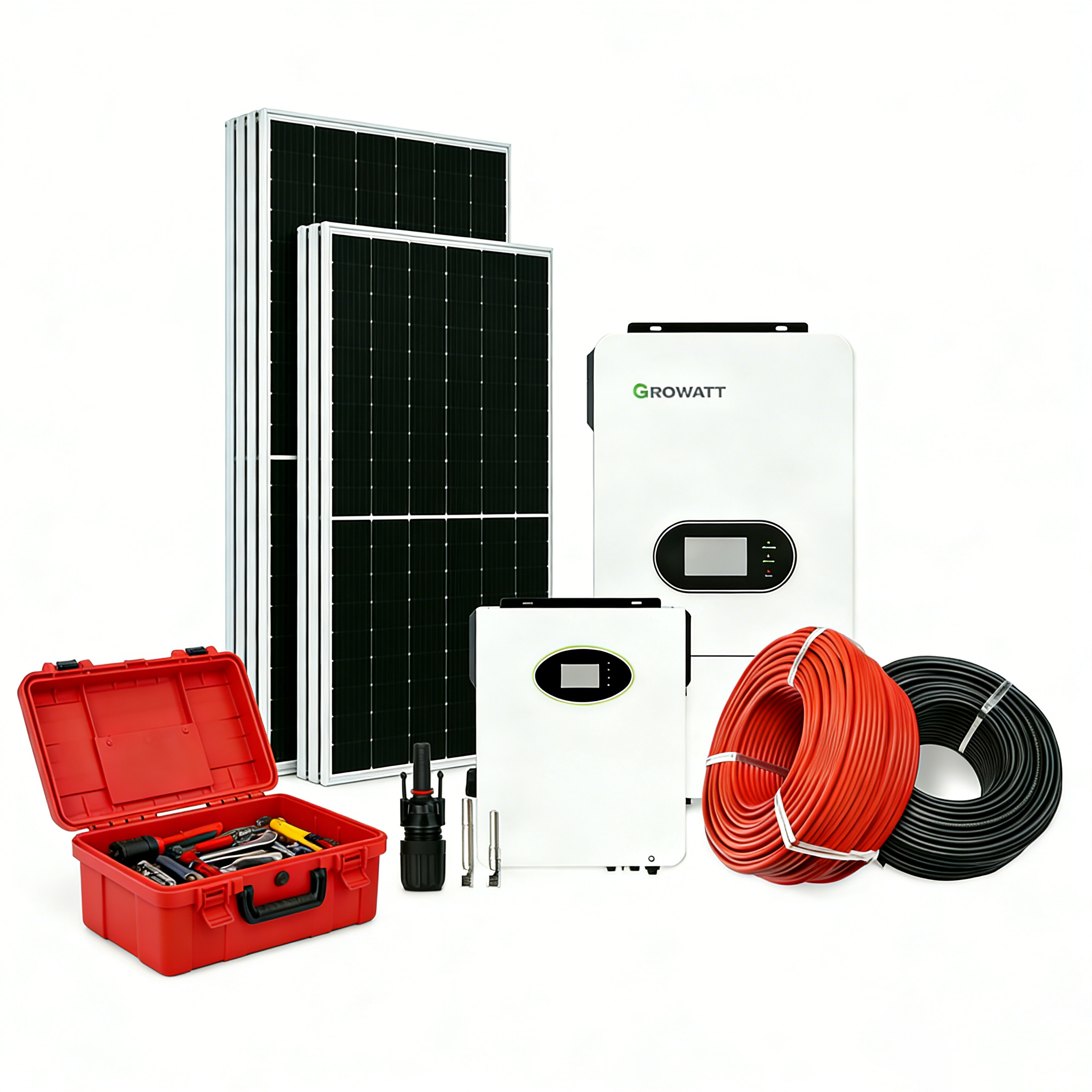
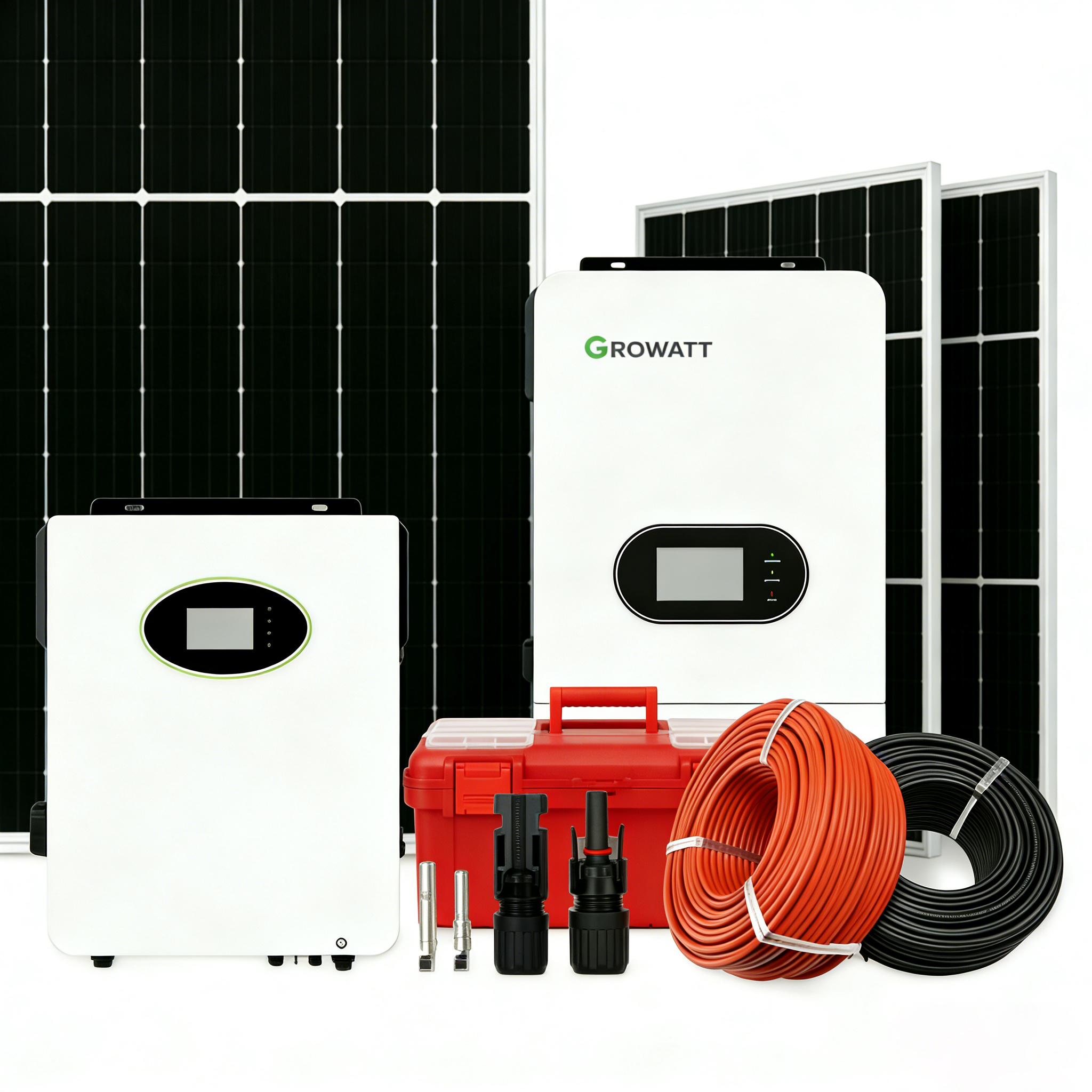
A complete set of off-grid household solar energy system must contain the following 5 parts:
- Photovoltaic modules (solar panels): Power generation core, common power ranging from several hundred watts to several kilowatts, matching household electricity demand.
- Solar controller: Protect the battery to avoid overcharging and over-discharging, and improve power generation efficiency (MPPT controller efficiency is higher than PWM controller).
- Battery pack: Energy storage core, the mainstream is lithium battery or lead-acid colloidal battery, the capacity needs to be determined according to the average daily electricity consumption and the number of backup days for rainy seasons.
- Off-grid inverter: It must be a pure sine wave inverter to ensure the stable operation of high-power appliances such as refrigerators and air conditioners, and the power needs to match the total load of the system.
- Auxiliary materials: including photovoltaic brackets, waterproof cables, distribution boxes, lightning protection devices, etc., to ensure the safety of system installation and operation.
Key differences from grid-connected solar systems
| Characteristic | Off-grid Household Solar System | Hybrid Solar Energy System |
| Grid Connection | Completely off the public grid | Must be connected to the public grid |
| Energy Storage Equipment | Must be equipped with a large-capacity battery | No battery required (or optional small capacity) |
| Power Supply Stability | Unaffected by the power grid, relying on energy storage for autonomous power supply | Depends on the power grid, the system also stops working during power outages |
| Applicable Scenario | Remote areas without grid power, emergency power supply needs | Grid power stable area, pursuing surplus power grid income |
| Initial Investment | Higher (including battery cost) | Lower (no battery) |
Why Are More And More Households Choosing Solar Energy System?
With global electricity prices continuing to rise, government green energy subsidies on the rise, and environmental awareness rising, residential solar energy systems have become the first choice for household energy transition. In Germany, more than 40% of new residences will be equipped with solar systems in 2024; in Australia, the household solar penetration rate has exceeded 35%.
But the question is: “Can solar be installed without a public grid?” “I want to be self-sufficient in electricity for the whole house, what size system should I choose?”
Don’t worry – we have tailor-made solar solutions for you, and you can find the perfect green energy solution.
Why Off-Grid Solar Is a Game-Changer for Your Home?
Tired of frequent power outages? Living in a rural area with no grid access? Or looking for a clean, cost-saving alternative to diesel generators?Off-grid solar systems let you take control of your electricity—no more relying on unstable grids or expensive fossil fuels.
But with so many options, how do you pick the right one?
Whether you’re a small family in a remote village, a camper who loves road trips, or a homeowner with heavy power needs, we’ve rounded up 4 best-selling off-grid solar systems that fit every lifestyle. Read on to find your perfect match.
First, Figure Out Your Needs (3 Questions to Ask).Before choosing an off-grid solar system, answer these 3 questions to avoid overspending or underpowering:
- Where will you use it?
(Rural home? Camping? RV? Construction site?)
- What appliances do you need to power?
(Fridges? AC? Washing machines? Just lights/phones?)
- How many days of backup do you need?
(Do you live in a rainy area that needs 3+ days of storage?)
Once you have the answers, let’s match you to the right system.
How To Choose Off-Grid Solar Energy System For Your Home?
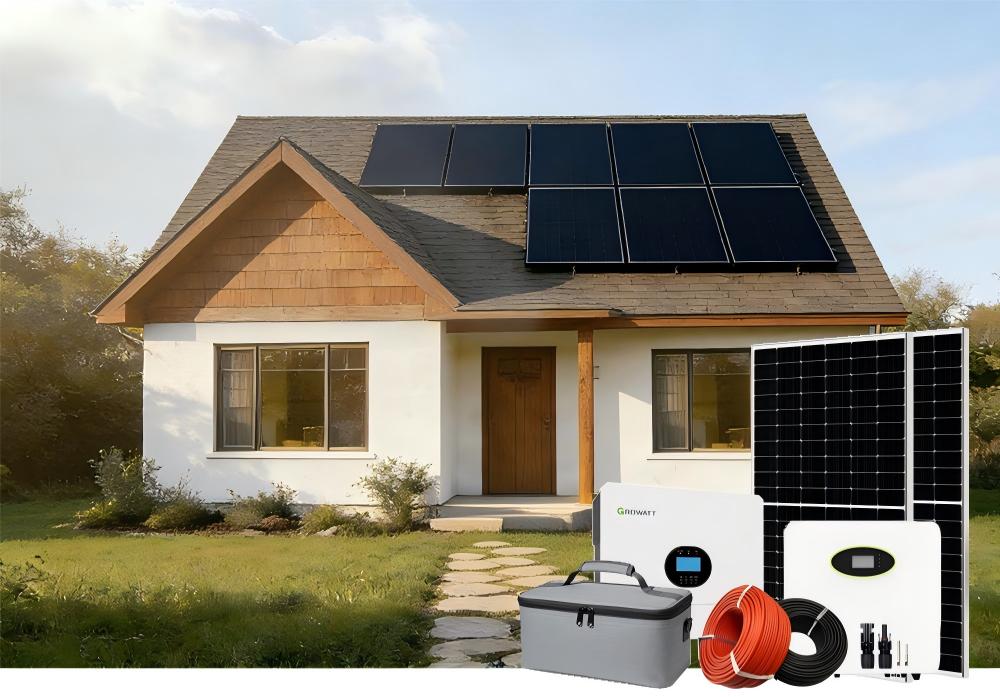
We’ve tested dozens of off-grid systems and narrowed down the top 4—each designed for a specific use case. Click the product links to check details or get a custom quote!
4.2kW Off-Grid Household Solar Energy System
Apply to
- Remote areas without grid coverage(Self-built houses and homestays in mountainous areas, pastoral areas and islands).
- Backup/grid power supply in areas with unstable power grids.
- Urban/suburban households seeking electricity independence.
Key Pain Points It Solves
- Power supply gaps in grid-uncovered areas.
- “Blackout anxiety” pain points in regions with unstable power grids.
- “Power Security” Pain Points in Emergency Scenarios.
Product Highlights
- 8×550W monocrystalline solar panels
- 5kWh lithium-ion battery
- 4.2kW off-grid inverter integrated controller
- Installation area: 25-30m2(fits most residential roofs) (25-30m2 = 269 – 322.91 sq ft)
👉 Check Product Details → 4.2kW Off-Grid Household Solar Energy System
5kW Off-Grid Household Solar Energy System
Apply to
- Remote homes/small dwellings without grid coverage(Family house for 2-4 people).
- Household grid power/backup power in areas with unstable power grids.
- Power supply for small-scale production and operation scenarios.
- Low-carbon families seeking energy independence.
Key Pain Points It Solves
- Gap pain points in areas without public grid coverage.
- “Frequent blackout frustrations” pain points in regions with unstable power grids.
- Critical power supply security needs in Emergency Scenarios.
- Pain points of “unstable power supply due to load fluctuations” in small production and operation scenarios.
Product Highlights
- 9×550W monocrystalline solar panels
- 10kWh lithium-ion battery
- 5kW off-grid inverter integrated controller
- Installation area: 20-25m2 (fits most residential roofs)
👉 Check Product Details → 5kW Off-Grid Household Solar Energy System
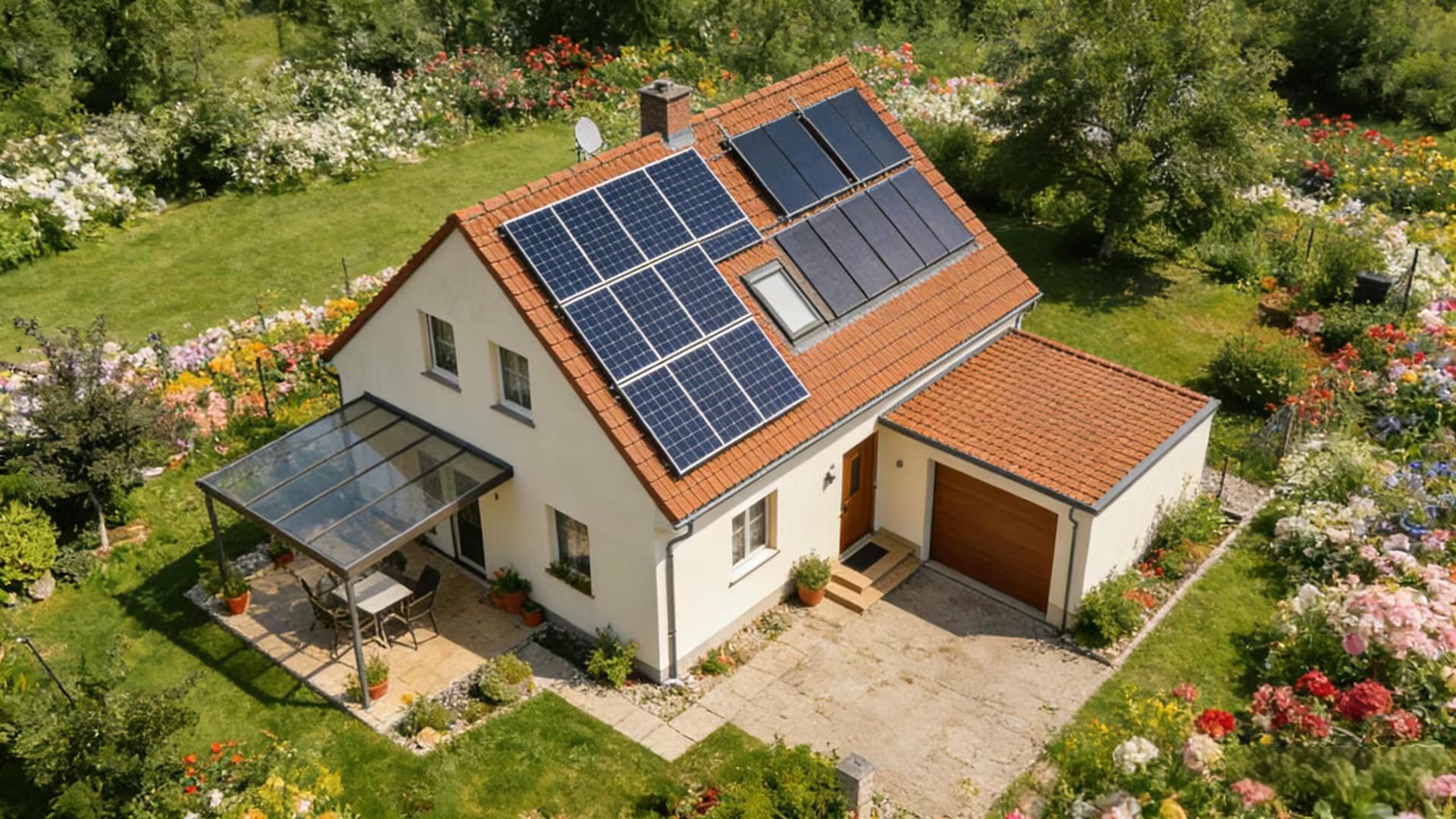
6kW Off-Grid Household Solar Energy System
Apply to
- Apply to 3-5 person large families without grid coverage.
- “All-round” backup/grid power supply in areas with unstable power grids.
- Pursue low-carbon villas with high self-sufficiency rate/suburban self-built houses.
- Farm/orchard integrated power supply for agricultural production and daily living.
Key Pain Points It Solves
- Pain points of “insufficient electricity” in multi-population households.
- Pain points of “difficult power supply due to load fluctuations” in small business scenarios.
- The pain points of “uninterrupted key equipment” in areas with unstable power grids.
- Pain points of “multi-device continuous power supply” in emergency scenarios.
Product Highlights
- 10 × 550W monocrystalline solar panels
- 15kWh lithium-ion battery
- 6kW off-grid inverter integrated controller
- Installation area: 22-31m2(suitable for large roofs or ground mounts)
👉 Check Product Details → 6kW Off-Grid Household Solar Energy System
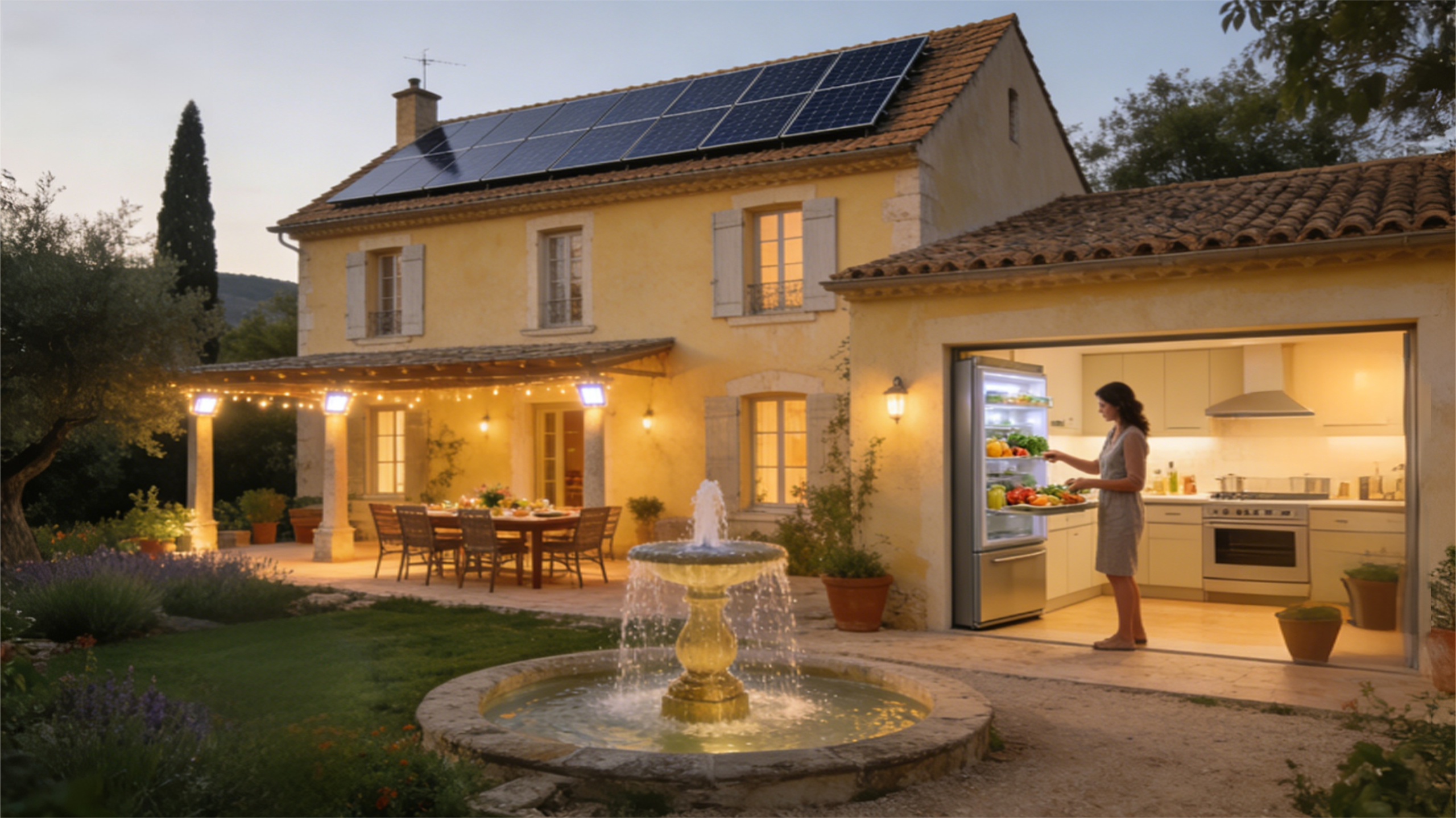
6.2kW Off-Grid Household Solar Energy System
Apply to
- 4-6 people without grid coverage.
- “High reliability” grid power/backup power in areas with unstable power grids.
- Low-carbon households pursuing near 100% energy self-sufficiency.
- Outdoor work site/medium-sized campground.
Key Pain Points It Solves
- The pain point of “peak load power shortages” in large families with multiple populations.
- Pain points of “24-hour uninterrupted power supply for key equipment” in areas with unstable power grids.
- The pain points of “production + life integrated power supply” for medium-sized farms.
Product Highlights
- 10×550W foldable solar panel
- 5kWh lithium battery
- 6.2kW off-grid inverter integrated controller
- Installation area: 24-31m2(suitable for large roofs or ground mounts)
👉 Check Product Details → 6.2kW Off-Grid Household Solar Energy System
How to Verify If a System Fits Your Needs
Not sure which one is right? Use this simple formula to calculate your daily power consumption:
- List all your appliances + their power (e.g., fridge: 150W, TV: 80W, AC: 1200W)
- Calculate daily usage: Power (W) × Hours used per day ÷ 1000 = kWh
- Example: Fridge (150W × 24h) + TV (80W × 4h) + AC (1200W × 6h) = 3.6 + 0.32 + 7.2 = 11.12kWh/day
→ Choose a system with daily output ≥ your usage (e.g., 6kW system generates ~24kWh/day in full sun, enough for 11.12kWh)
Pro tip: Add 20% buffer for rainy days—this is why battery capacity matters!
Why Choose Us?
From consultation to power generation, the whole process is worry-free, no matter which solution you choose, we provide:
- Free scheme design: based on your address, roof/balcony orientation, electricity bill.
- Local compliance support: provide national grid-connected document templates and policy guidelines.
- Installation guidance: graphic manual + video tutorial + online technical support.
- Support quality assurance: components 25 years, inverter 5 – 10 years.
✅ has served 11,000 + global households, covering Germany, France, the Netherlands, Italy, Australia, the United States and other markets.
FAQ
Q1: What are the possible reasons for the decrease in power generation in the off-grid solar system?
A: Common reasons include: occlusion or dust accumulation on the surface of the solar module; loose and oxidized components or line joints, resulting in poor contact; aging batteries, reduced energy storage capacity, unable to store excess power; seasonal changes, reduced sunshine duration or intensity (such as lower power generation in winter than in summer); controller or inverter failure, resulting in reduced power conversion efficiency.
Q2: What maintenance does the off-grid solar system need to do on a daily basis?
A: The maintenance work is simple and low-frequency, mainly including: Solar modules: regularly (e.g. monthly) clean the surface of dust, leaves, bird droppings and other obstructions to avoid affecting power generation; check whether the component frame and wiring are in good condition after thunderstorms; Batteries: Lead-acid batteries need to regularly check the electrolyte level, and add distilled water when insufficient (do not add tap water or electrolyte); Lithium batteries do not need to be replenished, only need to regularly check whether the terminals are loose; Inverter/controller: keep the equipment ventilated and heat dissipated, avoid sun exposure and moisture, and regularly check whether the display parameters are normal.
Q3: How to choose the orientation and inclination angle of the installation of solar panel?
A: The orientation and inclination angle directly affect the power generation efficiency. The basic principles are as follows: Orientation: In the northern hemisphere, the due south direction is preferred; eastward or westward will lead to a decrease in power generation. For every 15 ° increase in the deflection angle, the power generation will be reduced by about 10%. Inclination: Priority is equal to the local latitude, which can be fine-tuned according to the season (slightly reduced in summer and slightly increased in winter).
For example, In the Northern Hemisphere (e.g. Germany: latitude 51°, Australia: Southern Hemisphere latitude 30°), the optimal tilt angle is equal to the local latitude (fine-tune -5° in summer, +5° in winter). For Germany, the tilt angle is 46°-56°; for Australia, it is 25°-35°.In addition, the installation of the components needs to be guaranteed to be unobstructed to avoid trees.
Q4: When there is no sun (at night/rainy days), can the off-grid solar system still supply power?
A: Yes, the source of power supply is the energy storage battery. The system will store the excess power generation into the battery on sunny days for use during non-light periods. The power generation efficiency will decrease on rainy days, but a small amount of power generation can still be used to supplement energy storage. The larger the capacity of the battery, the longer the power supply time when there is no light; if you need long-term power supply in rainy days, you can choose to use a diesel generator as a backup power supply.
Q5: How do I calculate how much power I need for an off-grid solar system?
A: It is necessary to follow the steps of “load power consumption calculation → energy storage capacity determination →solar panel power matching”: count the rated power and daily usage time of all power equipment, and calculate the total daily power consumption (unit: Wh, that is, watt-hours); consider the standby demand in rainy days, usually multiply the total daily power consumption by 3 to 7 times, as the total energy storage capacity of the battery (for example, the daily power consumption is 1000Wh, and the battery of 3000~ 7000Wh is selected);
The power of solar panel needs to be calculated according to the local sunshine duration, formula reference: solar panel power Technologies total daily power consumption ÷ local average daily effective sunshine duration ÷ system efficiency (about 0.7~ 0.8). For example: daily power consumption 1000Wh, local average daily sunshine 4h, system efficiency 0.75, the solar power = 1000Wh ÷ 4h ÷ 0.75 = 333W, the actual choice of 350W or 400W components.
Related Resources
6kW Hybrid Household Solar Energy System
5kW Hybrid Solar Energy System
Summary of Balcony Solar Policies in Europe (Updated 2024)
You Might Also Be Interested
5kW Hybrid Solar Energy System | TUV Certified | EU Standard
10kW Hybrid Household Solar Energy System – TUV Certified for Germany