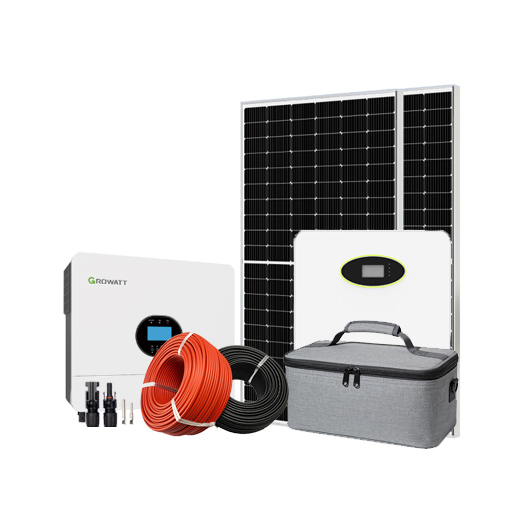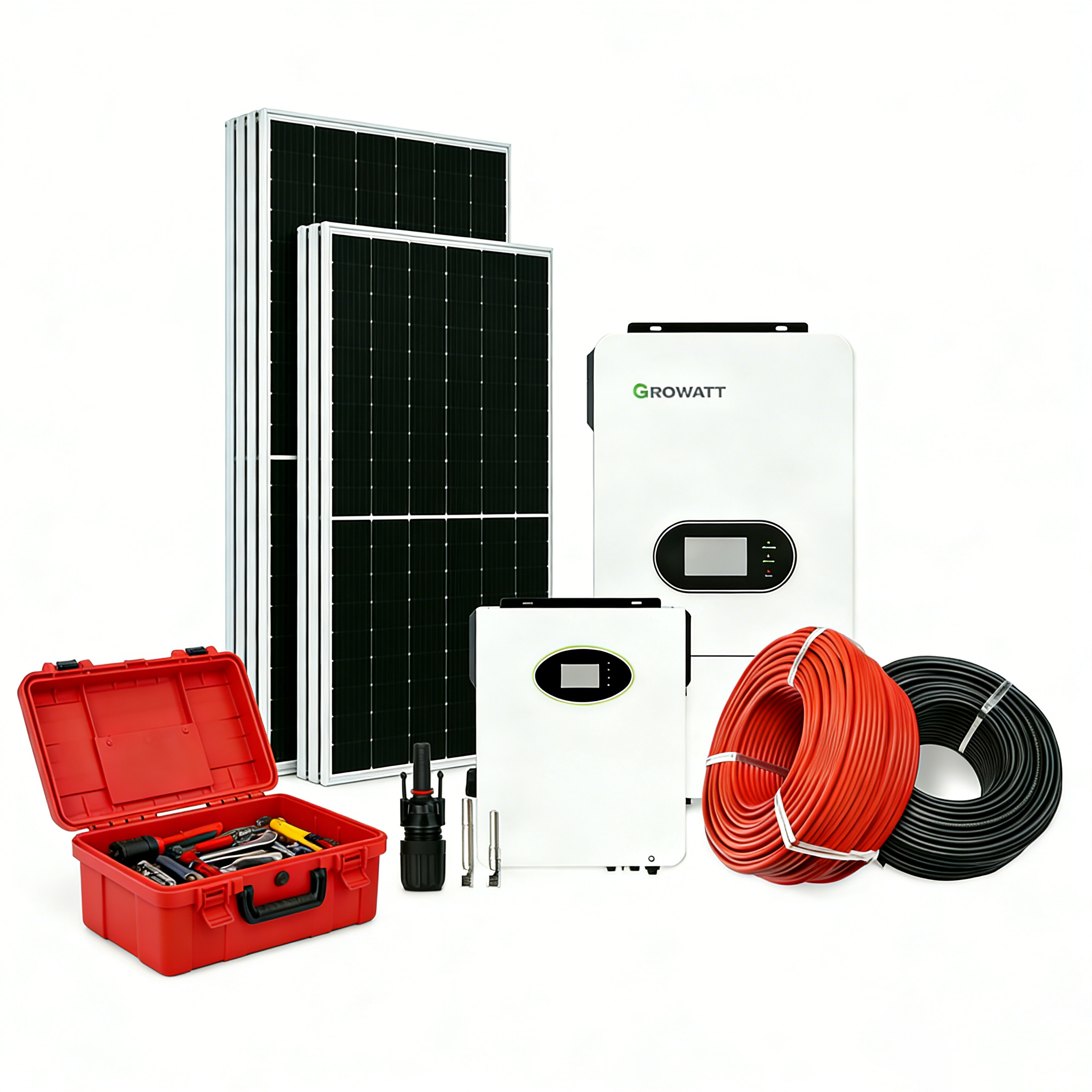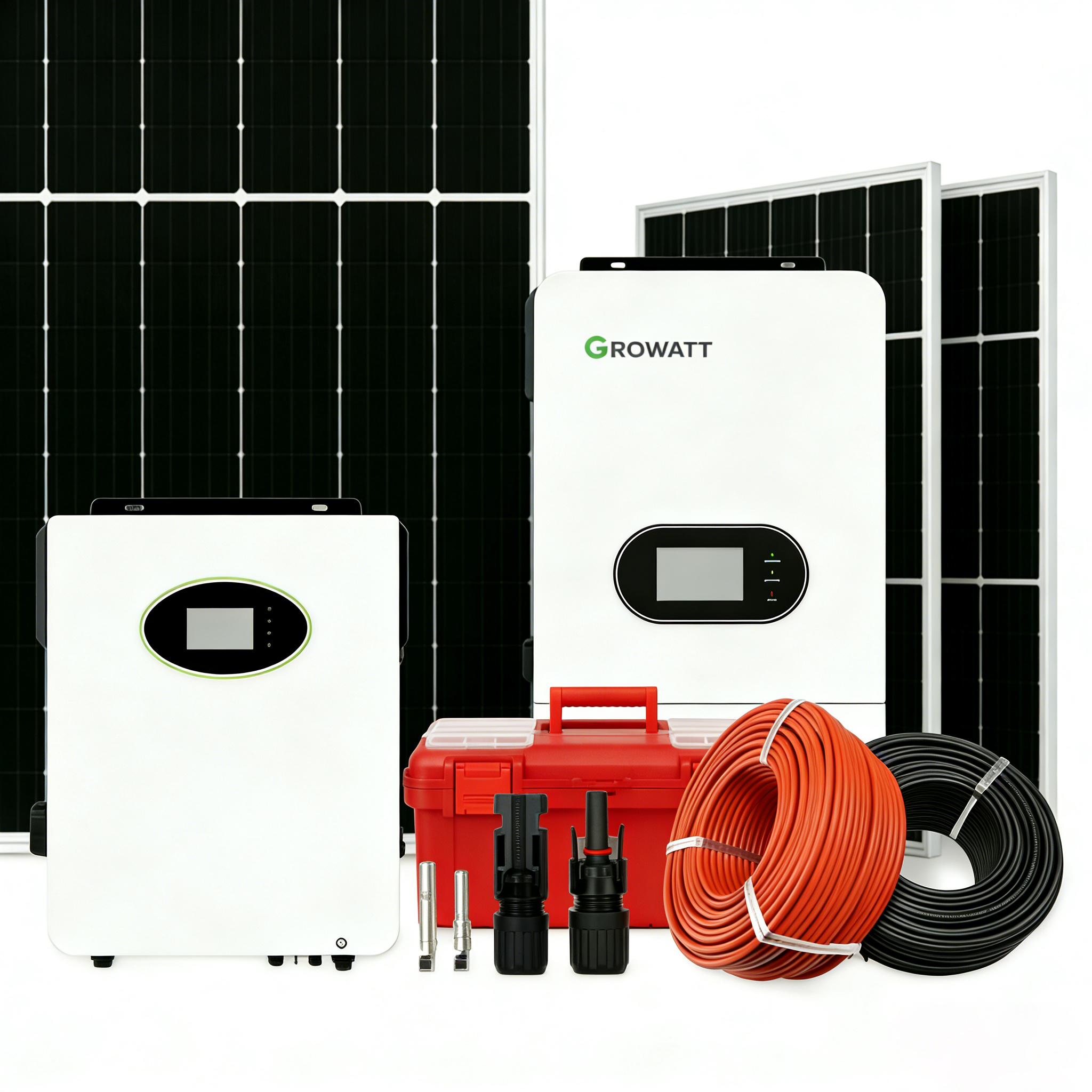

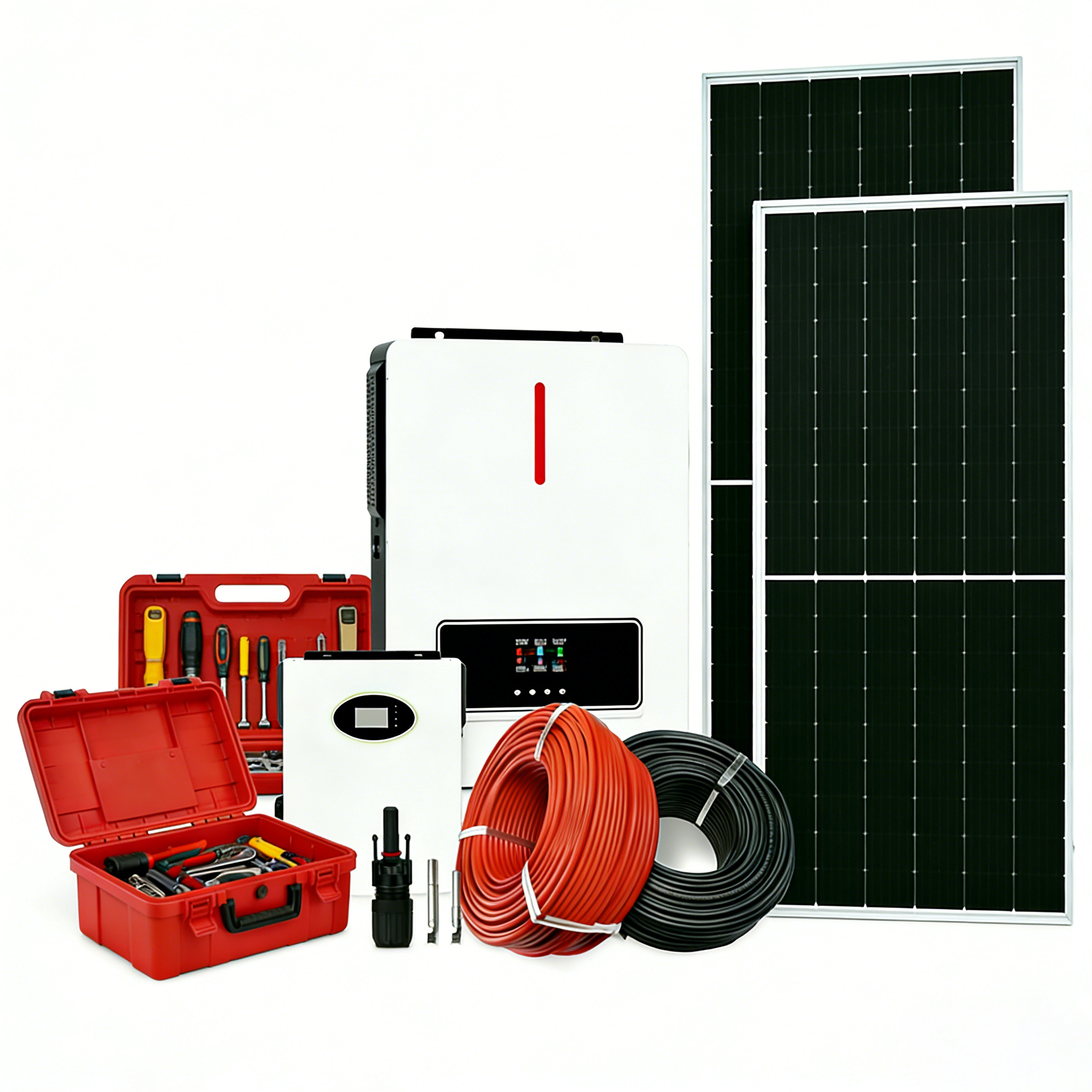
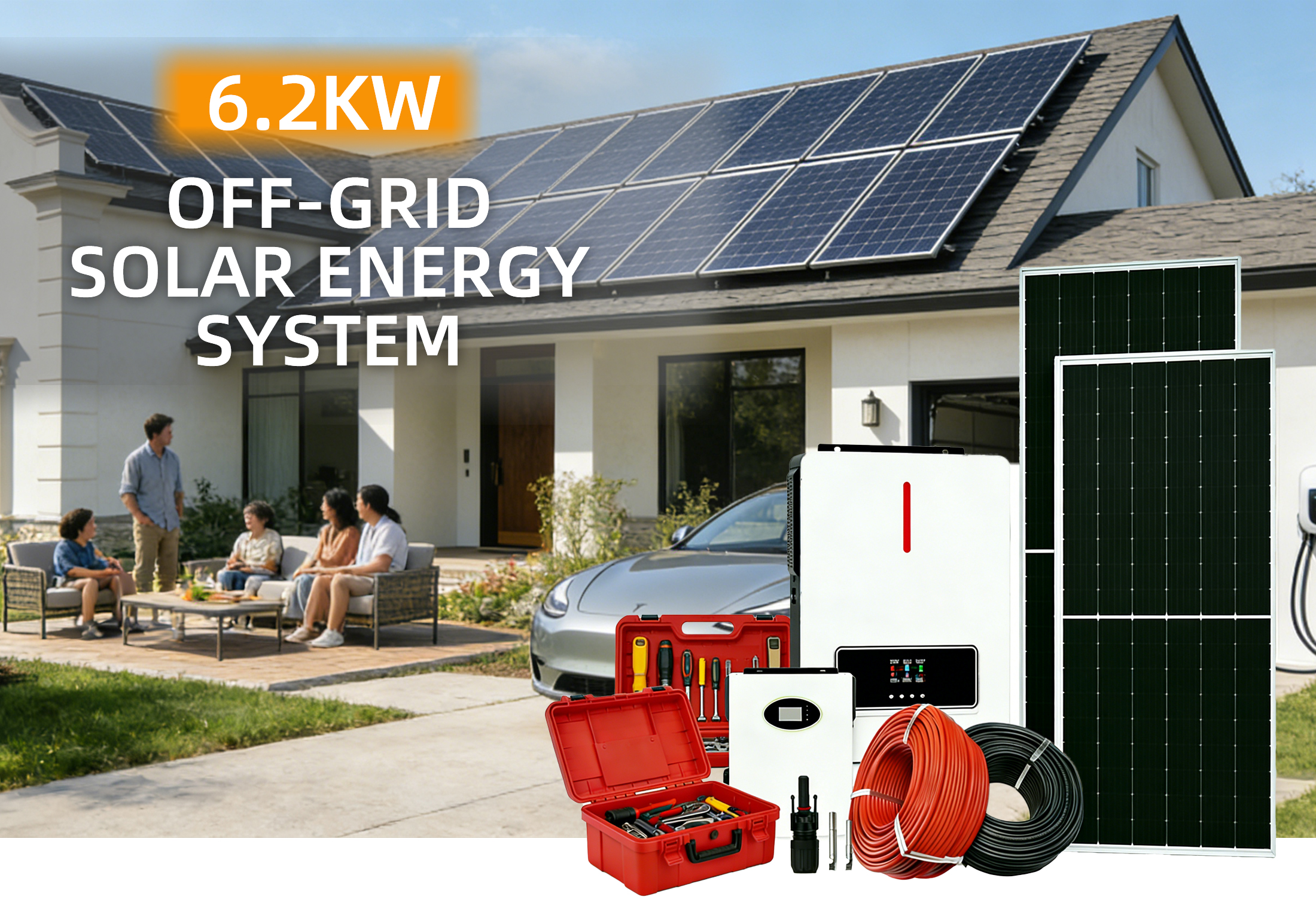
 Why Choose a 6.2KW
Household Off-grid Solar System?
● Convert the direct current generated by photovoltaic power into alternating current suitable for household use
● Manage the charging (storing excess electrical energy into the battery) and discharging (drawing power from the battery) of the battery
● Realize synchronous connection and intelligent switching with the public power grid
● It has multiple working mode control logics
Standard Configuration List
| NO. | Item | Description | Quantity |
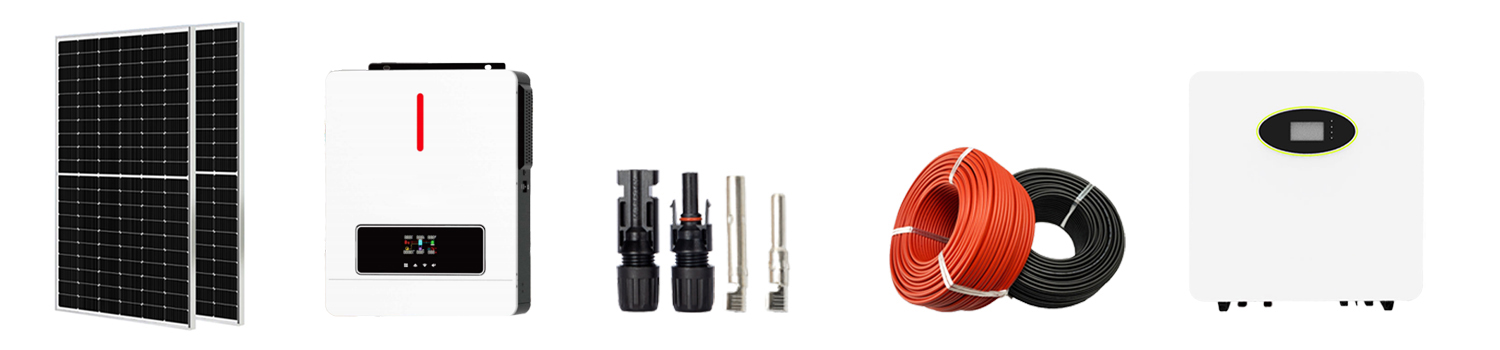
| 1 | Solar panel | 550W | 10 pieces |
| 2 | Lithium battery | 51.2V100AH | 1 unit |
| 3 | Off-grid inverter&controller all in one | 6200TL-24TX | 1 unit |
| 4 | Solar Connector | MC4 | 3 sets |
| 5 | Solar mounting system | Aluminum alloy | 1 unit |
| 6 | Pv cable | 4mm ² | 2 rolls |
Features
○ Neutral brand: A-grade monocrystalline solar panels, with A 25-year performance warranty
● Off-grid 6.2KW inverter single-phase 240V+WIFI, IP65, 2 years warranty
○ Photovoltaic cable connection terminal with German TUV certification
● Photovoltaic dedicated DC cable, red and black 100 meters each (100 meters per roll)
○ 5-year warranty; The maximum charge and discharge current is 100A/Grade A battery cells, 15 KWH battery
Application Scenarios
Investment Return Simulation
| Core indicators | Values/Results |
| System cost (including installation) | €15000~18000 |
| Annual power generation | 6944 kWh(Based on the average irradiation conditions in the central region of Germany) |
| Self-use ratio | 65% |
| Surplus electricity ratio | 35% |
| Annual electricity savings (self-use) | ≈€2518 |
| Annual online revenue | ≈€595 |
| Annual total revenue | ≈€3113 |
| Payback period | about 5 years |
| Net income over 25 years | ≈€62860 |
Remarks: 1. The data is based on the German photovoltaic market and energy policy in 2025. The actual income may be affected by regional radiation differences, changes in household electricity consumption habits, policy adjustments, and component attenuation (annual attenuation rate is about 0.5%, total attenuation in 25 years is about 12%, and this simulation has been indirectly included in the power generation calculation).
2. If the energy storage system is used, the proportion of self-use can be increased to more than 70%, which can further optimize the income structure
Customer Feedback
Frequently Asked Questions (FAQ)
Q1: Is a 6.2KW Household Off-grid Solar System sufficient for our German household’s daily electricity consumption and the “carnival electricity” for weekend parties?
A: No problem at all!The average daily electricity consumption of an average family of four in Germany is about 8-12kwh. The 6.2kW system with a reasonable capacity battery can generate 25-30kwh in a sunny day, which can not only cover daily needs, but also easily hold the electricity consumption of the stereo, oven and light of the weekend party
Q2: If this household solar system is installed on the roof, will it be very delicate and unable to withstand the heavy rain and heavy snow in Germany?
A: Don’t worry. It’s a tailor-made resilient player for the German climate!The components are made of toughed glass with high weather resistance, which can resist the impact of hail. The support conforms to the German building load standard, which can easily cope with the heavy pressure of heavy snow and will not “strike” in heavy rain
Q3: Where does a pure off-grid system save money compared to a hybrid system? Is the later maintenance cost high?
A: The initial investment is less and the later maintenance is simpler! There are no equipment or handling fees related to grid connection. Maintenance only requires cleaning the photovoltaic panels once a year. The battery life is up to 10 to 15 years, and the inverter also has a warranty of more than 5 years. The long-term usage cost is lower than that of the hybrid system.
Q4: Are there any permits required to install a pure off-grid system in Germany? Is the process complicated?
A: The process is not complicated! Pure off-grid systems are not connected to the public power grid and do not require an application for a grid access permit. They only need to report the relevant construction procedures to the local municipal department. The installation team will usually assist throughout the process.
Q5: Is there any subsidy policy for a Household 6.2kW off-grid solar system in Germany?
The 6.2kW Household Off-grid Solar System in Germany currently does not enjoy direct feed-in tariff subsidies, but it can enjoy multiple tax reductions and possible subsidies for energy storage facilities.
Subsidy situation for photovoltaic systems
For a 6.2kW off-grid solar system, Germany currently does not offer the traditional feed-in tariff (FIT) subsidy because the system operates off-grid and does not supply electricity to the grid.
According to the provisions of the German Renewable Energy Act (EEG), feed-in tariff subsidies mainly apply to grid-connected photovoltaic systems.
In 2025, Germany adjusted its subsidy policy for grid-connected photovoltaic systems, but there were no direct subsidies for off-grid systems.
Tax preferential policies
Value-added tax reduction and exemption
Starting from 2023, Germany will exempt rooftop household solar systems with a rated power of no more than 30kW from 19% value-added tax
The 6.2kW system fully meets the tax-exemption conditions and can enjoy a VAT exemption of 3 for purchase and installation
Income tax relief
The income from the generation of rooftop photovoltaic systems in single-family residences with a capacity not exceeding 30kW is exempt from income tax
For multi-family buildings, each household’s power should not exceed 15kW, and for each taxpayer’s name, it should not exceed 100KW. 3
Energy storage supporting subsidy
If your off-grid system is equipped with energy storage devices, you may be eligible for the following subsidies:
Energy storage subsidies in each state
Bavaria: A subsidy of 500 euros is provided for energy storage systems with a capacity of over 3kWh. For every additional 1kWh, a subsidy of 100 euros is offered, with a maximum of 3,200 euros
Berlin: The “Energy storage PLUS” program provides a subsidy of 300 euros per kilowatt of energy storage, with a maximum of 15,000 euros
Lower Saxony: Subsidize up to 40% of the cost of battery storage systems
Self-use reward
For projects with a capacity of ≤9 kWc, a self-use reward of 0.08 euros /Wc can be obtained
You Might Also Be Interested
4.2kW Off-grid Household Solar Energy System
Why choose a 6.2kw off grid solar system
Why Do Families Around The World Trust US?
One-stop service: From design, delivery to installation support
Local compliance: The system pre-configuration complies with the electrical standards of the target country
Lifetime technical support: Multi-channel response via wechat, WhatsApp and email
Transparent quotation: No hidden fees, including tax and freight (in some countries)
One installation, 25 years of benefits 6.2KW Household Off-grid Solar System – the starting point of energy freedom for your home