
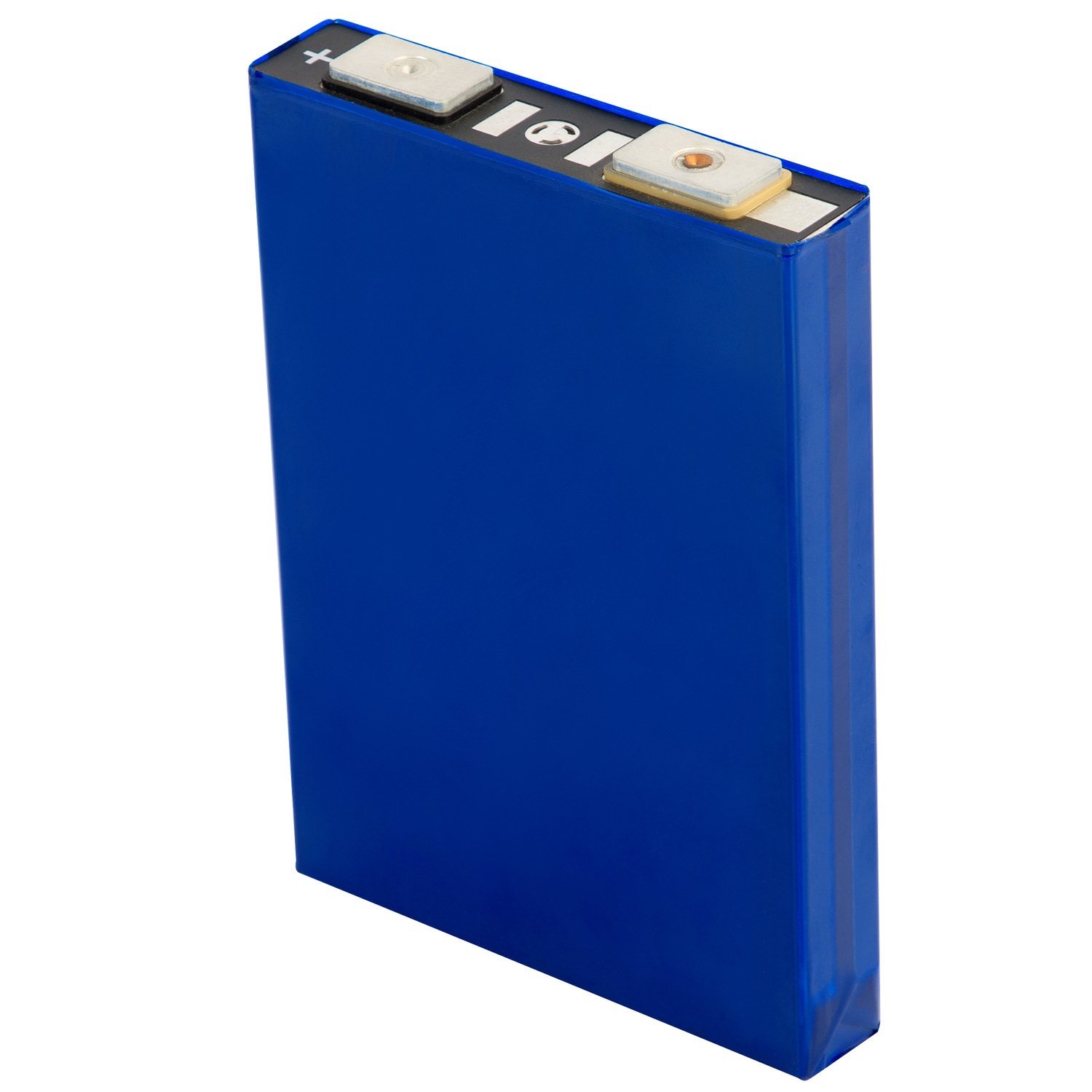
87Ah 3.2V LFP Lithium Battery – 3000 Cycles for EV, Energy Storage & Industry

High-performance 87Ah 3.2V LFP lithium battery (from Hefei Gotion High-tech Co.,Ltd. )– 3000 cycles, -30℃~60℃ operating range, and 175Wh/kg energy density.
Ideal for EVs, solar energy storage, and industrial equipment.
Reliable, long-lasting, and RoHS certified
Product Overview
HELIST 87Ah 3.2V LFP (Lithium Iron Phosphate) battery is a high-reliability energy storage solution designed for demanding scenarios like electric vehicles (EVs), solar/wind energy storage systems, and industrial equipment. With a prismatic cell structure (model: IFP52148102-87Ah), it combines excellent cycle life (3000 cycles with 80% capacity retention), wide temperature adaptability (-30℃ to 60℃), and high energy density (175Wh/kg). Unlike traditional lead-acid batteries or NCM lithium batteries, this LFP cell offers superior safety (no thermal runaway risk) and lower total cost of ownership (TCO) due to its long lifespan. Whether you need a battery for commercial EV fleets, off-grid solar storage, or warehouse AGV robots, this 87Ah LFP battery delivers stable performance and consistent power output.
Core Advantages
✅ 3000 Cycles Long Lifespan
80% capacity retention after 3000 charge-discharge cycles (0.5C/0.5C, 25℃). Reduces battery replacement frequency by 60% compared to lead-acid batteries, lowering your long-term operating costs.
✅ -30℃~60℃ Wide Operating Temperature
Performs stably in extreme cold (down to -30℃) and high temperature (up to 60℃) without capacity loss. Ideal for outdoor energy storage projects in northern cold regions or southern hot areas.
✅ 175Wh/kg High Energy Density
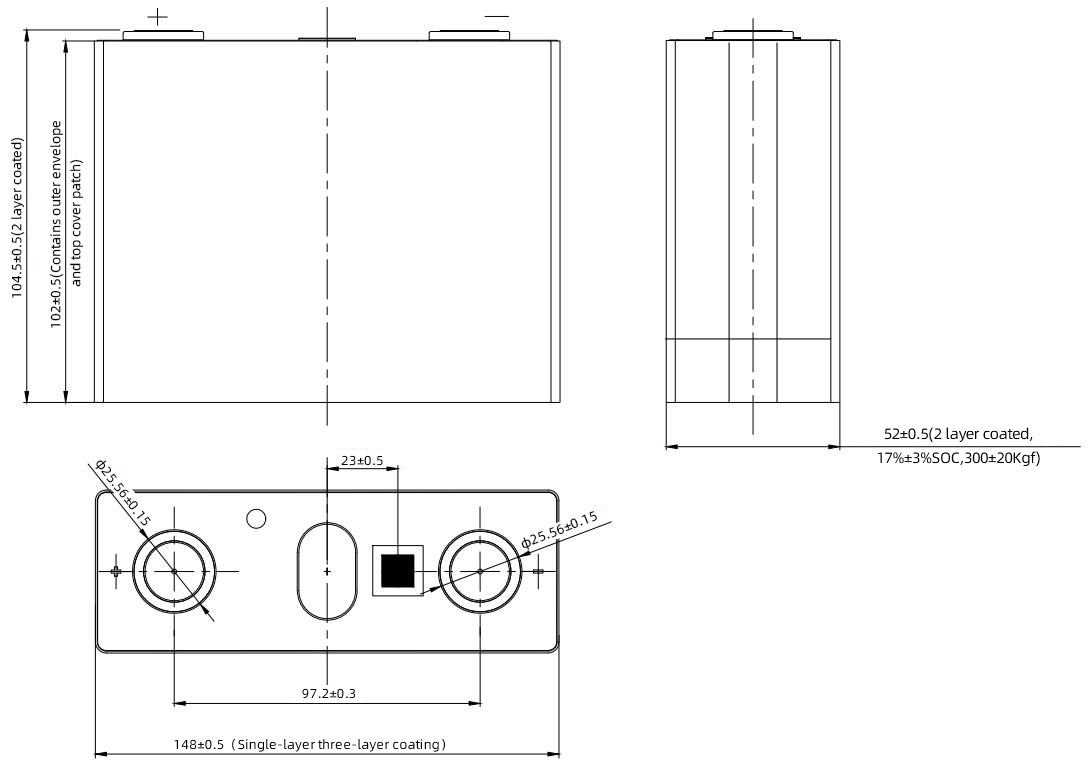
Volume density up to 360Wh/L, with a compact prismatic design (52mm×148mm×102mm). Saves installation space for EVs and energy storage cabinets, enabling higher energy output in limited areas.
✅ Superior Safety & Certification
Passes UN 38.3, IEC 62133, and RoHS 2.0 certifications. No fire, explosion, or thermal runaway risk even in short circuit, crushing, or overcharging scenarios.
✅ Low Internal Resistance (≤1.5mΩ DCR)
Ensures stable current output during high-rate discharge (supports 1C continuous discharge, 2C peak discharge). Reduces energy loss and heat generation, extending battery pack lifespan.
Application Scenario
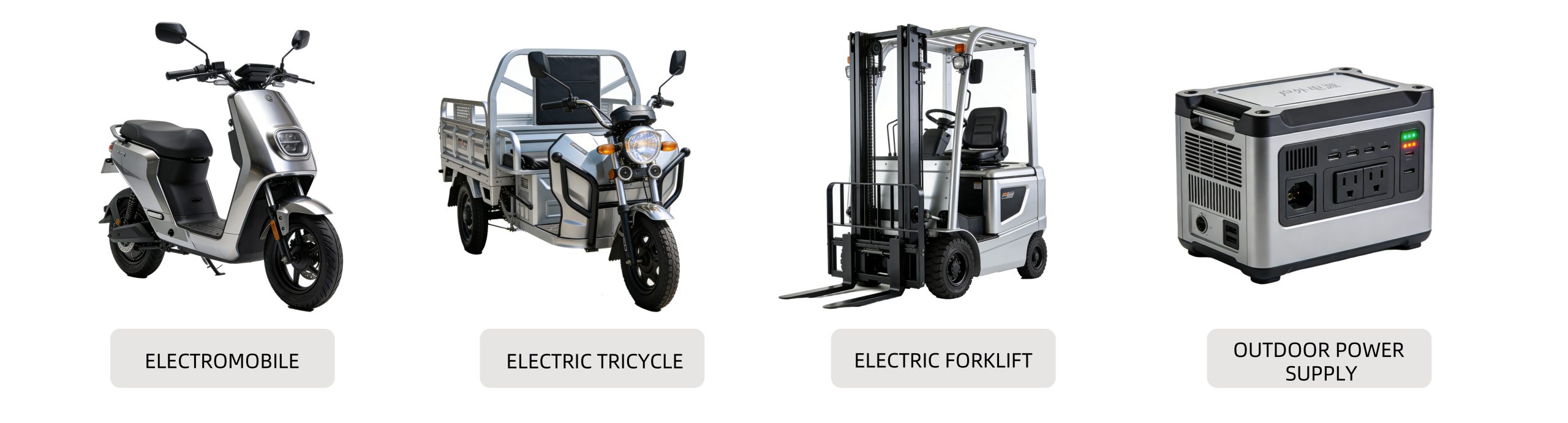
With its high energy density, wide temperature adaptability, and long lifespan, the 87Ah lithium ion battery is widely used in multiple high-demand scenarios. It perfectly matches the performance requirements of electric vehicles, energy storage systems, and industrial equipment.
(1)Electric Vehicles (EVs)
User Pain Points: High-frequency charging/discharging, short battery life, poor cold resistance.
Product Adaptability: 3000 cycles meet 8-10 years of EV service life; -30℃ cold resistance ensures performance in winter; low internal resistance supports high-rate discharge for vehicle acceleration.
Case Snippet: “Used in 500+ electric logistics vans in Northern China – 2000+ cycles with 85% capacity retention, no winter performance degradation.”
(2)Solar/Wind Energy Storage
User Pain Points: Long-term standby, unstable grid voltage, high safety requirements.
Product Adaptability: 3000 cycles match 10+ years of solar panel lifespan; wide temperature range adapts to outdoor installation; no thermal runaway risk ensures safe 24/7 operation.
Case Snippet: “Deployed in 10MW off-grid solar storage project in Southeast Asia – stable operation for 3 years, 92% capacity retention.”
(3)Industrial Equipment (AGV/Robots)
User Pain Points: High-cycle use, compact installation space, frequent charging.
Product Adaptability: Compact prismatic design fits AGV battery compartments; 1C fast charging support reduces downtime; low internal resistance ensures consistent power for continuous work.
Core Specifications
| Specification Item | Details | Benefit for You |
| Model Name | IFP52148102-87Ah | Standard model for easy pack assembly |
| Nominal Capacity | 87Ah | Sufficient power for medium-duty use |
| Nominal Voltage | 3.15V (1C), 3.2V (0.33C) | Compatible with most LFP pack systems |
| Charge/Discharge Voltage Range | 2.5V~3.65V (T>0℃), 2.0V~3.65V (T≤0℃) | Adapts to extreme temperature use |
| Weight | 1625g±50g | Lightweight for EV/AGV weight reduction |
| Weight Energy Density | 175Wh/kg (0.33C) | High energy output in limited space |
| Volume Energy Density | 360Wh/L (0.33C) | |
| AC Internal Resistance | 0.3mΩ~0.6mΩ (25℃±2℃, 17%±3% SOC) | Low energy loss during charging |
| DC Internal Resistance | ≤1.5mΩ (50% SOC@5C10S, 25±2℃) | Stable discharge at high rates |
| Operating Temperature | Charge: -20℃~55℃ / Discharge: -30℃~60℃ | Extreme weather adaptability |
| Cycle Life | 3000 cycles (80% retention) | Long service life, low replacement cost |
| Certifications | RoHS 2.0, GB 38031-2020, UN 38.3 | Global market access |
Details of Product Dimensions
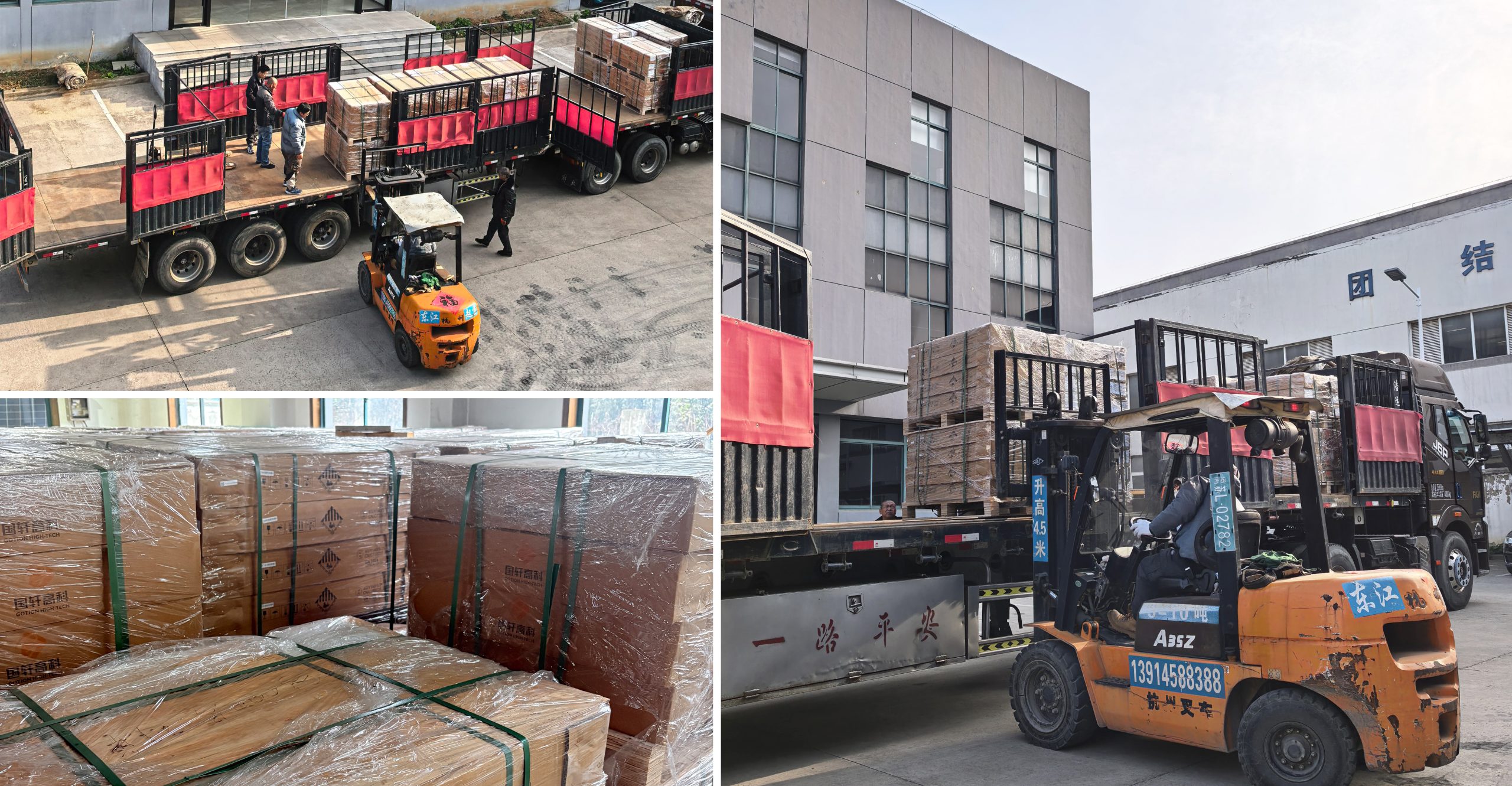
Packaging
Performance Details
(1)DCR Performance (Different Temperature & SOC)
Key Data (Discharge DCR@3C 10s):
55℃ (90% SOC): 0.57mΩ (minimum resistance, optimal for high-temperature use)
25℃ (50% SOC): 1.16mΩ (stable for daily use)
-20℃ (10% SOC): 9.03mΩ (still usable in cold environments)
Charge DCR@2.25C 10s (25℃, 90% SOC): 0.96mΩ (low charging loss)
(2)Pulse Power Performance
Peak Pulse Discharge Power (10s): 3522W (55℃, 90% SOC) – ideal for forklift lifting
Peak Pulse Feedback Power (10s): 2383W (55℃, 10% SOC) – supports energy recovery
Maximum Allowable Pulse Discharge Rate: 2.9C (25℃, 80%-90% SOC)
(3)Cycle Life Curve Data
500 cycles (25℃): ≥90% capacity retention
1500 cycles (25℃): ≥80% capacity retention
800 cycles (55℃): ≥80% capacity retention
FAQ
Q1: What is the nominal voltage of the 87Ah lithium battery?
A1: The nominal voltage is 3.15V (1C) and 3.2V (0.33C), with a charge/discharge voltage range of 2.5V~3.65V (T>0℃) and 2.0V~3.65V (T≤0℃).
Q2: How long is the cycle life of this battery?
A2: It has an excellent cycle life: 3000 cycles at 25℃ (80% capacity retention), 1500 cycles at 45℃, and 800 cycles at 55℃, plus a 10-year calendar life.
Q3: Is this battery suitable for cold regions?
A3: Yes. It can discharge at -30℃ and charge at -20℃, making it ideal for cold northern areas. The wide temperature range ensures stable performance in extreme weather.
Q4: What is the installation compatibility of the 87Ah battery?
A4: The prismatic design (52mm×148mm×102mm/104.5mm) is easy to integrate into battery packs. The thickness and width are standardized for most EV and industrial equipment PACK designs; refer to the “Product Dimension Details” for precise installation parameters.
Q5: How long does it take to fully charge the 87Ah battery with fast charging?
A5: Under the step charge strategy (25℃~45℃), the maximum charging current reaches 1.3C (about 113.1A) in the initial stage. It takes approximately 1.5~2 hours to fully charge from 0% to 100% SOC, depending on the ambient temperature and battery remaining capacity.
Q6: What is the maximum allowable pressure during PACK assembly?
A6: The maximum allowable pressure during PACK assembly is 600kgf (under 17%±3% SOC), and the optimal final pressure after assembly is 150±50kgf. This ensures the battery’s structural stability and electrical performance during use.
Q7: Can the battery be stored for a long time? What are the key storage conditions?
A7: Yes. The recommended long-term storage conditions are: temperature ≤35℃, SOC maintained at 30%~50%, ambient humidity ≤85% ROH (no condensation), and charge/discharge once every 3 months to maintain capacity recovery performance.
Q8: What safety protection does the battery have against short circuits or extrusion?
A8: The battery has passed strict safety tests: it will not explode or catch fire in short circuit (external line resistance <5mΩ, 10min test) or extrusion (perpendicular to the plate, 100kN maximum force) scenarios. The LFP chemistry and structural design provide inherent safety protection.
Q9: Does the battery comply with international environmental standards?
A9: Yes. It fully complies with EU RoHS 2.0 (2015/863) and battery directive 2006-66-EC, restricting 10 harmful substances (such as cadmium, lead, mercury) within the specified limits, and is suitable for global market access.
Q10: What is the difference between the discharge DCR and charge DCR of the battery?
A10: Discharge DCR is tested at 3C for 10s (SOC 10%~90%), with values ranging from 0.57mΩ (55℃, 90% SOC) to 9.03mΩ (-20℃, 10% SOC). Charge DCR is tested at 2.25C for 10s, with values ranging from 0.61mΩ (45℃, 90% SOC) to 5.25mΩ (0℃, 10% SOC). The difference is due to the battery’s internal electrochemical reaction characteristics under charging and discharging conditions.
Usage Notes
1.Precautions
Store in a cool, dry place (≤35℃, 30%~50% SOC, humidity ≤85% ROH, no condensation) when not in use for a long time; charge/discharge once every 3 months.
Do not expose to direct sunlight or heat sources.
Avoid wearing metal accessories (rings, watches) when handling the battery.
Ensure correct connection of positive and negative terminals to prevent short circuits.
2.Prohibited Actions
Do not exceed the maximum charge rate.
Do not disassemble, modify, throw, or hit the battery.
Do not pierce with sharp objects (nails, knives, drills).
Do not mix with other battery models or new/old batteries in PACK.
Do not immerse in water or sea water, or put in microwaves/high-pressure containers.
Related Product Recommendations
IFP53148115 104Ah 3.2V LFP Lithium Battery for EV & Energy Storage