
800W Flexible Solar Balcony System – German Compliant & High ROI
Why Choose 800W Flexible Solar Balcony System?
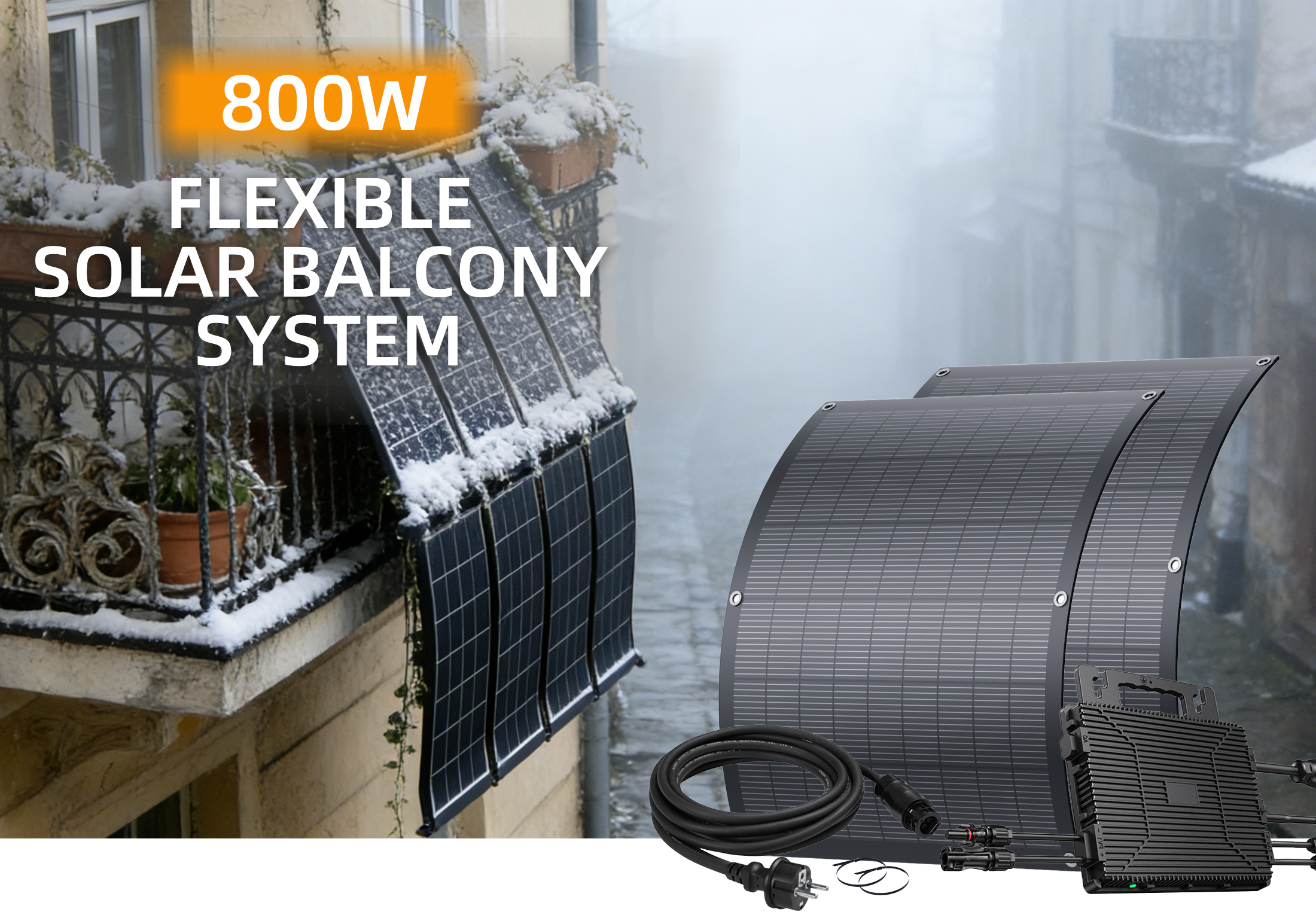
High efficiency and energy conservation: The flexible solar balcony system can effectively capture and convert solar energy, providing sufficient clean energy for families or organizations and reducing reliance on traditional electricity.
Flexibility: The flexible design of the solar panels makes them easier to install and adapt to different balcony structures, saving space while enhancing aesthetic appeal.
Easy to maintain: Flexible solar balcony systems are usually designed simply, are not prone to damage, have low maintenance costs, and are convenient for users to carry out daily maintenance.
Standard Configuration List
|
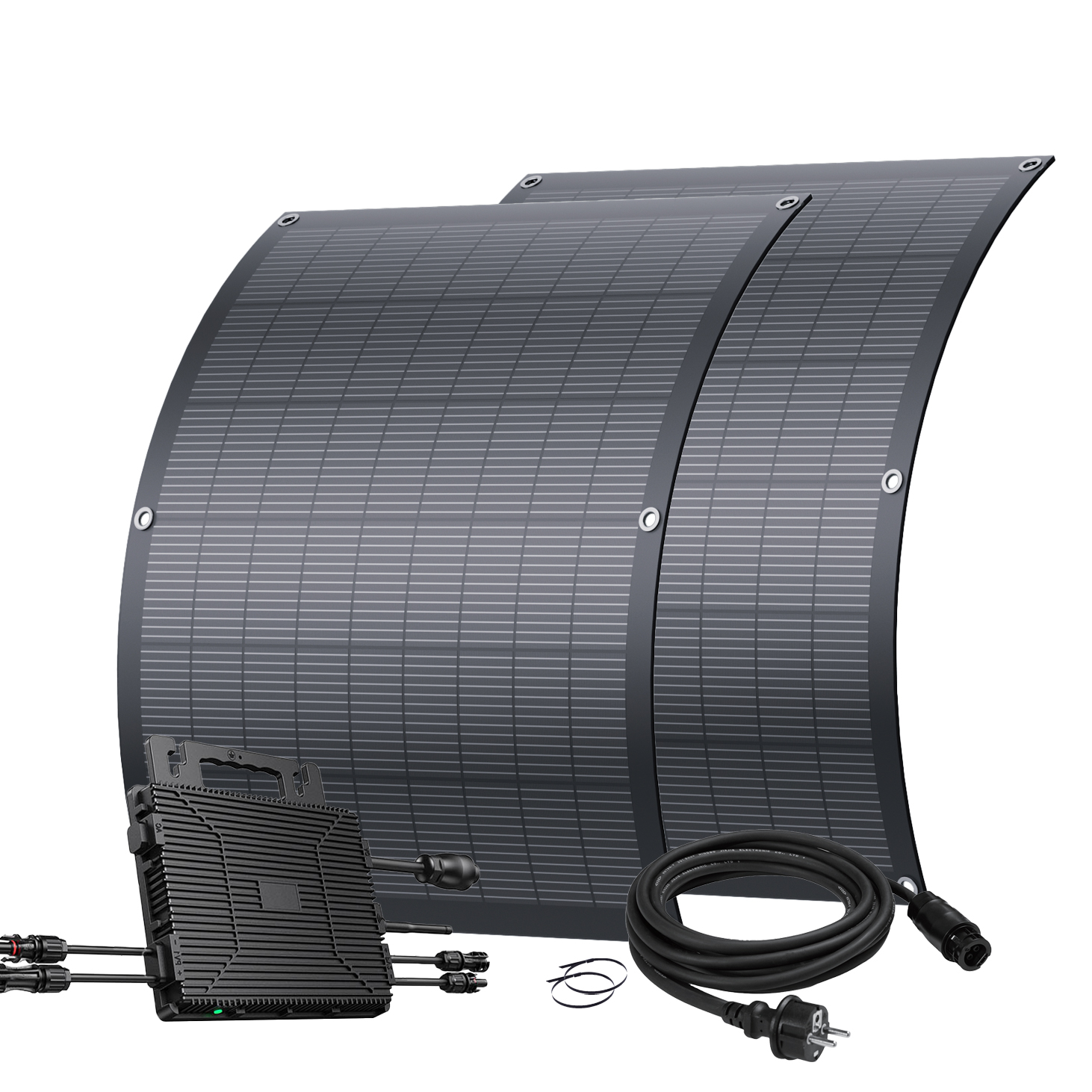
Main components: |
|||
|
NO. |
Item |
Description |
Quantity |
|
1 |
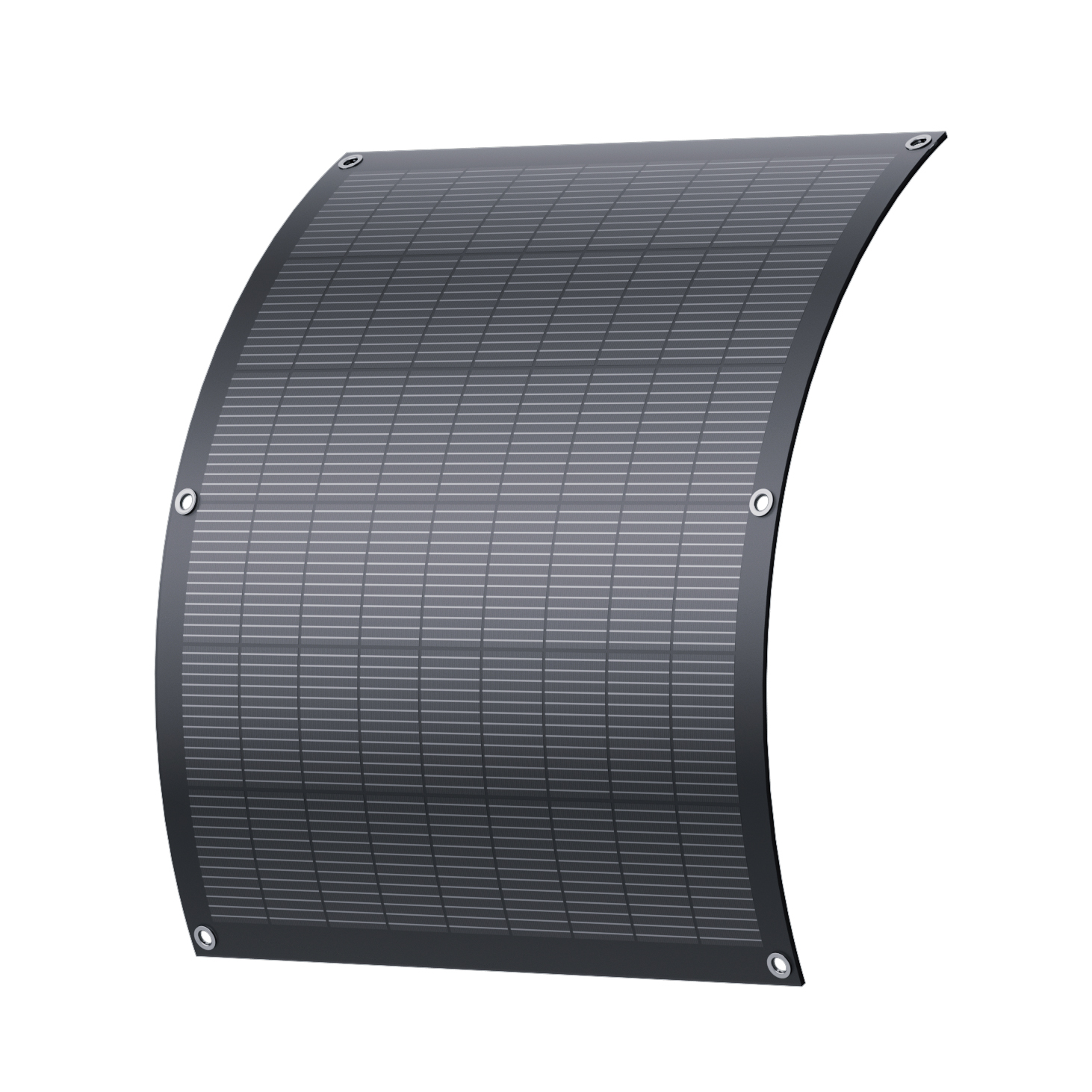
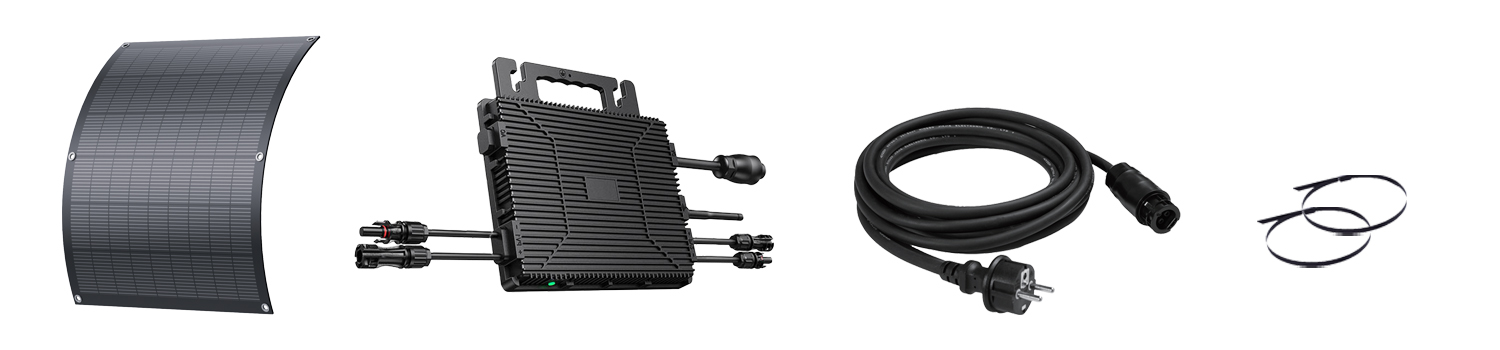
Flexible Solar Panel |
200W |
4 pieces |
|
2 |
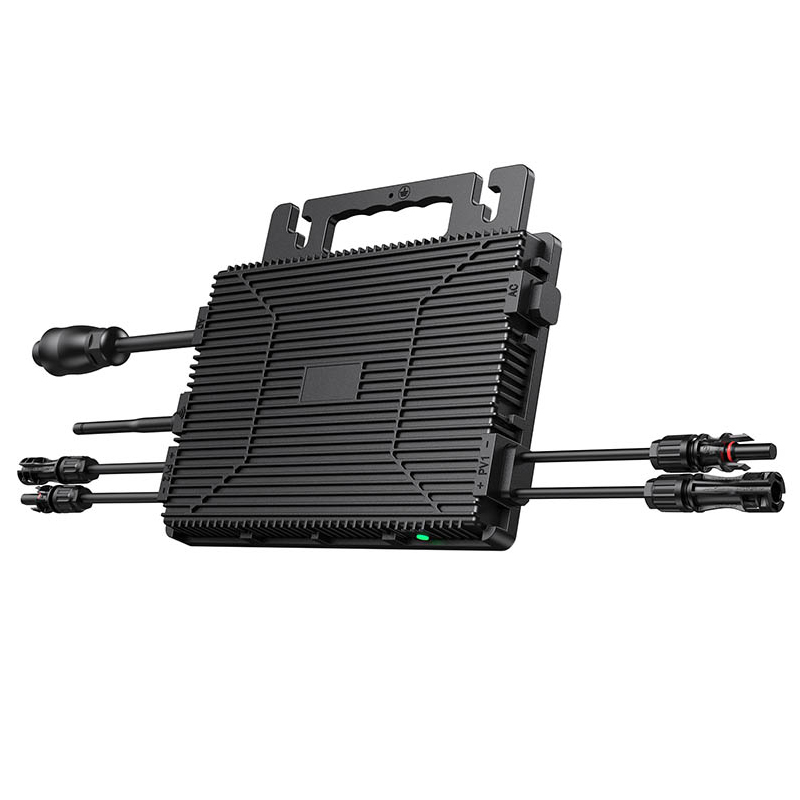
Micro Inverter |
800W |
1 unit |
|
3 |
Solar Cable |
AC |
5 m |
|
4 |
Ties |
Stainless Steel |
24 roots |
| Flexible Solar Panel Specification: | ||
| NO. | Model | Parameter |
| 1 | Maximum Power (Pmax) | 200W/Piece |
| 2 | Open-Circuit Voltage (Voc) | 18.36V |
| 3 | Short-Circuit Current (Isc) | 13.51A |
| 4 | Maximum Power Point Voltage (Vmp) | 15.66V |
| 5 | Maximum Power Point Current (Imp) | 11.78A |
| 6 | Rated Current Of Series Fuse | 15A |
| 7 | Protection Level | ≥ IP67 |
| Microinverter specifications: | ||
| 1 | Rated Power | 800W |
| 2 | Max. Input Voltage | 60V |
| 3 | Max. Input Current | 13.5A*2 |
| 4 | MPPT Voltage Range | 25-55V |
| 5 | Max. DC Short Circuit Current | 16.5A*2 |
| 6 | Number of MPPTs | 2 |
| 7 | Output Voltage Range (M) | 184-253 |
| 8 | Max. Output Current | 4A |
| 9 | Nominal Frequency/Range | 50Hz/45-55 |
| 10 | Peak Efficiency | 96% |
| 11 | Dimensions(WxHxD) | 260mm*225mm*32mm |
| 12 | Weight | 2.9KG |
Features
Physical properties ↓
Ultra-light and ultra-thin, lightweight: Utilizing advanced thin-film technology, its weight is only a fraction of that of traditional solar panels, with a significantly reduced thickness
It can be bent, folded and even rolled up, adapting to various complex shapes and installation environments
Performance advantage ↓
Strong adaptability: It can easily cope with deformations such as bending and twisting, and can work stably even on uneven surfaces
High-efficiency power generation: The conversion efficiency is constantly improving, and some products can rival traditional solar panels, capable of generating electricity continuously even in low-light conditions
Costs are gradually decreasing: As production scale expands and technology matures, cost-effectiveness is constantly improving
Installation and use ↓
It is lighter in weight and thinner in thickness. No bracket is needed during installation and it can be directly bonded to the roof
Flexible deployment: Installation has become more flexible than ever before and can be widely applied in various scenarios
Environmentally friendly ↓
The production process is more environmentally friendly and has a smaller carbon footprint
Environmentally friendly: The environmental pollution generated during production and use is relatively small
Application Scenarios
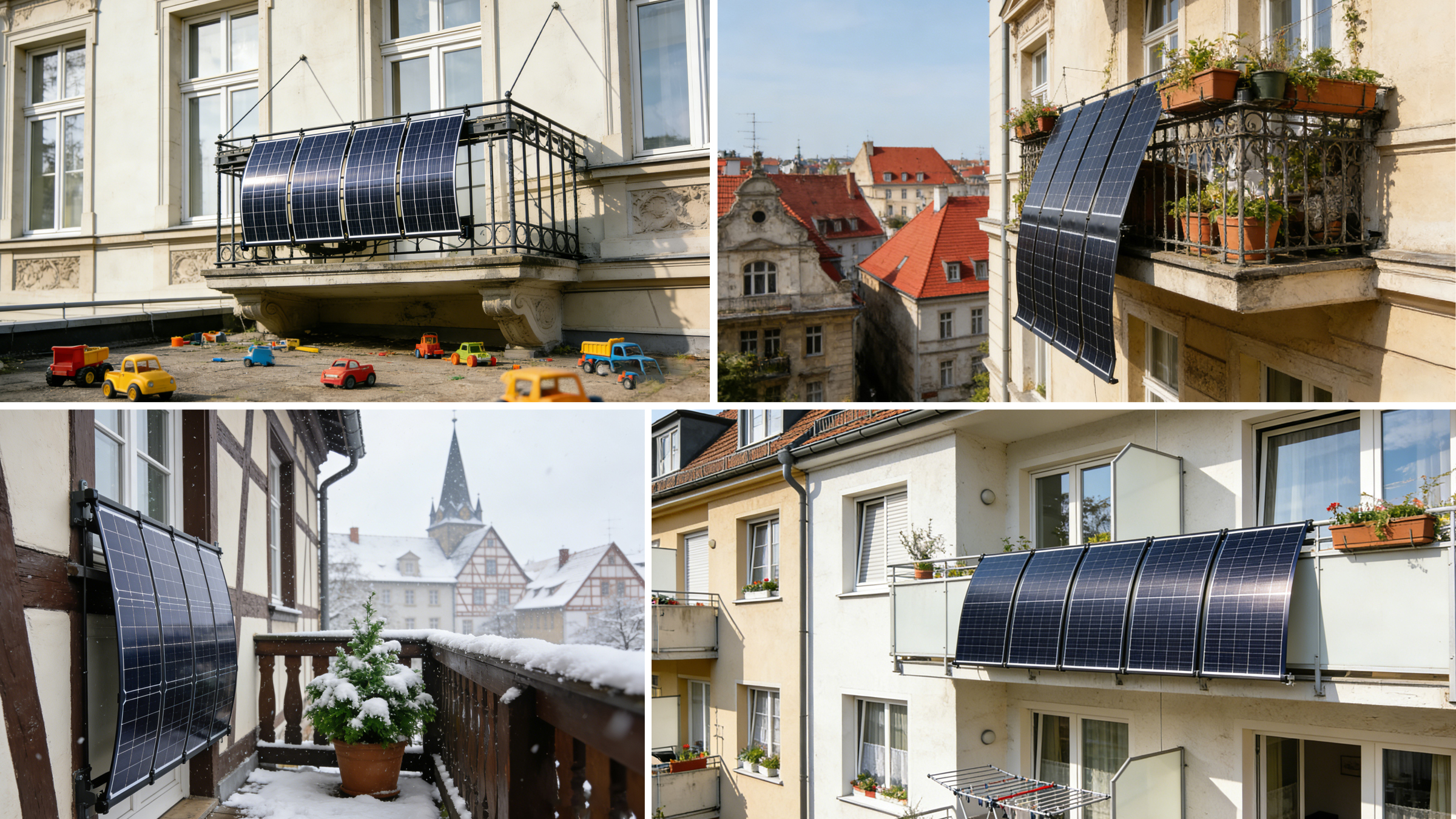
For personal use by small apartment tenants
300-600W system, for small household appliances, can be removed when moving.
Family peak-valley arbitrage
600-1200W system, self-use + surplus power connected to the grid to receive subsidies, saving electricity bills.
Energy-saving renovation of old buildings
Lightweight components are installed on the guardrail, which does not damage the building and generates electricity in compliance with regulations.
Shared power generation in apartment buildings
Public and residential balconies will be installed uniformly, and the benefits will be distributed to each household.
Emergency backup power supply
Photovoltaic power generation combined with small-scale energy storage can address grid fluctuations and ensure critical power supply.
Investment Return Simulation
| Core indicators | Values/Results |
| System cost (including installation) | ≈€272(Customer purchases, freight, customs, etc. are not accounted for) |
| Annual power generation | 700-760 kWh (based on the total power of 4 200W components with an efficiency of 17.7%, the average in central Germany is 730kWh, STC conditions: 1000W/㎡, 25℃ |
| Self-use ratio | 65% (Common household self-use level) |
| Surplus electricity ratio | 35% |
| Annual electricity savings (self-use) | ≈€165(calculated at 0.347 euros /kWh, 730kWh×65%, 4 200W components generate electricity stably to ensure self-use income) |
| Annual online revenue | ≈€19 (calculated at 0.0786 euros /kWh, 730kWh×35%, the latest feed-in tariff for systems with a capacity of ≤10kW in Germany in 2025) |
| Annual total revenue | ≈€184 |
| Payback period | 4.3-5.4 years (no subsidy); 2.7-3.8 years (including a local subsidy of 500 euros) |
| Net income over 25 years | ≈€3,600~4,000 (deducting system costs, based on the 25-year design life of 4 2 million components, excluding inflation) |
Policy description for the German region(Results details can be sent email consultation):
1. Compliance filing: The 800W system does not require a building permit and only needs to complete the MaStR filing with the Federal Network Agency (BNetzA).
2. Subsidy support: In some states, the maximum subsidy is 500 euros per unit. The on-grid electricity price compensation policy for already operational projects will not be affected by subsequent adjustments.
3. Self-use and grid connection: According to the Peak Solar Energy Act, during periods of negative electricity prices in the power market, photovoltaic grid connection will no longer be eligible for subsidies (electricity prices are 0). According to the updated EEG policy on August 1, 2025, the partial feed-in tariff for household photovoltaic systems with a capacity of ≤10kW is 0.0786 euros /kWh. This subsidy standard decreases by 1% every six months, and the subsidy guarantee period is 20 years. For newly-built photovoltaic systems without smart meters, the grid-connected power will be limited to 60%. This limit can be lifted after the installation of smart meters.
Customer Feedback
Frequently Asked Questions (FAQ)
Q1: Compared with rigid solar systems, what are the advantages of installing 800W Flexible Solar Balcony System on balconies in Germany?
A:The core advantages lie in adaptability and convenience, which are more in line with the characteristics of German apartment balconies.
● Lighter weight: The total weight of 800W flexible photovoltaic panels is only 8-12kg. When combined with brackets, the entire system weighs approximately 25-35kg, which is much lower than that of rigid photovoltaic systems of the same power. It exerts less pressure on the balcony and is more likely to obtain the landlord’s consent.
● Flexible installation: The flexible board can be slightly bent (with a maximum bending degree of ≤30°), making it suitable for special scenarios such as curved balcony railings and slightly inclined walls, while the rigid board can only be installed flat.
● Strong concealment: With a thickness of only 2-3mm, it has a weak visual presence after installation and is less likely to damage the aesthetic appeal of the building’s facade, which is more in line with the appearance management regulations of some residential areas in Germany.
● Easy disassembly: It adopts a dedicated snap-on or adhesive bracket. After the lease expires, disassembly is simple and leaves no residue.
Q2: How is the weather resistance of 800W Flexible Solar Balcony System in Germany? Can it adapt to the local climate?
A:Our high-quality products are fully compatible with the German climate and have guaranteed weather resistance.
● Wind and rain resistance: Flexible photovoltaic panels that meet IP65 or higher protection standards can withstand common heavy rain and strong winds (wind speed ≤120km/h) in Germany. During installation, just ensure that the brackets are firmly fixed.
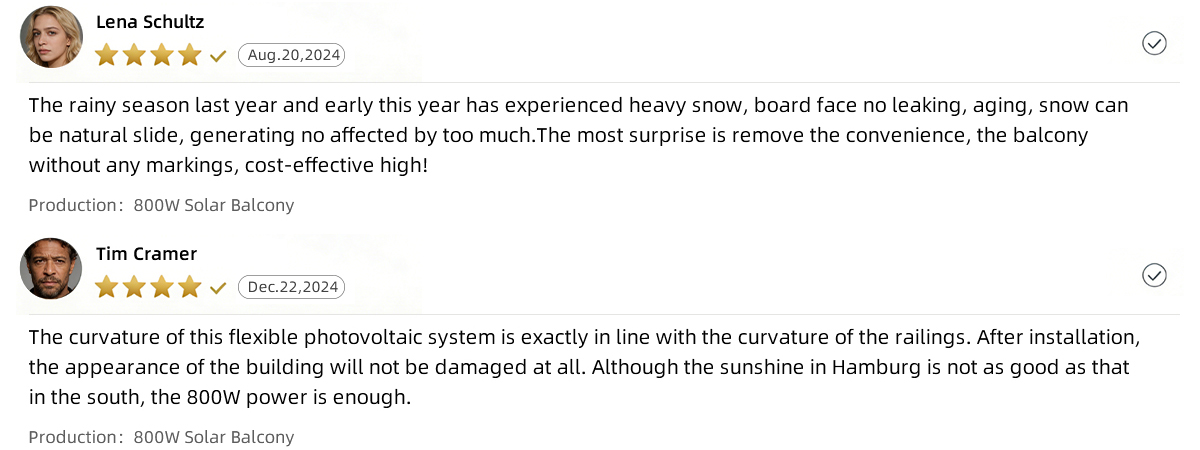
● Resistance to low temperatures and snow accumulation: Flexible photovoltaic panels have stable power generation efficiency in low-temperature environments and can generate electricity normally in winter (the power generation is about one-third of that in summer). Snow accumulation will temporarily block power generation, but the smooth surface of the board and the slight heat generated during power generation can easily cause the snow to slide naturally. Installing it at a 20-30° Angle can further accelerate the sliding of the snow.
● Anti-aging: Choose products certified by TUV, which can resist strong ultraviolet radiation from Germany, prevent the aging and peeling of the packaging layer, and ensure long-term stability during use.
Q3: What is the average annual power generation of 800W Flexible Solar Balcony System in different regions of Germany?
A:The power generation is significantly affected by the regional sunlight conditions. The overall average annual power generation is approximately 680-800 KWH. The specific regional differences are as follows:
● Southern regions (such as Bavaria and Baden-Wurttemberg) : They enjoy the most abundant sunshine, with an average annual sunshine duration of approximately 1,300 to 1,400 hours and an annual power generation capacity of 750 to 800kWh.
● Central regions (such as Hesse and North Rhine-Westphalia) : The average annual sunshine duration is approximately 1,100 to 1,200 hours, and the annual power generation is about 700 to 750kWh.
● Northern coastal areas (such as Schleswig-Holstein) : The duration of sunshine is relatively short, with an average of about 1,000 to 1,100 hours per year and an annual power generation of approximately 680 to 720kWh.
Note: If the south-facing direction is chosen during installation with an inclination of 35-45° (the optimal installation inclination in Germany), the power generation can be increased by 10% to 15%. If there is tree shade or building obstruction, the power generation will decrease significantly.
Q4: Is it necessary to apply for a license or filing procedures to install an Flexible Solar Balcony System in Germany?
A:No construction permit is required, but a simplified filing must be completed.According to the German Solarpaket 1 Act and related regulations, the Flexible Solar Balcony System is a compliant small PV installation and does not need to apply for a building permit from the municipal department.But, after the installation is completed through the federal network agency (BNetzA) market main data register (MaStR) complete registration for the record, no need site acceptance, for the record to complete can be normal use.In addition, the need to ensure that the use of pv modules, inverters and other equipment have obtained ZEREZ certification (February 1, 2025 implementation of the components of the compulsory certification requirements), otherwise can’t normal grid.
Q5: Can I install an Flexible Solar Balcony system in Germany by myself? Or is it still necessary to seek professional help?
A:It is strongly recommended that it be installed by qualified professionals. The power of the Flexible Solar Balcony System is approaching the policy critical value for small-scale photovoltaic installations in Germany, and the complexity of electrical wiring and grid connection is higher than that of low-power systems.Although the basic steps such as support fixing and component laying can be operated by themselves, the core links such as anti-reverse current device installation and power grid access and commissioning must comply with DIN VDE 0126-1-1 electrical safety standards and be completed by certified electritors to avoid safety hazards such as short circuit and electric shock caused by wiring errors, and ensure compliance with regulatory requirements.
You Might Also Be Interested
6KW Hybrid Household Solar Energy System
12KW Household Hybrid Solar Energy System
Why choose 800w flexible Solar Balcony
Why do families around the world trust us?
○ Fully German compliance certification and assistance in the whole process of filing
○ Customize and adapt to various balcony scenarios in Germany
○ Localized team, worry-free installation and after-sales service
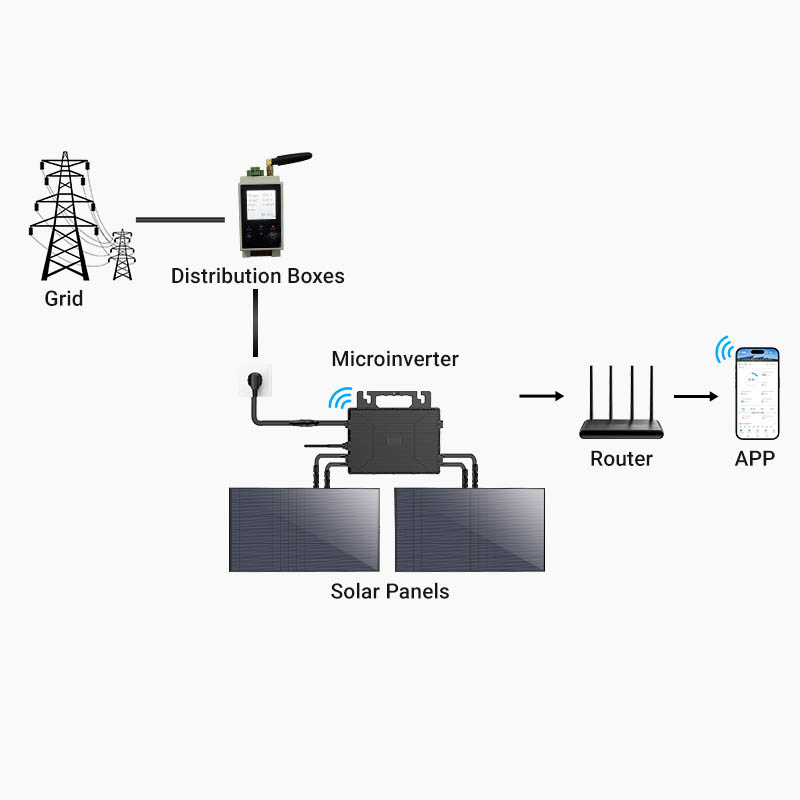
○ Efficient power generation and intelligent revenue monitoring
○ Subsidy matching, high cost performance and quick return on investment