
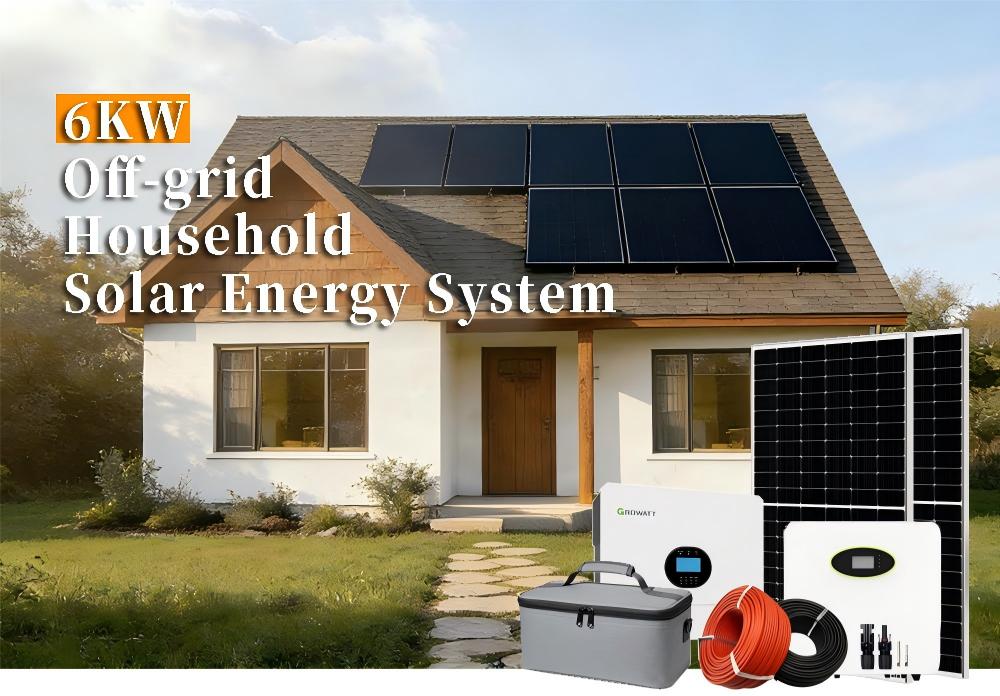
 Why Choose a 6kW Off-grid Household Solar Energy System?
- Grid-uncovered areas: rural and remote areas, mountainous homestays, outdoor workstations, etc., completely achieve complete independence from the public power grid.
- Grid instability scenarios (frequent outages/voltage fluctuations): old residential areas with frequent power outages, suburbs with large voltage fluctuations, to ensure the continuity of electricity consumption.
- Environmental protection and energy conservation needs: Pursue zero-carbon life, reduce fossil energy consumption, and surplus electricity is stored in the energy storage battery(with energy storage batteries) to achieve day and night power supply cycle.
- Basic continuous electrical load: The total power of lighting, refrigerators, routers, mobile phone charging and other equipment is usually around 1-2kW, and the rated power of the 6kW system can easily support these loads with ample power margin.
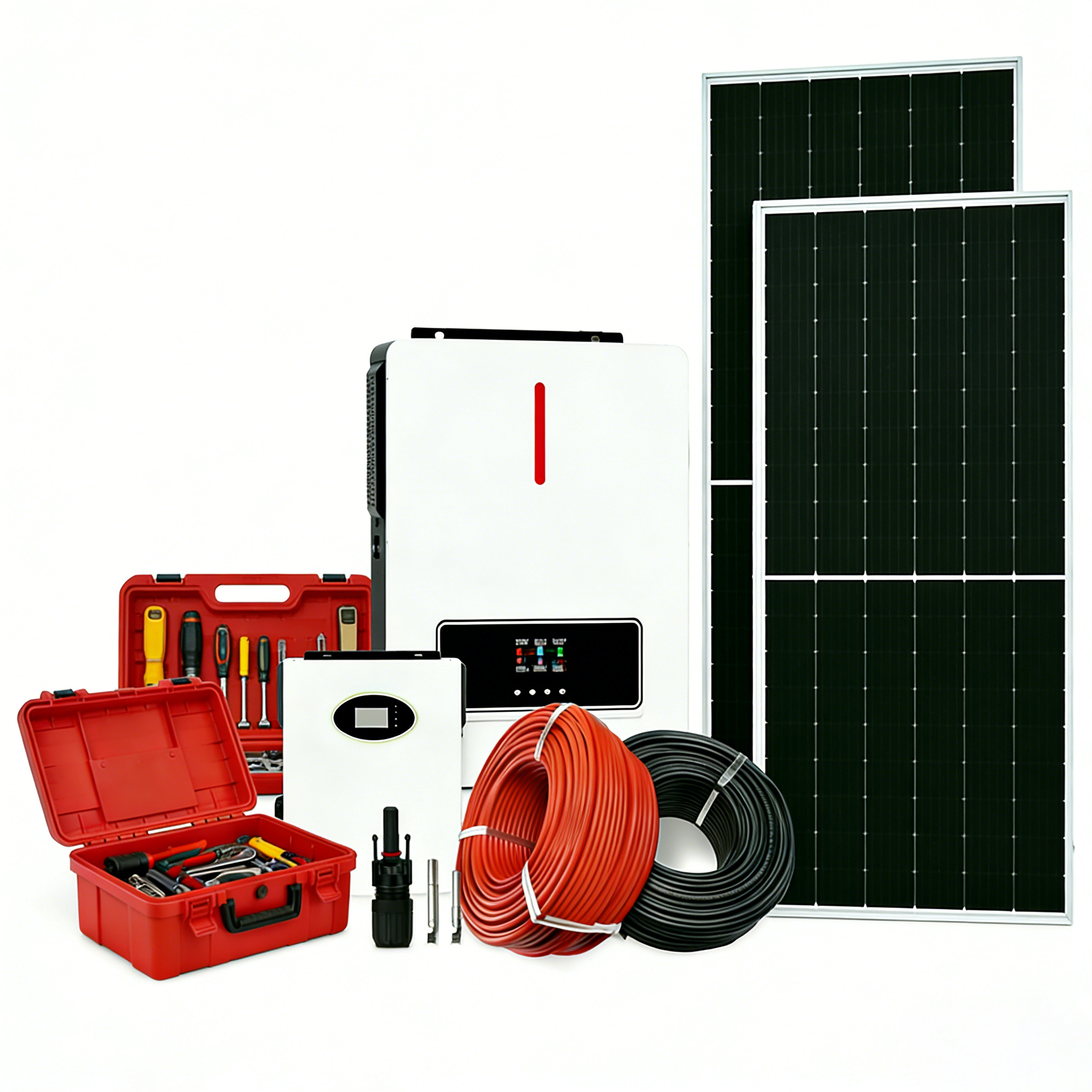
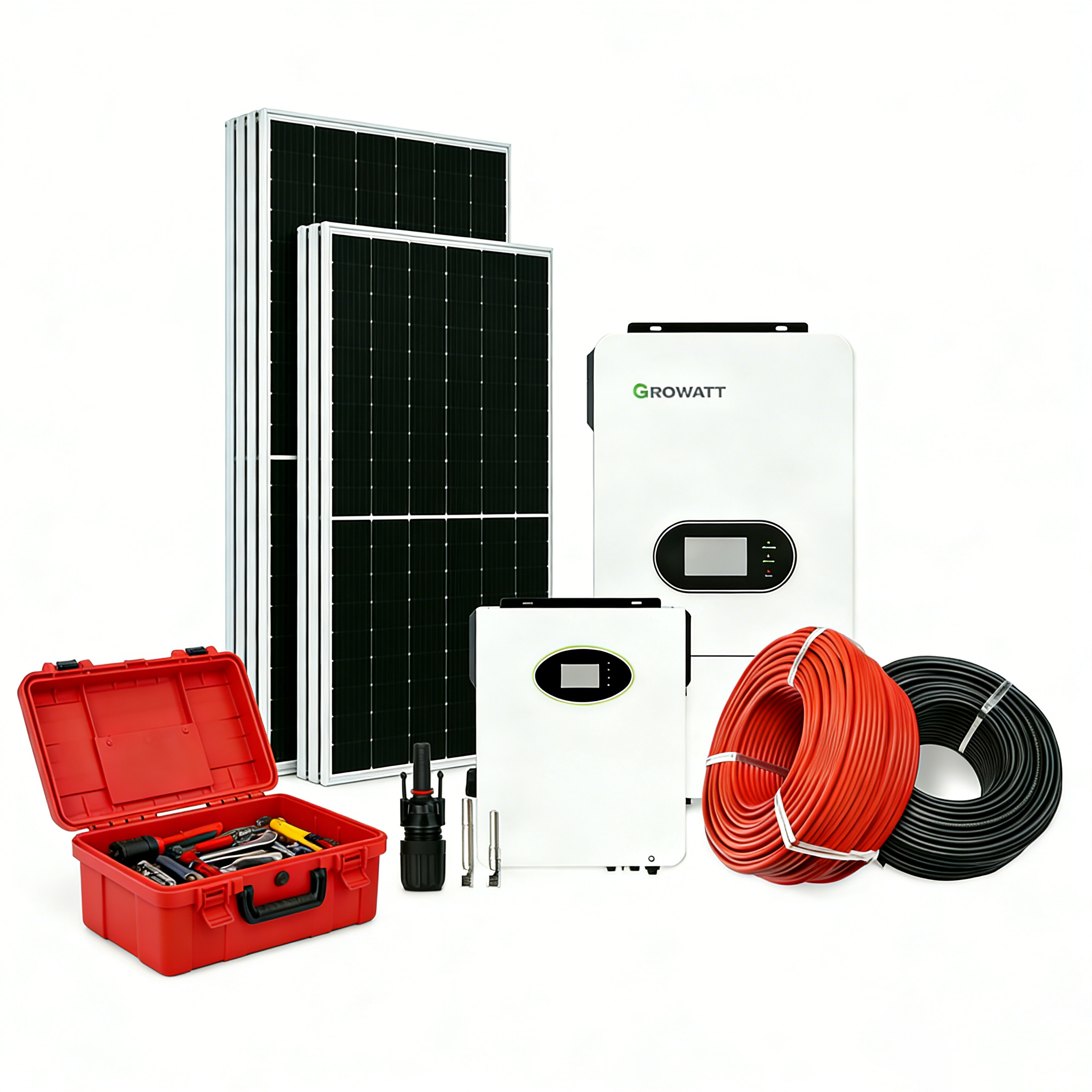
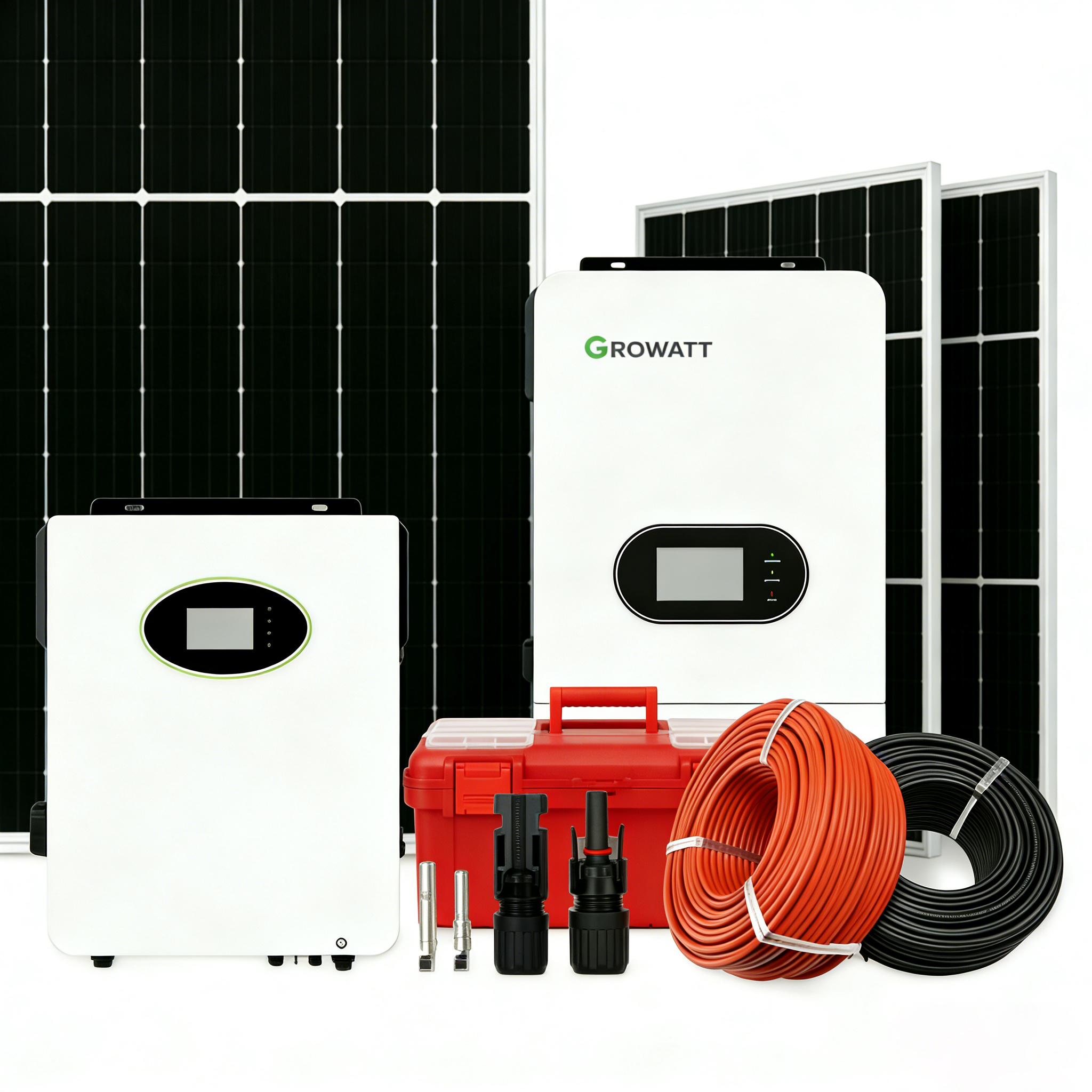
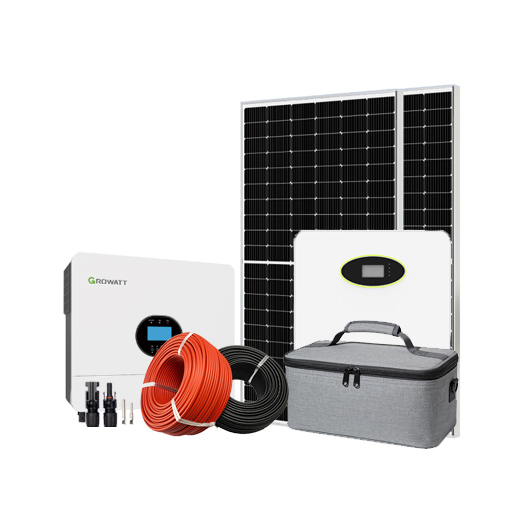
Standard Configuration List
| No. | Item | Description | Quantity |
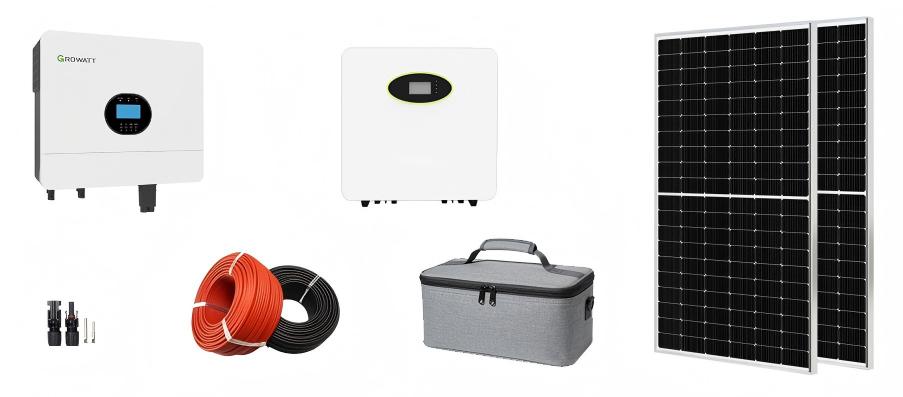
| 1 | Solar Panel | 550W | 10 pieces |
| 2 | Off-grid Inverter Control Machine | SPF6000ES | 1 unit |
| 3 | Lithium Battery | 51.2V 300Ah | 1 unit |
| 4 | Solar Mounting System | Aluminum alloy | 1 set |
| 5 | PV Cable | 4mm2 | 2 rolls |
| 6 | Solar Connector | MC4 | 4 sets |
Features
Solar Panel:Neutral brand; Class A monocrystalline solar panels;25 years of performance and quality assurance.
Off-grid Inverter Control Machine:Off-grid 6kW inverter;single phase 240V + GPRS.
Solar Connector:With German TUV certification, photovoltaic cable connection terminals.
PV Cable:Solar dedicated DC cable, 100 meters each in red/black (100 meters in one roll).
Lithium Battery:Quality assurance 5 years; maximum charge and discharge current 100A max charge/discharge current;15 kWh battery(15.36kWh Lithium Battery (rated 15kWh for daily practical reference)).
Applicable Scenario
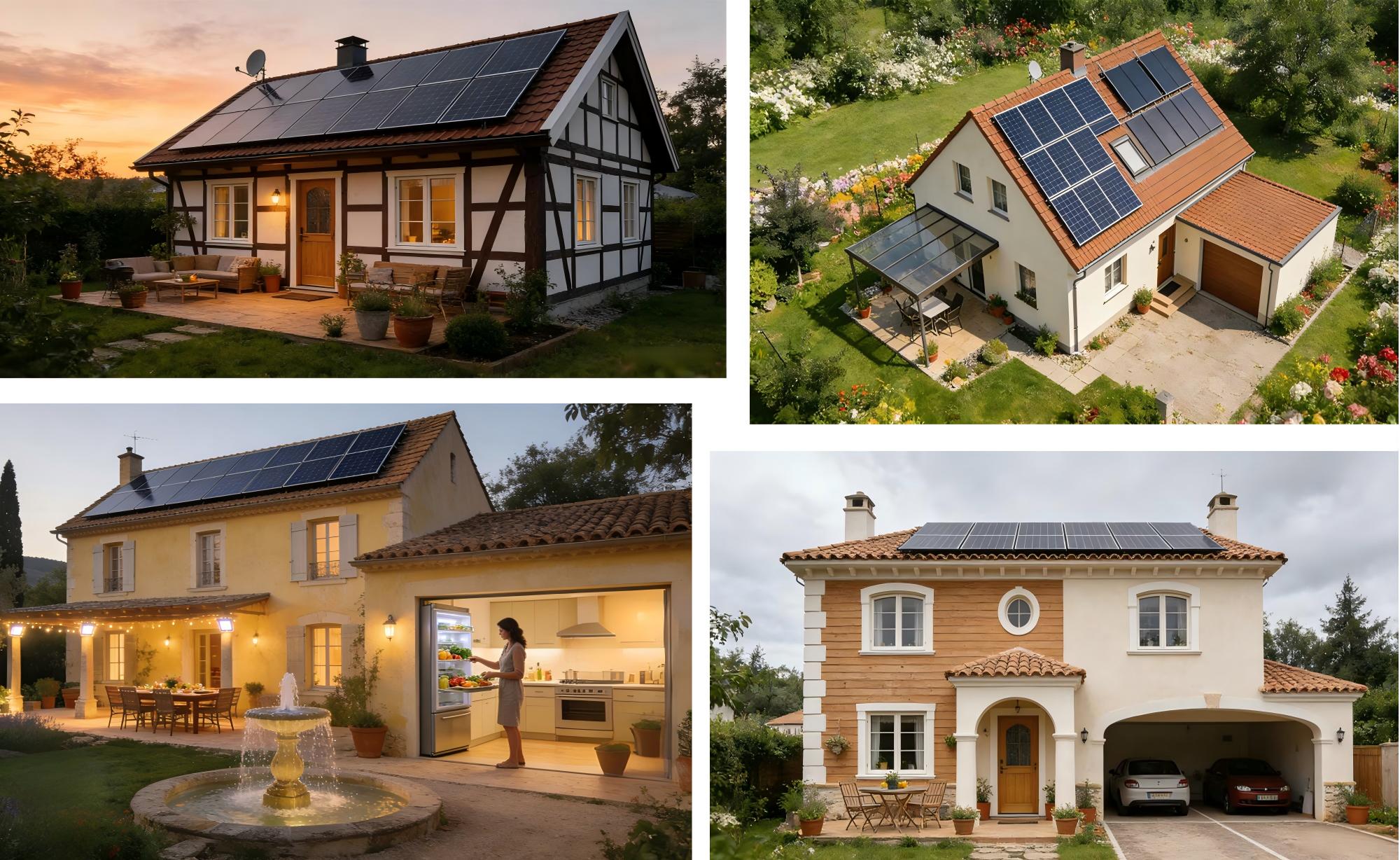
Multi-population rural single-family houses and high-end pastoral villas:there are a large number of single-family houses in European villages that are far from the urban power grid, especially for multi-population families of 3-5 people. The daily electricity consumption includes refrigerators, washing machines, dishwashers, electric ovens, small heat pumps, heating/cooling, and other high-power equipment. The 6kW off-grid household solar energy system has a higher matching power generation and energy storage, which can stably support the daily electricity consumption of the whole family.
Centralized power supply for RV camps & mobile living communities and mobile living complexes:the European RV culture is mature, and many high-end RV camps promote the “zero carbon emission” operation model. The 6kW off-grid household solar energy system can be used as a centralized power supply unit for the camp’s independent camp, while providing power for 3-5 RVs, supporting air conditioning, kitchen, charging and other needs, replacing traditional diesel generators, to achieve silent and pollution-free camp operation.
Small business and service establishments in rural areas:small business establishments in rural Europe, due to their distance from the power grid or the high cost of the power grid, are suitable for the use of 6kW off-grid household solar energy system for power supply: small grocery stores/cafes in rural areas: supporting the electricity consumption of cash register systems, refrigerators, lighting, coffee machines, ice machines, etc., to meet daily business needs; rural clinics/community service stations: powering medical equipment, emergency lighting, and communication equipment to ensure the continuity of basic medical services, especially for community sites in remote mountainous areas.
Ecological agriculture and intelligent power supply for small farms:Europe advocates ecological agriculture and organic planting, 6kW off-grid household solar energy system can support intelligent production equipment for small farms: Organic planting greenhouse:power the operation of temperature and humidity control system, automatic irrigation pump, supplementary lighting, ventilation equipment, to achieve precision planting, and clean electricity meets the certification standards of organic agricultural products; Small livestock farm/bee farm: power supply for electronic monitoring equipment for fences, automatic feed mixers, and constant temperature breeding sheds, reducing labor costs and improving breeding efficiency.
Return On Investment Simulation(Take Germany as an example)
| Project | Numerical value |
| System Cost (including installation) | ≈€12,143 |
| Annual Power Generation | ≈6,857 kWh |
| Personal Use Ratio | 60% |
| Ratio of surplus electricity to the Internet | 40% |
| Annual Electricity Savings (for personal use) | ≈€1,234 |
| Annual Internet Revenue | ≈€274 |
| Total Annual Revenue | ≈€1,508 |
| Payback Cycle | ≈8-10 years |
| 25 Year Net Income | €25,714+(Excluding electricity price increases) |
PS:Grid feed-in is an optional upgrade configuration for this off-grid system; the standard version is 100% independent power supply with surplus electricity stored in the battery.
Customer Feedback
FAQ
Q1:What is the difference between it and a grid-connected system?
A: Power generation is prioritized for self-use and surplus is stored in the battery. The grid-connected system needs to be connected to the grid. The excess electricity can be sold but relies on the grid. The off-grid system realizes complete power independence.
Q2:Can the power generation of the 6kW off-grid household solar energy system meet the electricity demand of ordinary European households?
A: The annual electricity consumption of ordinary European households is about 3000-5000kWh, and the annual power generation of the 6kW system is about 6800-7200kWh. With 15-20kWh energy storage batteries, 70% -100% of electricity self-sufficiency can be achieved (depending on household electricity consumption habits).Annual power generation: ≈6857kWh (Southern Europe: up to 7200kWh, Northern Europe: about 6200kWh, based on Germany’s latitude as the reference).
Q3:Can you enjoy the subsidy policies of the European Union or various countries?
A:The subsidy policies of 6kW off-grid household solar energy systems are far less than those of grid-connected systems, and the differences between countries are large: Southern European countries (Spain, Italy): Some regions give environmental subsidies for energy storage batteries in off-grid systems, and the subsidy amount is about 10% – 20% of the battery cost, and proof of system carbon emission reduction is required;
Nordic countries (Sweden, Norway): If the off-grid system is matched with a clean energy combination such as solar + heat pump, you can apply for green energy tax relief; Note: Subsidy applications need to prepare complete certification documents and installation reports in advance, and only low-consumption components that meet European Union environmental standards.
Q4:Do I need to report to the government or apply for permission to install a 6kW off-grid household solar energy system?
A:It needs to be judged by scenario: Roof installation: Most European Union countries (such as Germany and France) require the submission of building planning permission applications to the local municipal department, and the roof load-bearing test report and system safety layout plan need to be provided to avoid damaging the building structure or affecting the neighborhood lighting;
Ground installation: If you occupy private land such as courtyards, you need to confirm the land attributes (whether it belongs to an ecological reserve). Some Nordic countries require a certain distance from the residential boundary to prevent electromagnetic disputes; Special instructions: The off-grid system is not connected to the public power grid, and there is no need to apply for a grid connection license from the power grid company, but after the installation is completed, the local electrician association will conduct safety acceptance and issue a compliance certificate.
Q5:Is the daily maintenance cost of the 6kW off-grid household solar energy system high?
A:The maintenance cost is low, and the core maintenance content is as follows: solar panels: clean the surface dust and fallen leaves every 1-3 months, and remove the snow in time in snowy weather to avoid blocking; Batteries: lead-acid batteries need to be regularly checked for electrolyte level and voltage.
Lithium batteries are basically maintenance-free, and only need to be regularly monitored for charge and discharge status. Inverter/controller: keep the equipment ventilated and dry to avoid dust accumulation. Check whether the terminals are loose once a year. Auxiliary materials: regularly check the aging of cables and rust prevention of brackets, especially in humid coastal areas.
Q6:What appliances can a 6kW off-grid household solar energy system drive in European households?
A 6kW inverter (rated power 6kW, peak power about 12kW) can cover: conventional loads: LED lighting, refrigerators, washing machines, dishwashers, TVs, routers; high-power loads: 2-3 heat pumps (winter heating), electric ovens, induction cookers (pay attention to avoid starting at the same time); special attention: some old-fashioned appliances in Europe have a large starting current, so a pure sine wave inverter needs to be selected to avoid damage to precision appliances (such as smart temperature-controlled refrigerators).
Q7:What should be paid attention to in daily maintenance?
A:Solar panel cleaning: there is a lot of snow in Northern Europe, and the snow needs to be cleaned in time in winter (to avoid overloading the bracket); Southern Europe is dusty, and needs to be cleaned once a month. When cleaning, it is necessary to abide by the European Union’s aerial work safety regulations, and it is forbidden to climb the roof without permission.
Battery maintenance: Lithium batteries are basically maintenance-free, but they need to be regularly (quarterly) tested by the inverter BMS system; lead-acid batteries need to be maintained in a ventilated environment to avoid electrolyte leakage from polluting the soil (strictly prohibited by European Union environmental protection laws).
Regular inspection: a comprehensive inspection needs to be done by a certified service provider every year, including component power attenuation, line insulation, and inverter parameters calibration and test reports should be retained as the basis for subsequent subsidies or second-hand transfers.
Related Products And Resources
→Solar Balcony: The choice for small space entry
→6kW Hybrid Household Solar Energy System
→Subsidies from major European countries
You Might Also Be Interested
4.2kW Off-grid Household Solar Energy System
5kW Off-grid Household Solar Energy System
Why Do Families Around The World Trust Us?
- One-stop service: from design, delivery to installation support.
- Local compliance: System pre-configured to meet target country electrical standards.
- Lifetime Technical Support: WeChat /WhatsApp/Mail Multi-channel Response.
- Transparent quotation: no hidden fees, including taxes and freight (in some countries).