
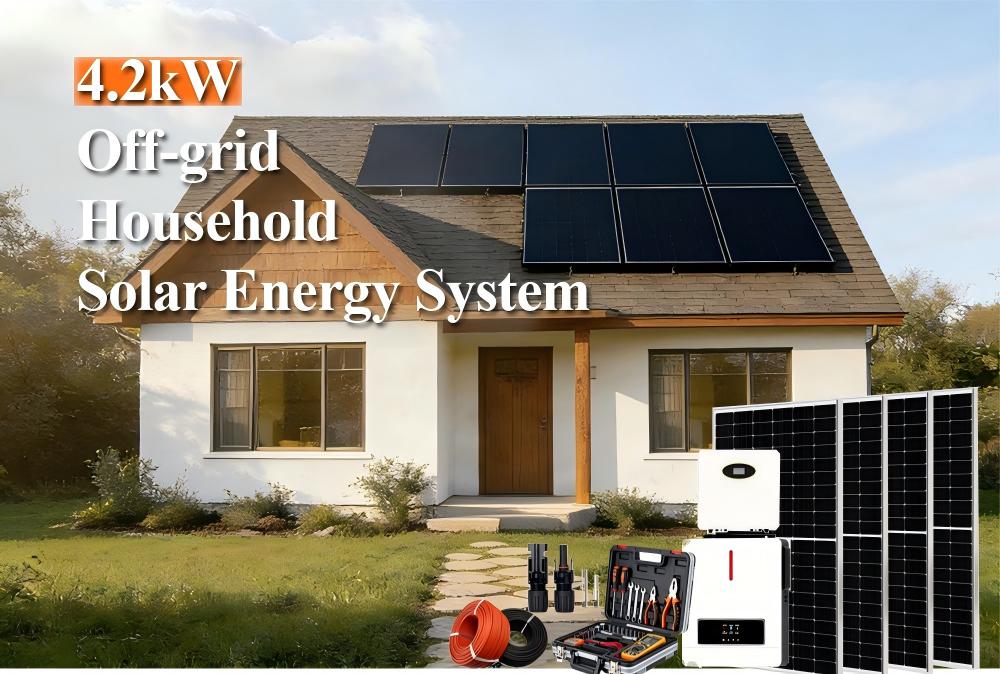
 Why Choose a 4.2kW Off-grid Household Solar Energy System?
- Energy Independence: Frees you from reliance on the public power grid, avoiding blackouts or power outages.
- Cost Savings: Eliminates monthly electricity bills and reduces long-term energy expenditure with minimal operating costs.
- Environmental Friendliness: Generates clean, renewable energy with zero greenhouse gas emissions, lowering carbon footprint.
- Remote Applicability: Ideal for rural or off-grid areas where grid connection is costly or unavailable.
- Low Maintenance: Requires little upkeep after installation, with a long service life (typically 25+ years).
Standard Configuration List
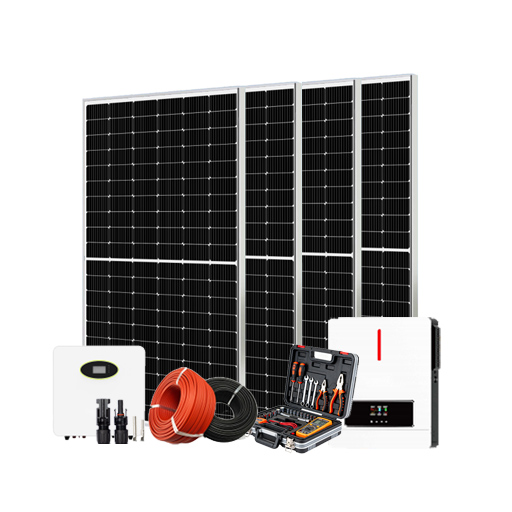
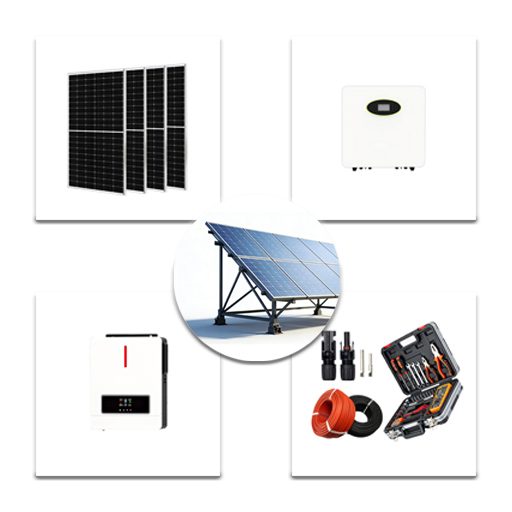
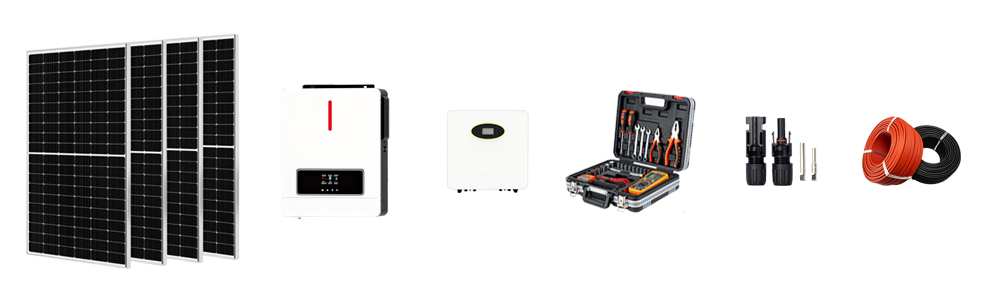
| No. | Item | Description | Quantity |
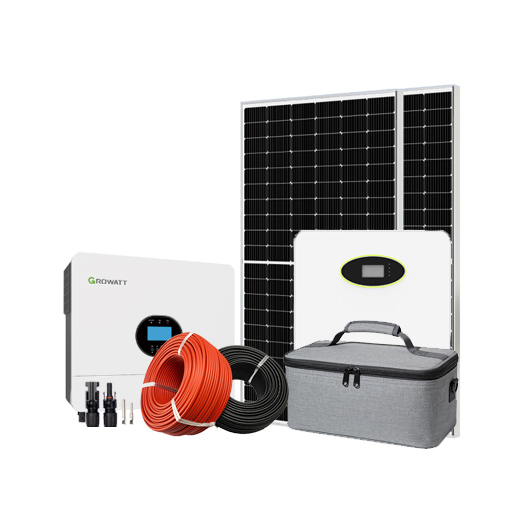
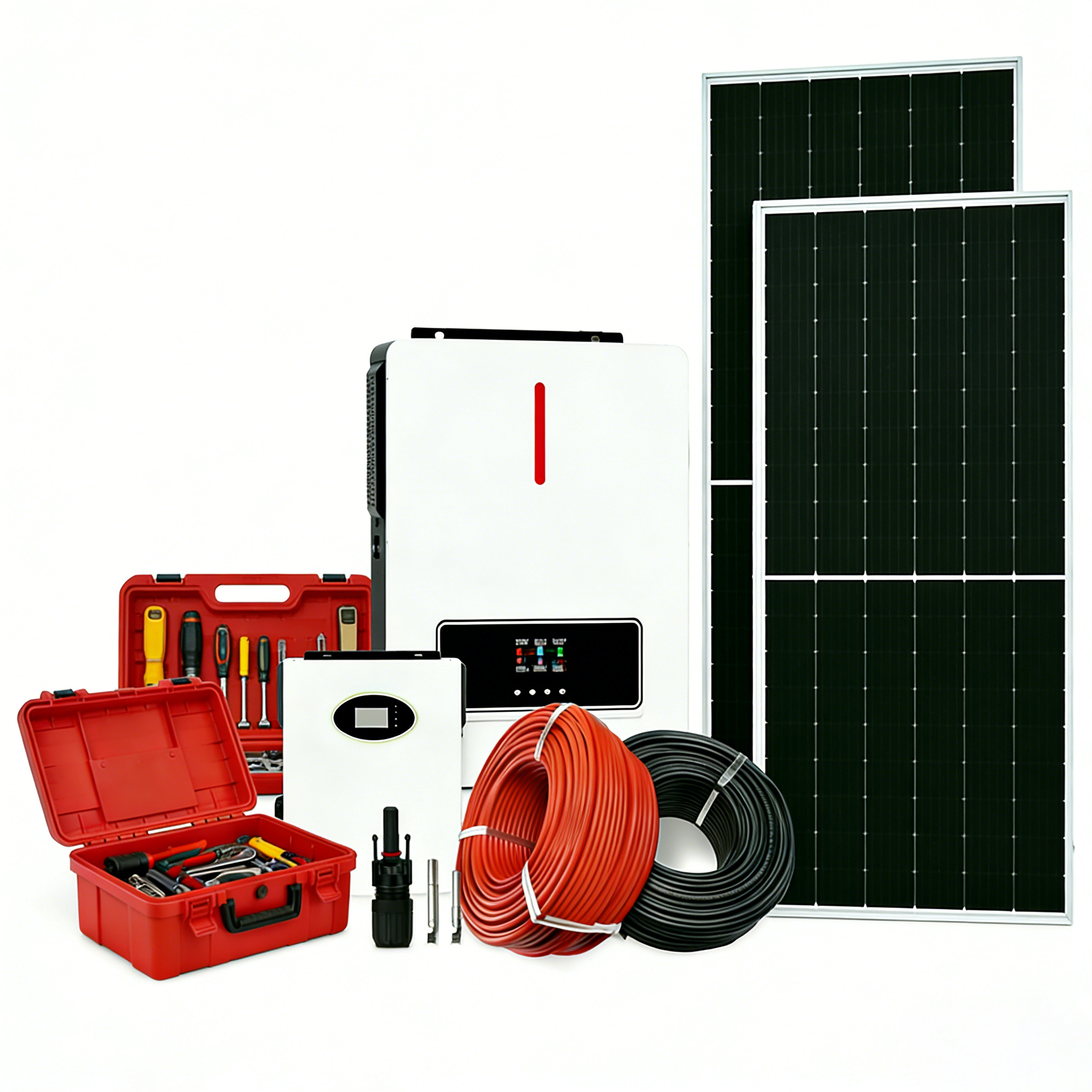
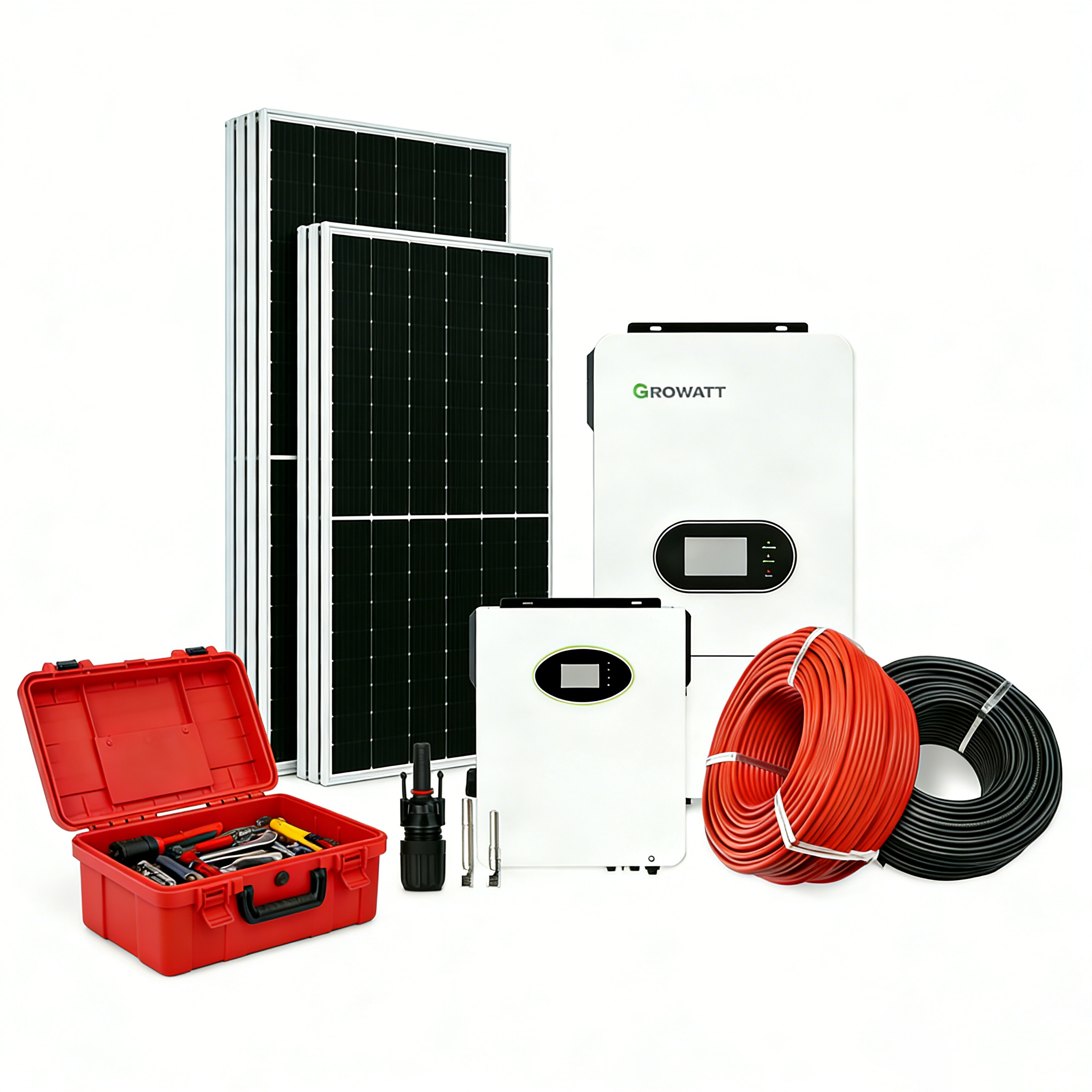
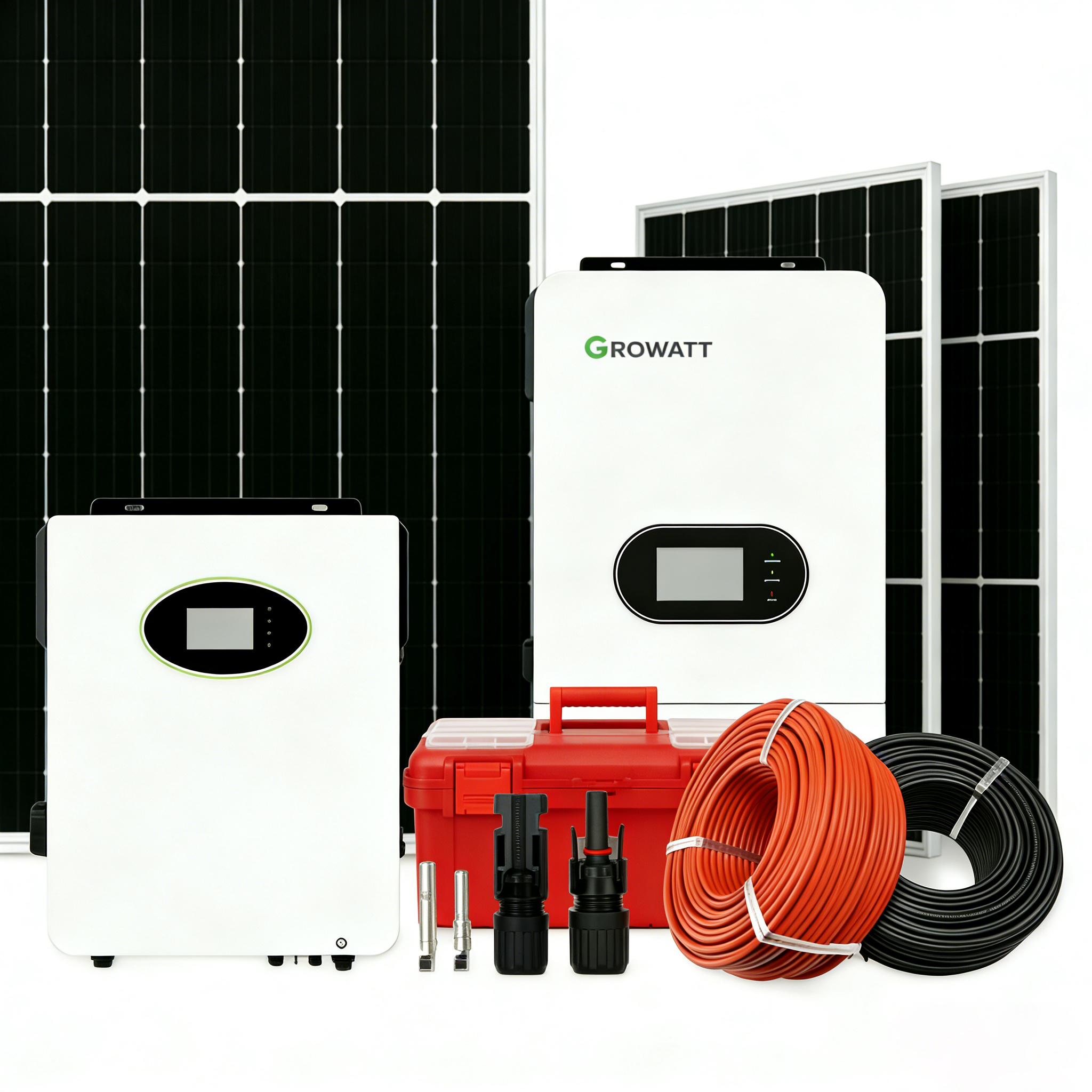
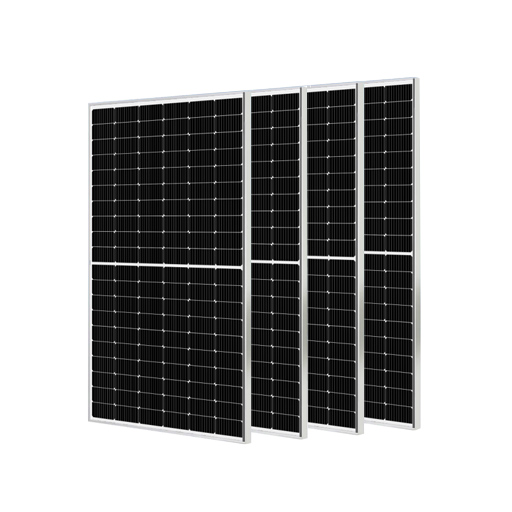
| 1 | Solar Panel | 550W | 8 pieces |
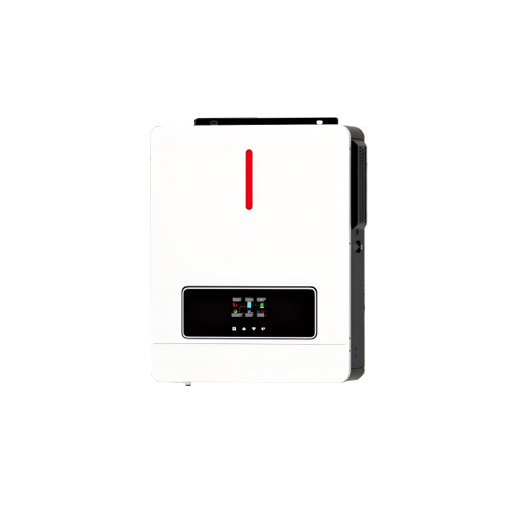
| 2 | Off-grid Inverter Control Machine | 4200TL-24TX | 1 unit |
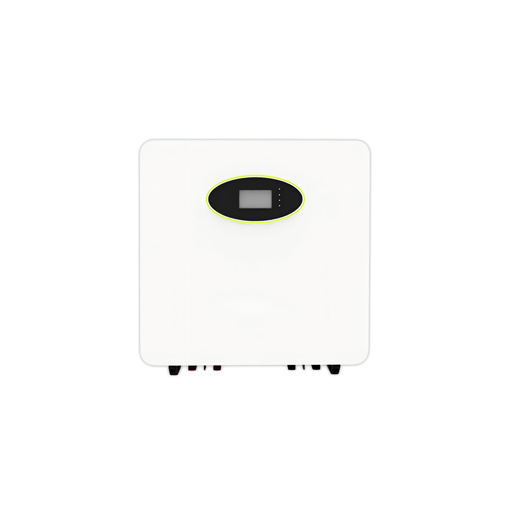
| 3 | Lithium Battery | 51.2V 100Ah | 1 unit |
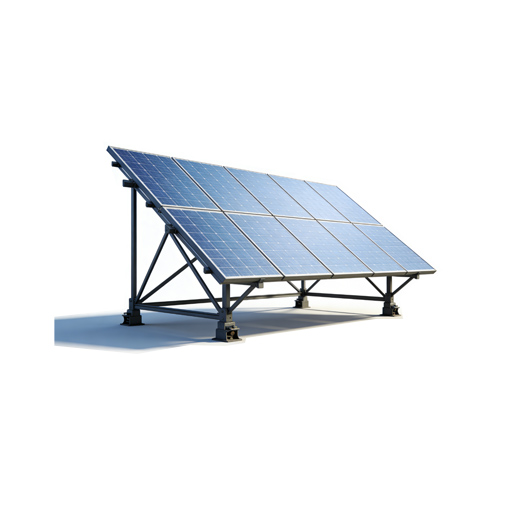
| 4 | Solar Mounting System | Aluminum alloy | 1 set |
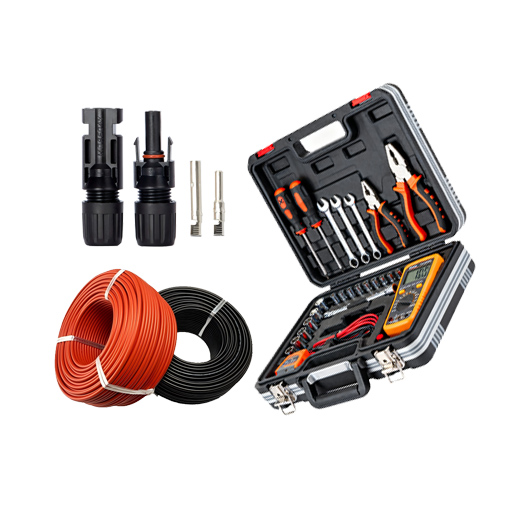
| 5 | PV Cable | 4mm2 | 2 rolls |
| 6 | Solar Connector | MC4 | 3 sets |
Features
Solar Panel:Neutral brand; Class A monocrystalline solar panels;25 years of performance and quality assurance.
Off-grid Inverter Control Machine:Off-grid 4.2kW inverter;Single-phase 240V with WIFI, 1-year warranty.
Solar Connector:With German TUV certification, photovoltaic cable connection terminals.
PV Cable:Solar dedicated DC cable, 100 meters each in red/black (100 meters in one roll).
Lithium Battery:Quality assurance 5 years; maximum charge and discharge current 100A;A product battery, 5kWh Capacity Lithium Battery.
Custom Upgrade Packages
- Solar Module Upgrade: Replace with high-efficiency monocrystalline silicon / heterojunction modules, or add 1-2 additional modules of the same specification for capacity expansion, which can increase power generation efficiency by 10%-20%.
- Energy Storage System Upgrade: Increase the capacity of lithium battery packs (e.g., expand from 5kWh to 10kWh), or replace with lithium iron phosphate batteries with long cycle life to extend the power supply time when there is no sunlight.
- Control Equipment Upgrade: Replace with an intelligent off-grid inverter that supports MPPT (Maximum Power Point Tracking), optimizes charging and discharging logic, and can also add a remote monitoring function.
- Auxiliary Function Expansion: Install automatic sun-tracking brackets for PV panels to increase power generation by 15%-30%; or add small charging piles and DC load interfaces to adapt to the power consumption of electric vehicles and outdoor equipment.
Applicable Scenario
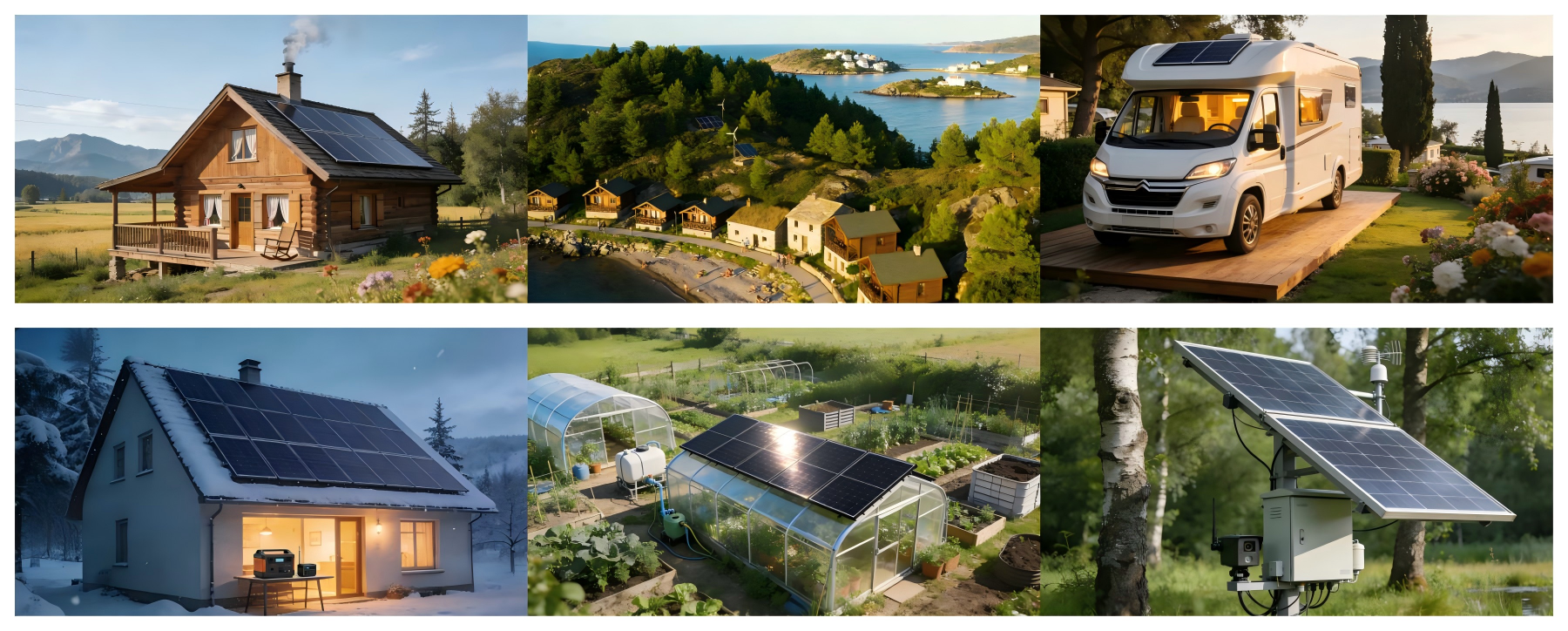
Rural remote dwellings and pastoral cottages.:Europe has a large number of rural single-family houses and pastoral holiday cottages that are far from the urban power grid. The cost of electricity access in these areas is extremely high. The 4.2kW off-grid household solar energy system can meet the basic electricity consumption of such houses – including lighting, refrigerators, washing machines, small heating equipment, kitchen appliances, etc. At the same time, it meets the European requirements for clean energy use, and can also reduce long-term electricity costs.
Mountain and island vacation and living places:European mountainous areas and islands , these areas have weak electricity coverage and rich tourism resources. Mountain wooden houses, ski vacation chalets: power supply accommodation, ski equipment, and small heating equipment to solve the problem of unstable power grids or difficult access in mountainous areas; Island homestays and fishermen’s chalets: meet the power needs of daily electricity and small equipment for desalination, and at the same time use the island’s abundant light to improve power generation efficiency, which is in line with the positioning of island eco-tourism.
The high-end matching of RVs and campsites:the European RV culture is prevalent, and campsites pay more attention to “eco-friendly”. The 4.2kW off-grid household solar energy system can be used in two types of scenarios: independent power supply for large RVs: replacing traditional on-board generators to power the air conditioning, kitchen, lighting, and energy storage equipment of the RV to achieve silent and zero-emission outdoor life; “ecological camp” of the campground: providing electricity for the independent camp of the campground, without laying a power grid, to meet the charging and lighting needs of the camper, and to meet the environmental certification standards of the European campground.
Emergency backup and power guarantee scenarios:parts of Europe are prone to extreme weather in winter, resulting in power outages. The 4.2kW off-grid household solar energy system can be used as a household emergency backup power supply. With the dual-mode inverter, the grid power can be used first when the mains power is normal, and it is automatically switched to solar + battery power supply when the mains power is interrupted to ensure the operation of key loads such as refrigerators, security systems, heating equipment, and communication equipment, and avoid life inconvenience caused by power outages. In addition, for some small places with high power stability requirements , the 4.2kW off-grid system can also be used as a backup power supplement.
Small-scale agriculture and ecological planting scenarios:Europe advocates ecological agriculture and organic planting, and the 4.2kW off-grid household solar energy system is suitable for all kinds of small agricultural facilities: greenhouse greenhouses in organic farms: power supply for temperature and humidity monitoring equipment, small ventilation fans, and drip irrigation system pumps, to achieve precision planting, and the power source is clean and pollution-free, meeting the certification requirements of organic agricultural products; small livestock farms: power supply for electronic monitoring equipment for fences, feed mixers, and small lighting equipment, especially for free-range pastures away from the power grid.
Environmental protection and scientific research small sites:Europe has invested a lot in ecological protection and scientific research monitoring, and the 4.2kW off-grid household solar energy system is often used for: monitoring sites in nature reserves: power supply for wildlife infrared cameras, meteorological monitoring equipment, and water quality monitoring equipment to achieve unattended long-term stable operation; environmental protection public welfare projects: such as small public lighting and water purification equipment in rural communities, to help improve the basic livelihood of remote areas, and at the same time meet the European Union’s carbon neutrality goal.
Return On Investment Simulation(Take Germany as an example)
| Project | Numerical value |
| System Cost (including installation) | ≈€8,500 |
| Annual Power Generation | ≈4,800 kWh |
| Personal Use Ratio | 60% |
| Ratio of Surplus Electricity to the Internet | 40% |
| Annual Electricity Savings (for personal use) | €864 |
| Annual Grid Feed-in Revenue | €192(this system can be flexibly switched and the grid connection function is an optional configuration) |
| Total Annual Revenue | ≈€1,056 |
| Payback Cycle | ≈8–10 years |
| 25 Year Net Income | €18,000+(Excluding electricity price increases) |
PS:The above data is for reference only, and should actually be based on factors such as the environment, electricity prices, and national policy subsidies.
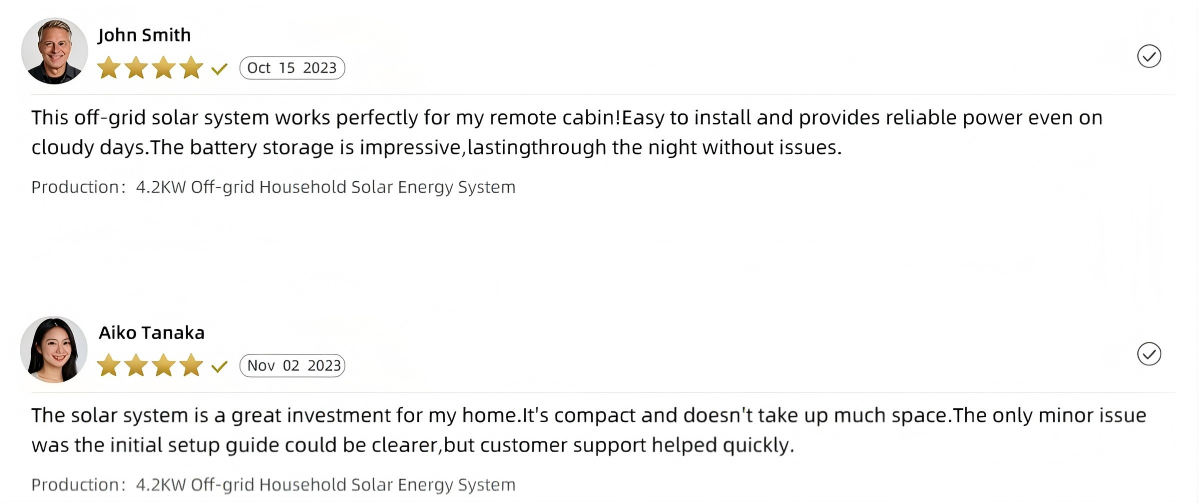
Customer Feedback
FAQ
Q1: My roof is not facing due south, can it still be installed?
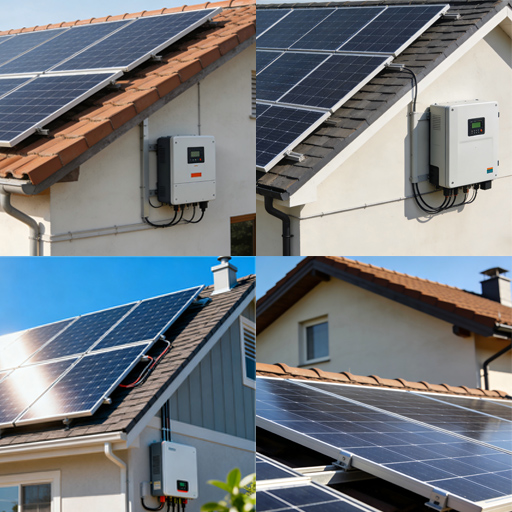
A: Yes! Only 10-15% of the power generation is lost in the southeast/southwest direction. We will accurately simulate your rooftop output through professional software.
Q2: Do you need to apply for a grid connection license? Is the process complicated?
A: Yes, the 4.2kW off-gird household solar energy system needs to submit a grid connection application to the local power grid company (such as Netzbetreiber in Germany). We provide a full set of document templates + agency services (some countries).Only the grid-connected mode requires a license application, while the pure off-grid mode does not.
Q3: If there is less power generation in rainy days or winter, will it be insufficient?
A: The 4.2kW off-gird household solar energy system design has taken into account the change of light throughout the year. If you are worried, it is recommended to match more than 4.2kWh of energy storage to achieve 24-hour green power supply.
Q4: Do you provide installation services?
A: We provide DIY kits (including detailed manuals + videos) and certified installer recommendations (cooperating with local electricians). Full managed installation is supported in some areas.
Q5:What household appliances can be driven by the 4.2kW off-grid household solar energy system?
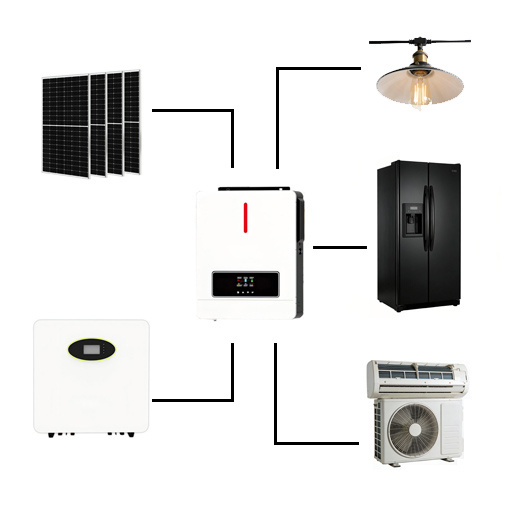
A:It can meet most of the commonly used electrical appliances in ordinary households, such as: 2-3 air conditioners (pay attention to the starting power of a single air conditioner, it is recommended to match a pure sine wave inverter), refrigerators, washing machines, TVs, lighting, small kitchen appliances, etc. Pay attention to avoid high-power electrical appliances starting at the same time to prevent the inverter from being overloaded.
Q6:How much area do you need to install a 4.2kW off-grid solar energy system?
A:The size of conventional photovoltaic panels is about 1.7m × 1m, and the area of a single block is about 1.7 ㎡. A 4.2kW system requires about 8 solar panels, and the installation area is about 25-30 ㎡ (roof or ground, need to be unobstructed).25 – 30 ㎡ represent the actual occupied area including installation spacing and supports,The pure plate area is approximately 13.6 ㎡.
Q7:Do you need to go through the procedures for installation?
A:Off-grid solar systems are not connected to the public power grid, and generally do not need to report to the power grid company; but they need to comply with local building and fire protection codes. If installed on the roof, it is necessary to confirm the roof’s load-bearing capacity, and if necessary, find a professional organization for load-bearing testing.
Q8:How long is the service life of the solar system?
A:Solar modules: The quality assurance period is generally 25 years, the actual service life can reach more than 30 years, the power will decay with time, and the power can still maintain about 80% of the initial value after 25 years; Inverter: The service life is about 10-15 years; Battery: lead acid 3-5 years, lithium battery 6-10 years, need to be replaced after expiration.
Related Products and Resources
→ Solar Balcony: The choice for small space entry
→ 10kWh household energy storage battery: worry-free electricity at night
→ German KfW subsidy application full process guide
You Might Also Be Interested
6kW-hybrid-household-solar-energy-system
6.2kW Household Off-grid Solar System
Why Do Families Around The World Trust Us?
-
- One-stop service: from design, delivery to installation support.
- Local compliance: System pre-configured to meet target country electrical standards.
- Lifetime Technical Support: WeChat /WhatsApp/Mail Multi-channel Response.
- Transparent quotation: no hidden fees, including taxes and freight (in some countries).