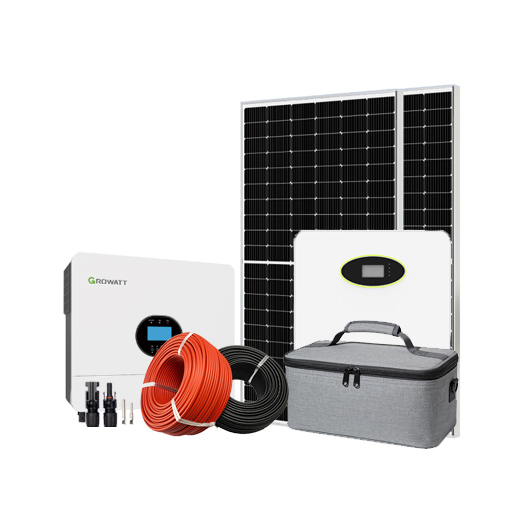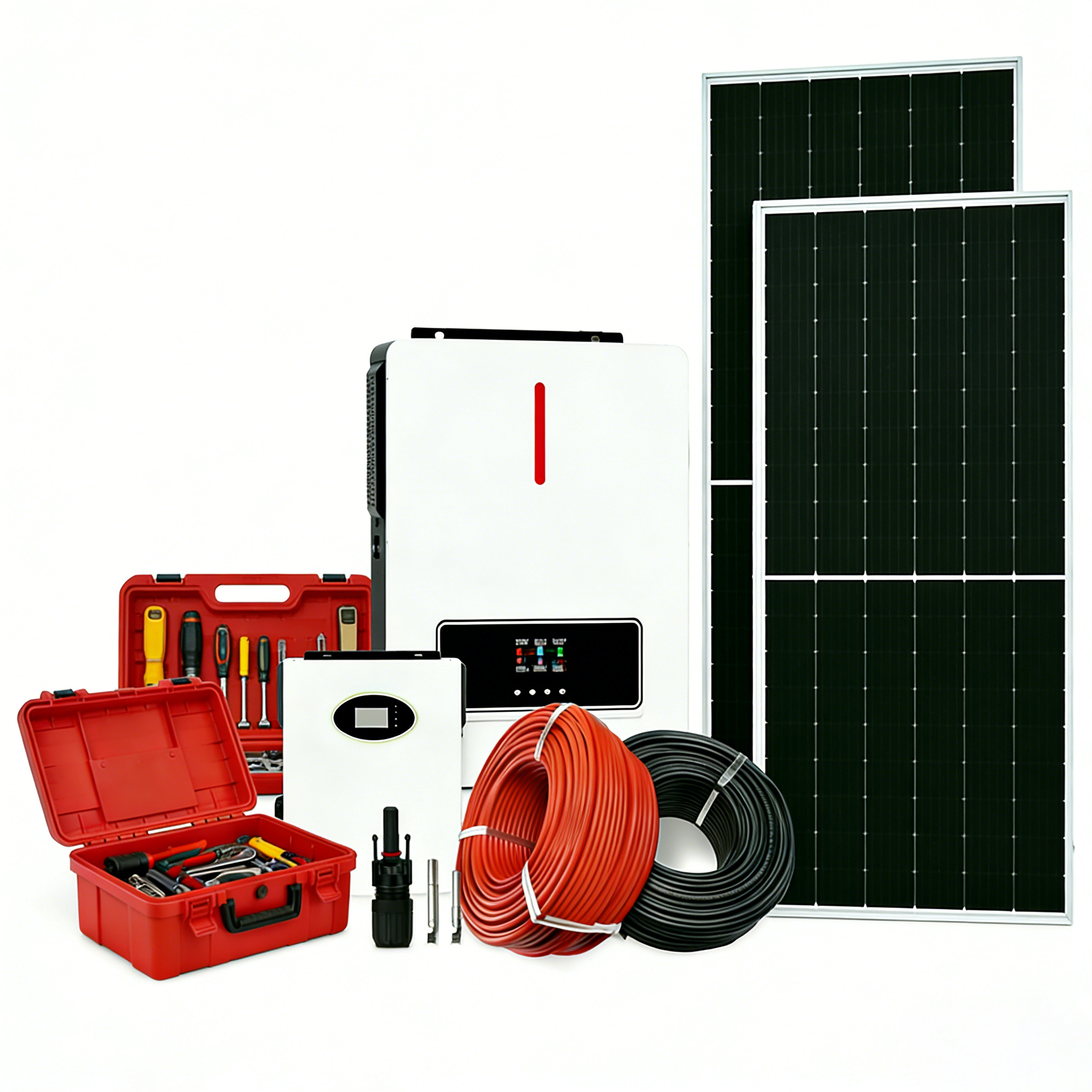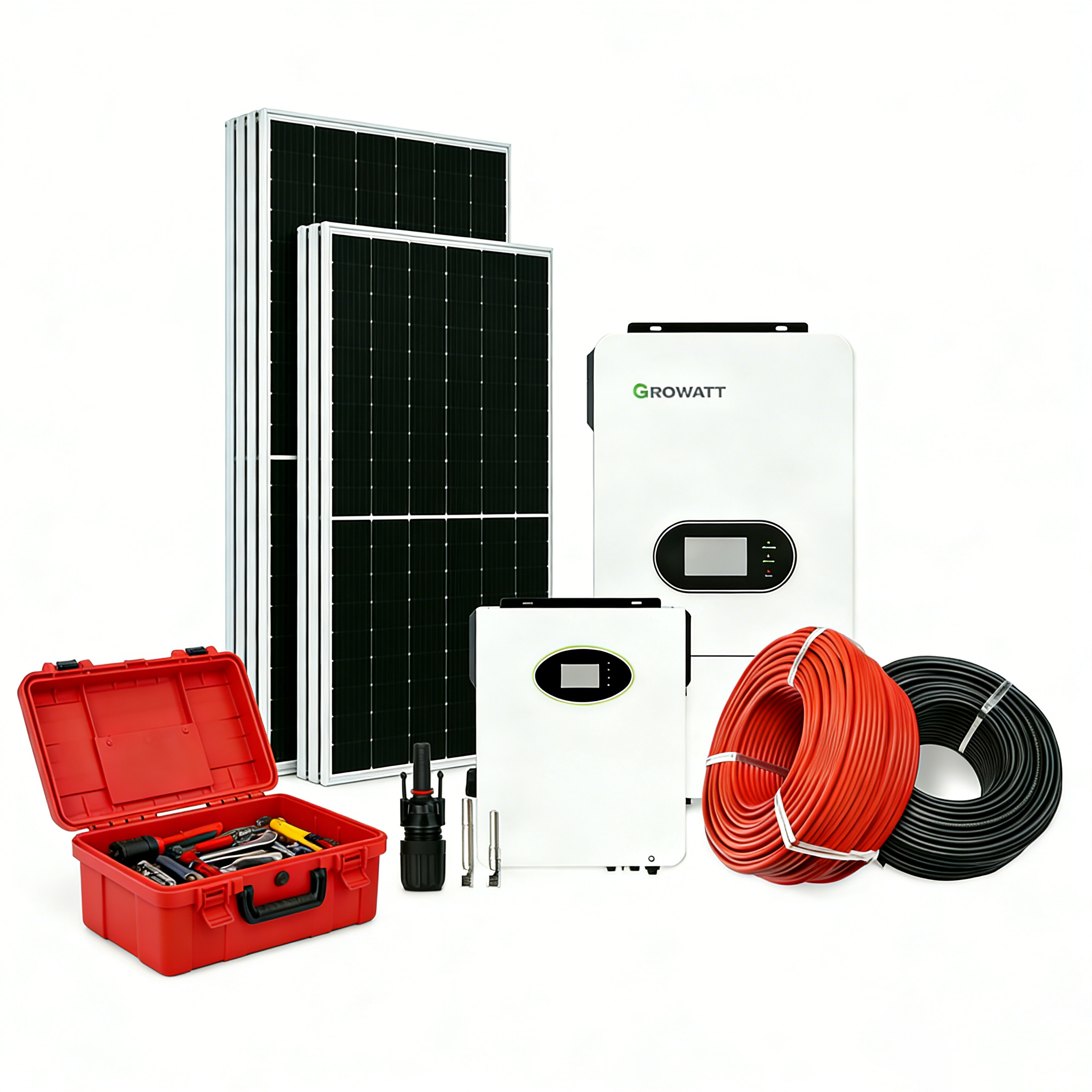

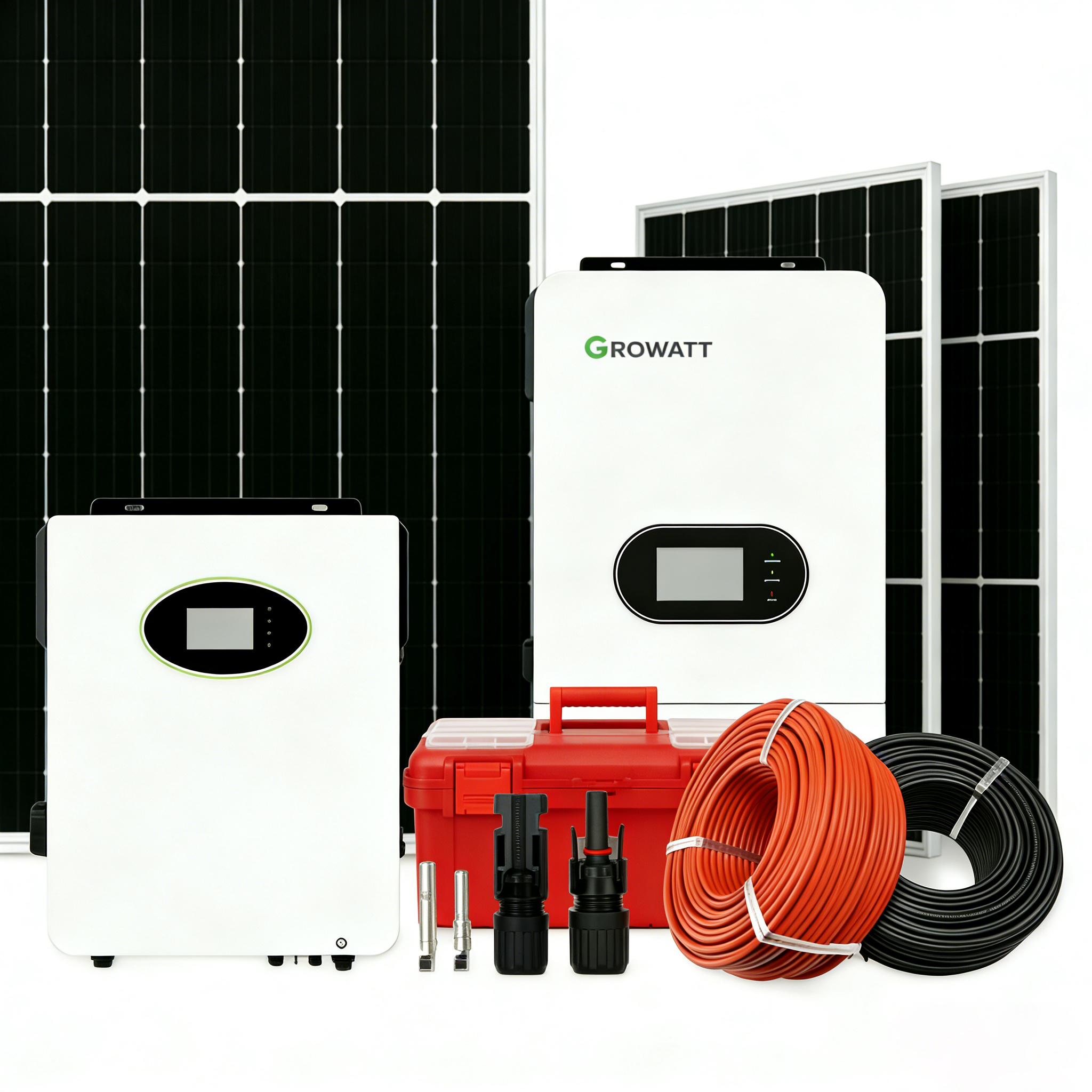
Standard Configuration List
| NO. | Item | Description | Quantity |
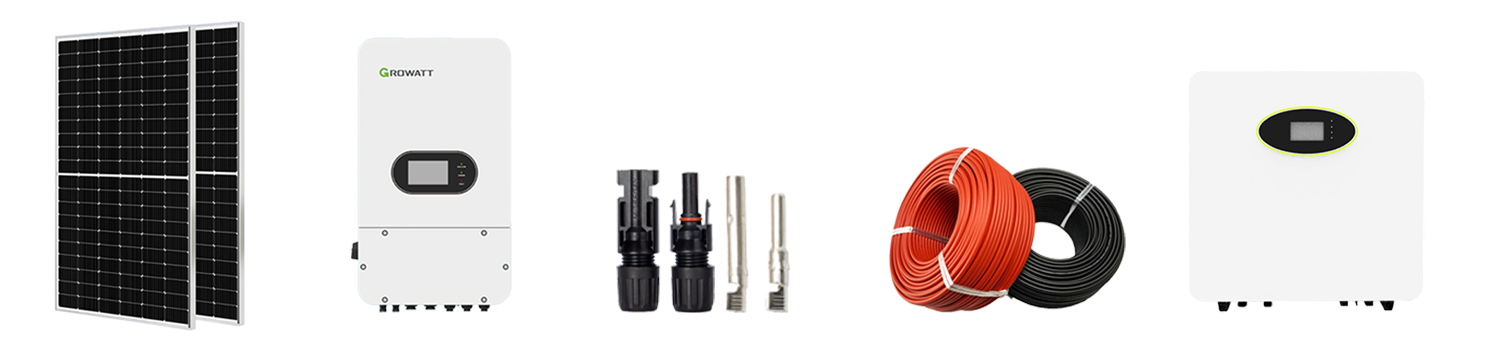
| 1 | Solar panel | 550W | 18 pieces |
| 2 | Lithium battery | 51.2V300AH | 1 unit |
| 3 | Hybrid inverter&controller all in one | SPM 10000TL-HU | 1 unit |
| 4 | Solar Connector | MC4 | 6 sets |
| 5 | Solar mounting system | Aluminum alloy | 1 unit |
| 6 | Pv cable | 4mm ² | 2 rolls |
Features
○ Neutral brand: A-grade monocrystalline solar panels, with A 25-year performance warranty
● Hybrid 10KW inverter single-phase 240V+WIFI, IP65, 5 years warranty
○ Photovoltaic cable connection terminal with German TUV certification.
● Photovoltaic dedicated DC cable, red and black 100 meters each (100 meters per roll)
○ 5-year warranty; The maximum charge and discharge current is 100A/Grade A battery cells, 15 KWH battery
Application Scenarios
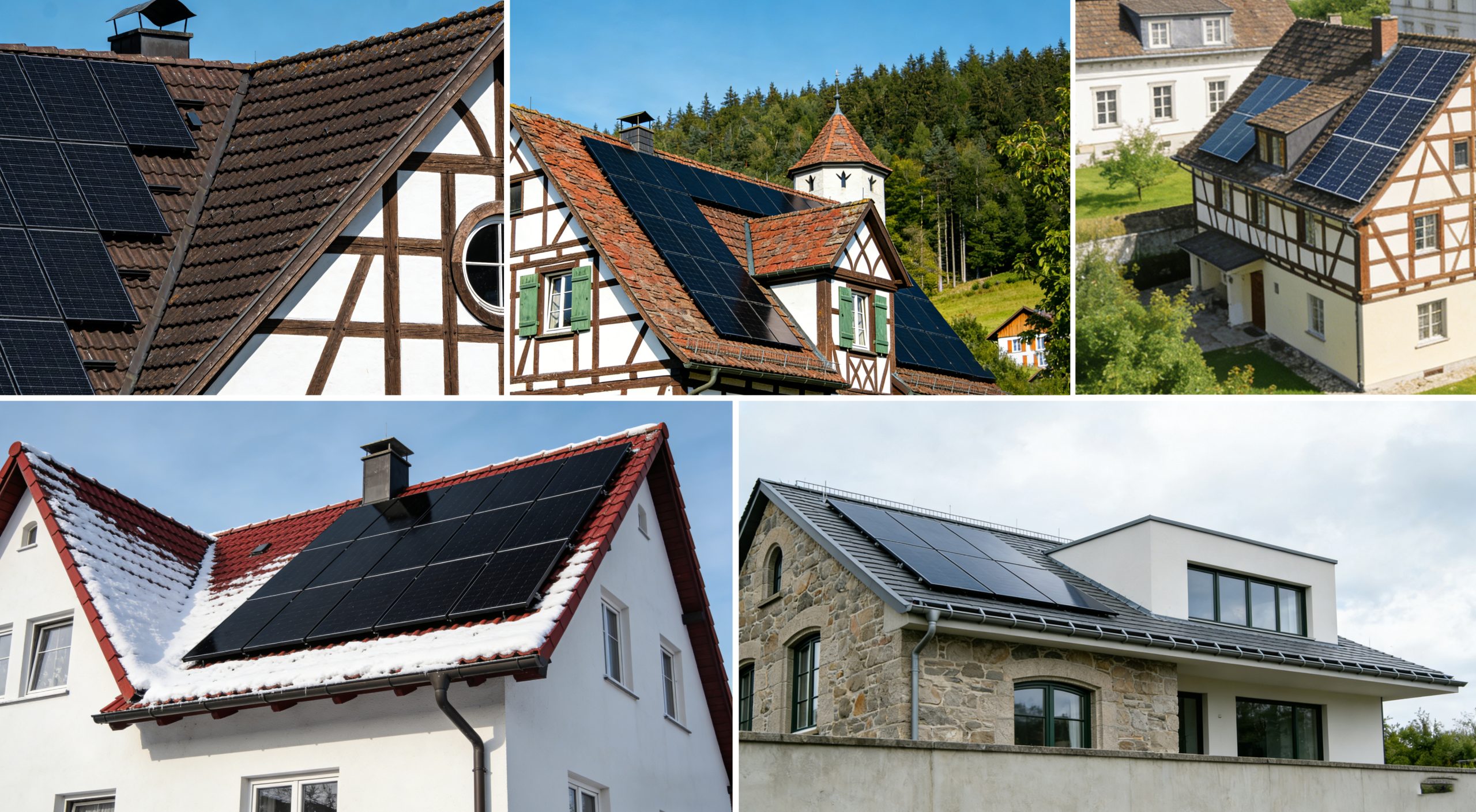
Our 10KW hybrid solar energy system is widely suitable for various residential scenarios in Germany, especially for families with high electricity demand and pursuit of energy independence:
– German detached villas and townhouses with independent roofs
– Self-built houses in rural areas of Germany (supporting off-grid operation)
– Families equipped with electric vehicles (supporting EV charging)
– Houses with floor heating, swimming pools and other high-power electrical equipment
– Residential areas with unstable grid power supply (ensuring continuous power supply)
Investment Return Simulation
| Core indicators | Values/Results |
| System cost (including installation) | €16500 |
| Annual power generation | 11200 kWh(Based on the average irradiation conditions in the central region of Germany) |
| Self-use ratio | 65% |
| Surplus electricity ratio | 35% |
| Annual electricity savings (self-use) | ≈€4092 |
| Annual online revenue | ≈€882 |
| Annual total revenue | ≈€4974 |
| Payback period | about 5 years |
| Net income over 25 years | ≈€107850 |
Remarks: 1. The data is based on the German photovoltaic market and energy policy in 2025. The actual income may be affected by regional radiation differences, changes in household electricity consumption habits, policy adjustments, and component attenuation (annual attenuation rate is about 0.5%, total attenuation in 25 years is about 12%, and this simulation has been indirectly included in the power generation calculation).
2. If the energy storage system is used, the proportion of self-use can be increased to more than 70%, which can further optimize the income structure
Customer Feedback
Frequently Asked Questions (FAQ)
Q1: Can this system in Germany power the entire house’s electric floor heating and charge two electric vehicles simultaneously?
A: No problem, no pressure! This system in Germany can generate an average of 30 to 40kWh of electricity per day. The average daily electricity consumption of a whole-house electric floor heating system in winter is about 15 to 20kWh. Even if two electric vehicles each charge 10kWh per day, it only amounts to 20kWh. The electricity generated by photovoltaic systems is fully sufficient to cover this. With the support of energy storage batteries and the power grid as a safety net, there’s no need to panic even if it’s overcast for consecutive days. Heating and travel electricity can be freely accessed in one step.
Q2:Is installing this system a waste of talent? Can an ordinary German household use such high power?
A:For large families or “big electricity consumers”, this is a tailor-made model! With an oven, dishwasher, dryer, electric floor heating and one or two electric bikes at home, the electricity demand is soaring. The 10kW system has a large power generation capacity. It can not only be self-sufficient but also sell the surplus electricity to the power grid to earn profits. This is much more cost-effective than installing a low-power system and repeatedly upgrading it.
Q3: Is a 10kW hybrid system more attractive than a low-power system when receiving subsidies in Germany?
A: It must be more fragrant! Germany offers greater subsidies for high-power household photovoltaic and energy storage systems. Besides the basic installation subsidies and battery subsidies, some federal states also provide additional rewards for integrated systems of “photovoltaic + energy storage + charging piles”.
Q4: How large should the energy storage battery be for a 10kW system? Is bigger always better?
A: It’s not the case that the bigger, the better. Matching according to needs is the most cost-effective! For an average large family in Germany, a battery of 15 to 20kWh is sufficient, which can store the surplus power during the day for use at night. If the peak electricity consumption is concentrated at night or power outages occur frequently, it is more reliable to use a battery with a capacity of 25 to 30kWh. Batteries that are too large will increase the initial cost and instead prolong the payback period.
Get Your Personalized 10KW Plan
Just tell us your basic information within 2 minutes and you will get:
Roof compatibility analysis
Power Generation and Revenue Forecast Report (PDF)
Guide to Local Subsidy Policies
Recommended configuration list (including battery options)
At the bottom, [Submit → Get Exclusive Proposals]
Send an email or contact WhatsApp for support
You Might Also Be Interested
5KW Hybrid Solar Energy System
6KW Hybrid Household Solar Energy System
Why choose a 10kw hybrid grid solar system
Why Do Families Around The World Trust US?
One-stop service: From design, delivery to installation support
Local compliance: The system pre-configuration complies with the electrical standards of the target country
Lifetime technical support: Multi-channel response via wechat, WhatsApp and email
Transparent quotation: No hidden fees, including tax and freight (in some countries)
One installation, 25 years of benefits 10kW household solar system – the starting point of energy freedom for your home